

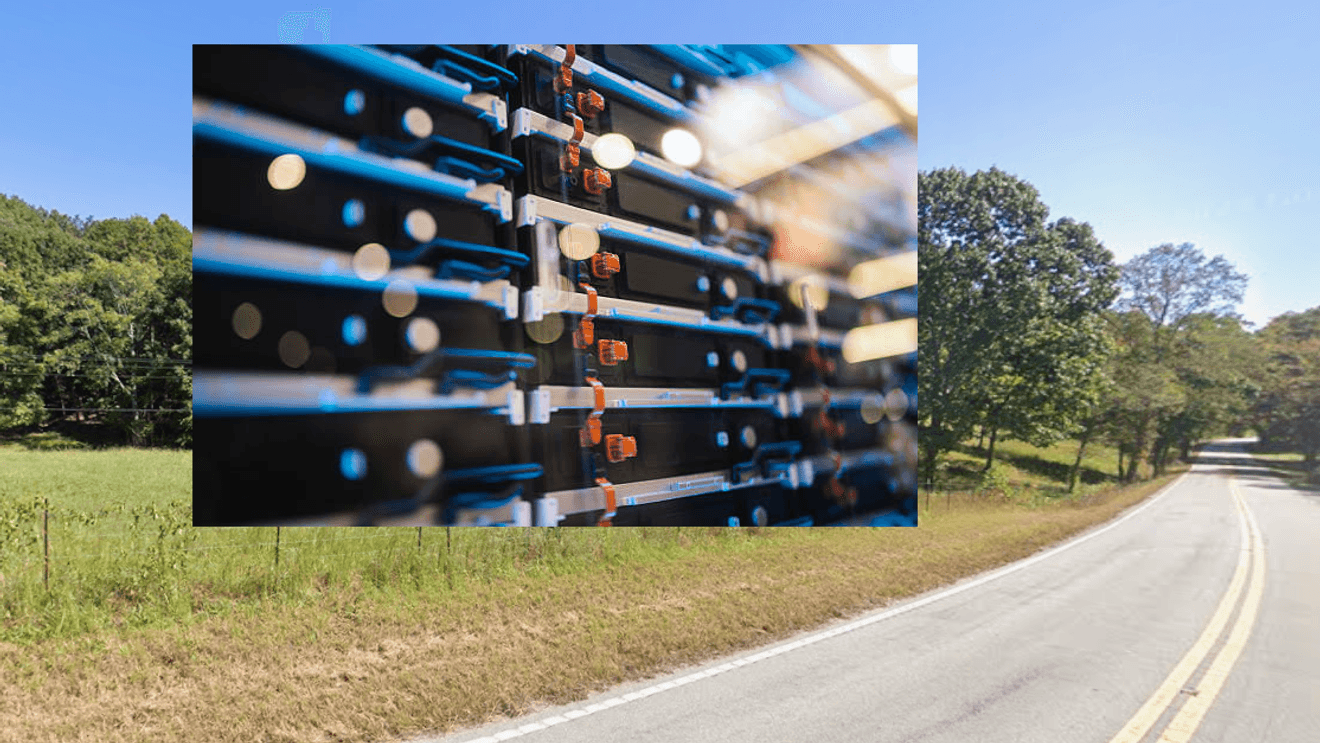

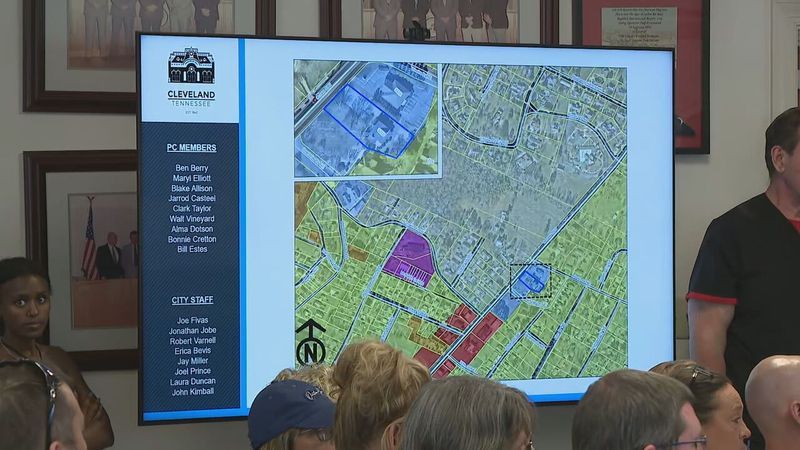
Could a data center be built on this patch of land in Bradley County, west of I-75 and north of Old Lower River Road NW? That’s what Wright Brothers Construction hope residents will allow. Photos: Google Maps /
BRADLEY COUNTY, Tenn. —A massive new data center is being pitched for Bradley County with an unusual answer to some of the concerns increasingly following these projects across the country: It would make its own power and get through daily operations without using municipal water.
But there’s now an important wrinkle in what exactly would be built there, and whether it will ease the concerns already expressed by residents at recent public meetings.
A Wednesday news release by Wright Brothers Construction for the $11.3 billion Project River describes the proposed 850-acre industrial campus as being “anchored by an on-site power plant and data center.”
The family-owned business has submitted roughly 850 acres west of Interstate 75 and north of Old Lower River Road NW for rezoning and annexation into the City of Cleveland.
Speaking Wednesday morning on Mix 104.1 WCLE, Wright Brothers Construction CEO Mitchell Simpson said a data center is likely, but not yet certain.
“We definitely know we’re developing a power plant,” Simpson said. But when asked whether developers know what that plant will power, he answered: “We don’t know what it’s going to power yet.”
Simpson said developers envision producing 1,500 megawatts of power on the property, with another 360 megawatts requested from TVA for backup and peak demand.
The customer for all that electricity, what Simpson called the project’s “offtaker,” has not been chosen.
“It potentially could be a data center,” Simpson said. “But it very well could be something else.”
He said developers could market the site for advanced manufacturing, robotics or semiconductor manufacturing in addition to a data center.
But later in the interview, Simpson acknowledged where he thinks the project is likely headed.
“When we’ve got that much power for what we’re creating, it’s very likely going to be that,” Simpson said of a data center.
That distinction matters in Bradley County right now.
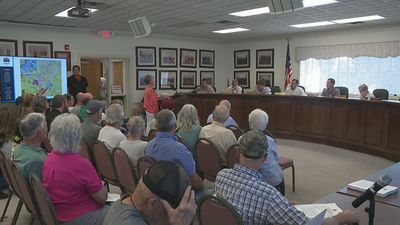
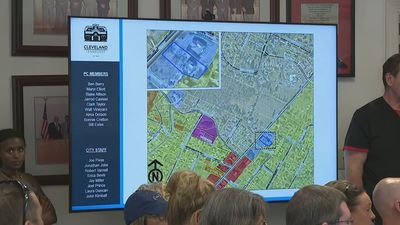
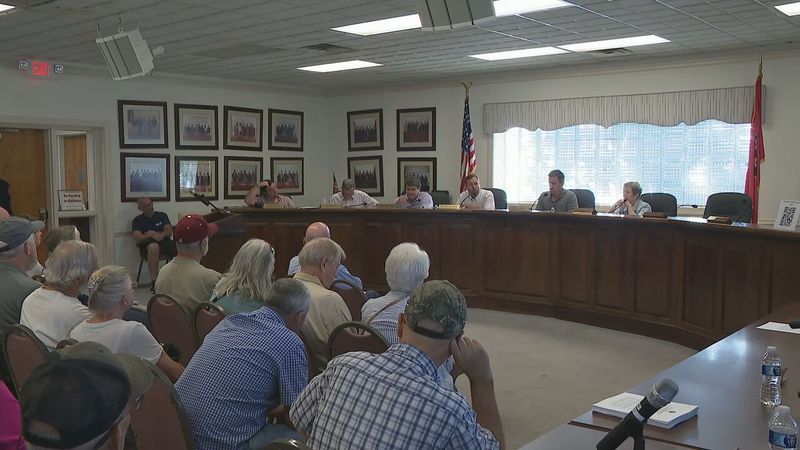
Just last week,residents packed a Cleveland Planning Commission meetingover a separate Wright Brothers proposal involving nearly 400 acres, with much of the concern centered on fears that a data center could eventually be developed there.
Those concerns mirror a growing national backlash as communities across the country grapple with the enormous amounts of electricity, water and land some data centers can require.
Those concerns included questions about electricity and water use, noise, traffic and what future industrial development could mean for surrounding communities.
Project River’s developers are clearly trying to answer some of those concerns before the project gets very far.
What they’re promising: A power plant first
The Wright family, founders and owners of Charleston-based Wright Brothers Construction, owns the roughly 850-acre Project River site along the Hiwassee River.
Simpson described the property as stretching from the Interstate 75 bridge along the river toward the marina. The family has owned it for roughly two decades, he said.
The property was submitted Tuesday for annexation into Cleveland and a land-use change.
Simpson said the centerpiece would be an energy complex capable of generating 1,500 megawatts behind the meter.
About 500 megawatts would come from a biomass plant burning Southern pine.
Two natural gas plants would provide another 1,000 megawatts, he said.
Developers say TVA electricity would serve as backup rather than the project’s primary source.
That’s a crucial part of their answer to one of the biggest complaints surrounding data centers nationally: their enormous appetite for electricity and the possibility that infrastructure costs could eventually reach other ratepayers.
Project River says it would pay for its own interconnection and infrastructure and would not increase other customers’ electric bills.
What about the water?
Water has become another flashpoint in communities considering large data centers, particularly those using water-intensive cooling systems.
Project River’s answer is unusual.
Developers say the facility would not draw municipal water for daily operations and would have no intake or discharge pipe running into the Hiwassee River.
Instead, Simpson said the biomass operation itself could become the water source.
Timber arriving at the plant would contain roughly 40% moisture that must be removed before it can efficiently be burned. Simpson said the proposed system could recover about 200 gallons of water per minute during that process.
If the ultimate customer is a data center, he said, that water could feed its cooling system.
The project’s formal announcement says that after an initial fill, captured water would continuously circulate through a closed-loop system.
And the noise?
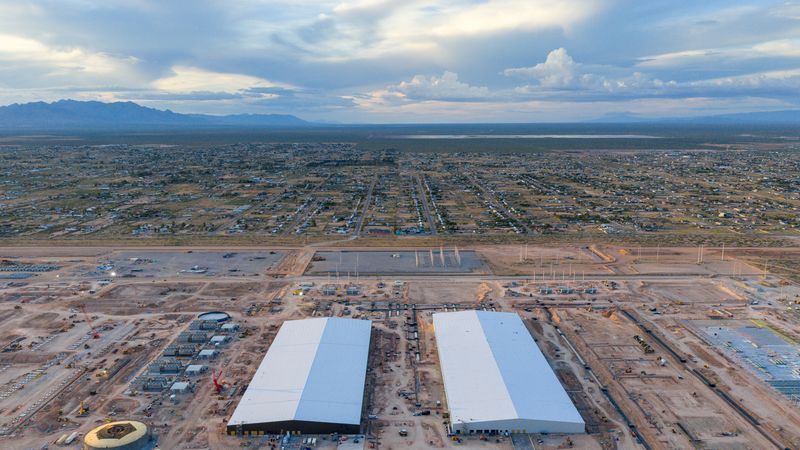
The developers also say Project River would not need the diesel backup generators commonly associated with some data centers and would be designed to meet local property-line noise standards. (File photo by Brandon Bell/
Simpson also addressed another concern already being raised locally: noise.
He said the property sits behind a large natural ridgeline and that preliminary plans would put the building pad 80 to 100 feet below the top of that ridge.
Developers argue the terrain and trees would serve as a natural sound barrier.
Project River says the development would also avoid the diesel backup generators commonly used at some data centers and would be engineered to meet applicable property-line noise standards.
How many jobs?
The project’s biggest headline number is up to 2,600 direct and indirect jobs.
But Simpson’s interview helps break down what that actually means.
If a data center is ultimately built, developers estimate about 900 permanent jobs would actually be located on the campus.
The formal proposal breaks those down as 525 data center positions, 250 power-generation jobs and 125 biomass handling and processing jobs.

The remaining roughly 1,700 jobsin the developers’ estimate would come from the regional forestry industry, including loggers, truck drivers and others supplying timber to the biomass plant.
Simpson tied that part of the proposal directly to the loss of the former Resolute operation and the decline of the area’s timber industry.
“We’re going to put the people that are timber harvesters that lost their jobs when Resolute went down,’ Simpson said. ‘We’re going to put them back to work because we’re going to need that for that power plant.
Developers also estimate construction could support about 3,500 jobs at its peak.
Residents will get their chance to ask questions
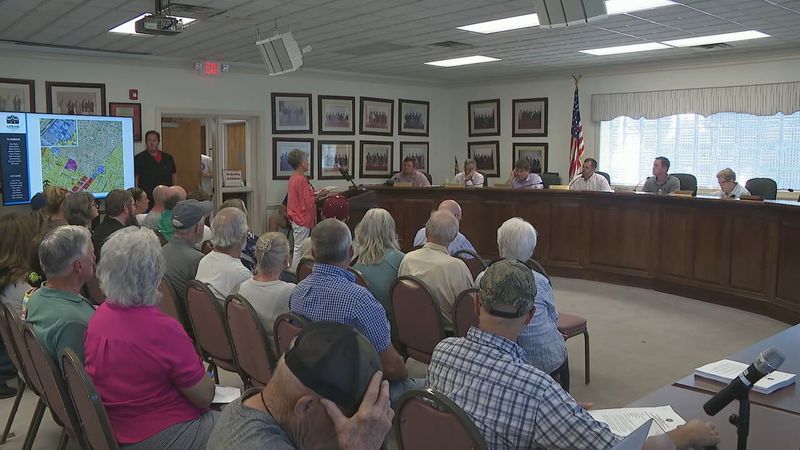
The announcement comes just days after residents packed a Cleveland Planning Commission meeting over another Wright Brothers proposal involving nearly 400 acres. Photo: WTVC
Project River is still at the beginning of the local approval process.
And Wright Brothers is promising residents a chance to question the people behind it directly.
Simpson announced two public meetings at Cleveland’s PIE Center:
- Tuesday, Sept. 1, from 6 to 8 p.m.
- Saturday, Sept. 12, from 10 a.m. to noon
Developers plan to make a presentation and take questions at both meetings.
Those meetings could become an early test of whether Project River’s answers about electricity, water, noise, jobs and tax revenue are enough to distinguish it from the data center projects drawing opposition elsewhere.
Because despite the uncertainty over exactly what will consume Project River’s electricity, Simpson acknowledged Wednesday that the possibility dominating the conversation in Bradley County is very real.
A data center, he said, is “very likely.”
Depend on us to keep you posted.
EARLIER:Data center fears spur crowd as Cleveland reviews 400-acre annexation request from builder
