

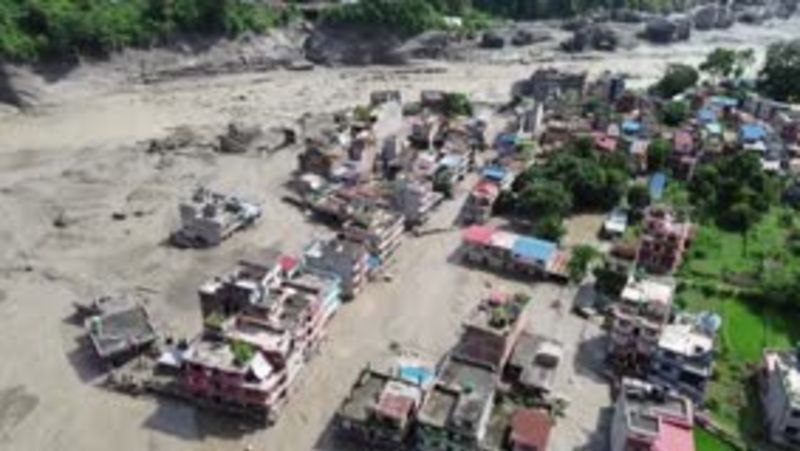
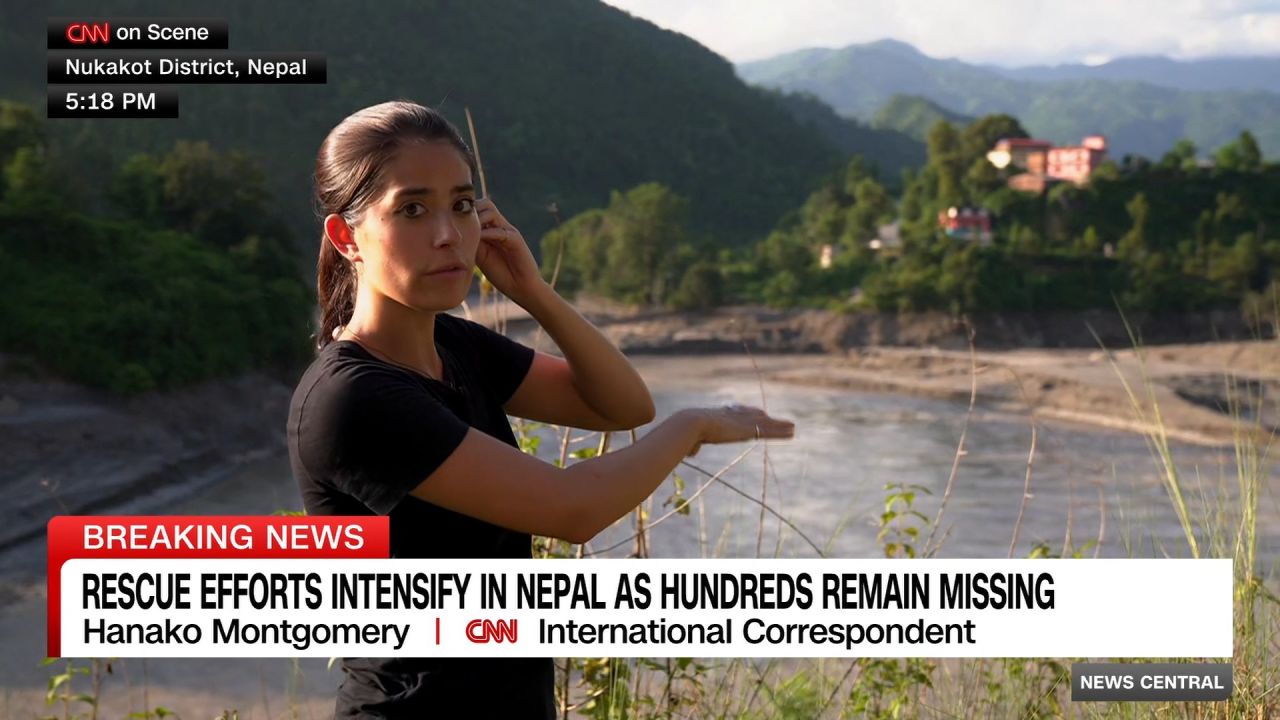
CNN team in Nepal see huge damage caused by flash flooding
5:26•ng
5:26
• Hundreds missing:More than 1,300 people are missing — including at least 700 foreigners — after catastrophic flash flooding hit China and Nepal on Wednesday. The death toll in Nepal has climbed to more than 350 people as search and rescue operations are hampered by a lack of connectivity, power and re
• Secondary threat: Landslides have created a new lake, increasing the risk of landslides, mudslides and flash floods, with three days of rainahead and collapsed earth forming unstable dams, China’s state media said.
• Crushing floodwaters:Dramatic footage shows a torrent of water hitting the mountainous region, submerging villages and wiping out bridges. The US Geological Survey said a glacial collapse — when a large section of ice breaks off a glacier and falls down a slope — was behind the disaster.
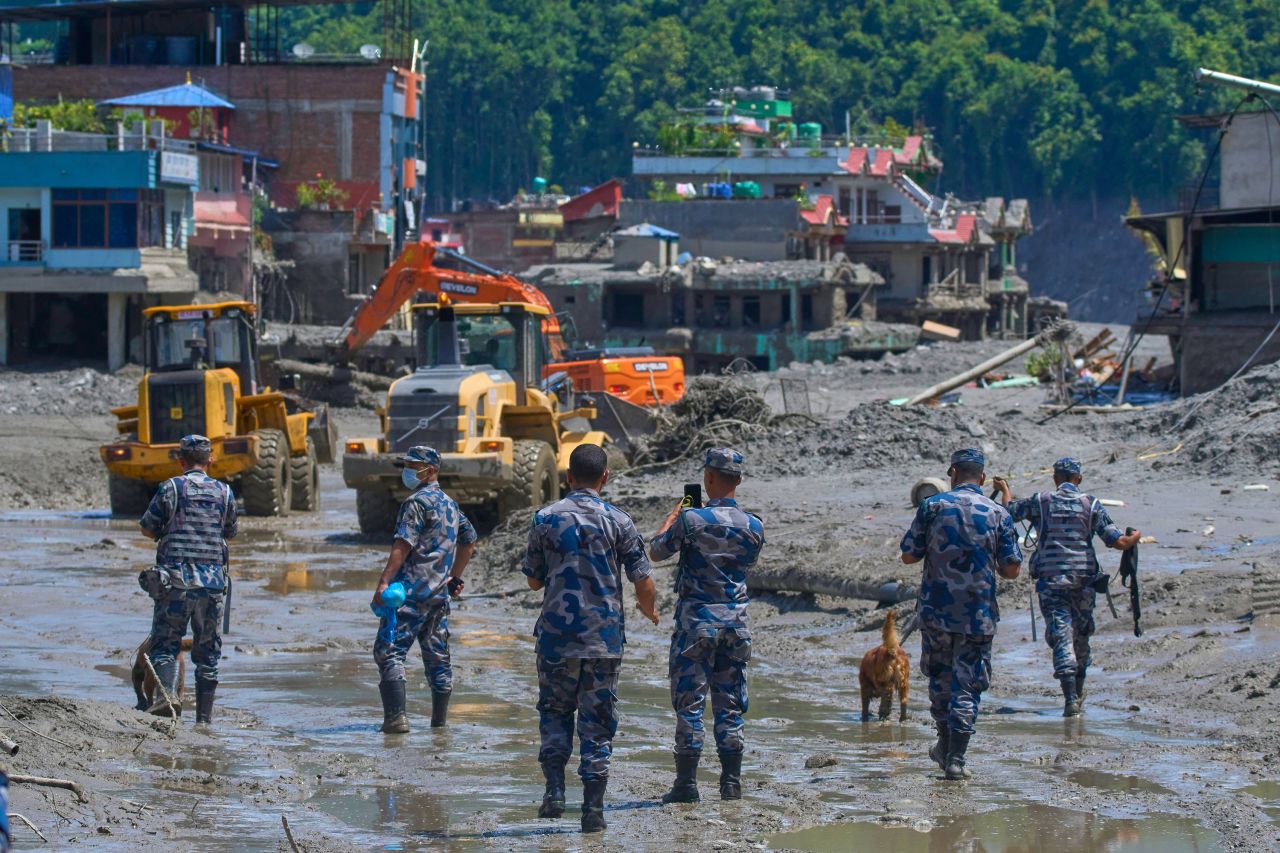
Nepalese policemen watch as earthmovers clear the debris of flash flooding in Nepal’s Nuwakot district, Thursday, Aug. 27.
With at least 353 deaths recorded in Nepal and hundreds of people still unaccounted for following yesterday’s flash floods, authorities have published a website for “unidentified and unclaimed” remains.
The website, which is being continuously updated, so far has at least 80 pages, each with 20 entries of remains.
Sharing details on X of the site, which features graphic imagery, Nepal Police said it allows people to see details of bodies affected by the catastrophic floods in the areas of Bhotekoshi and the Rasuwa district.
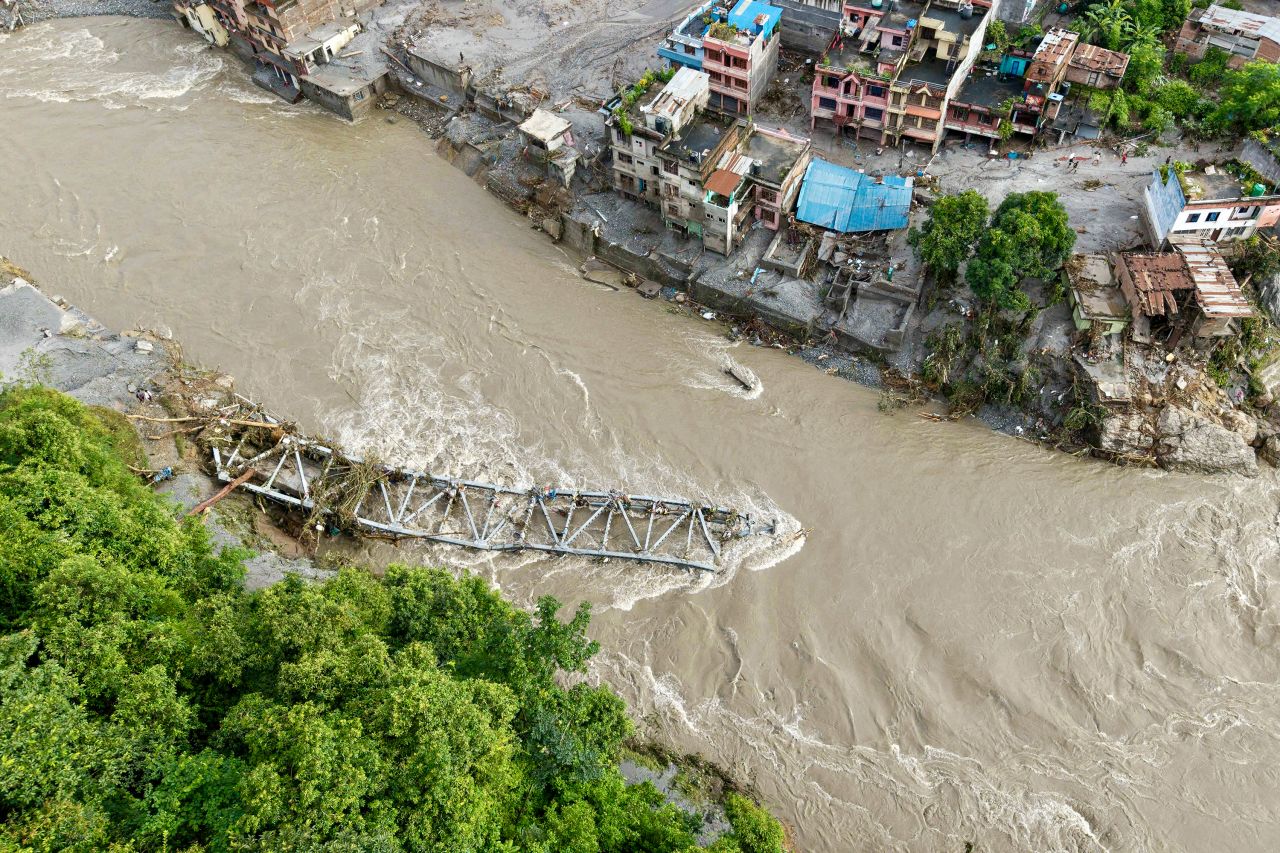
An aerial view shows a collapsed bridge along with houses lying deluged in sludge after flash floods at Devighat, Bidur Municipality in Nepal’s Nuwakot district on August 27.
Around two hours from Kathmandu a CNN team drove along the Trishuli river, flowing high, its waters blackened by silt and debris washed down from the high Himalaya, in the latest natural disaster to hit Nepal.
A one-lane bridge over one of the Trishuli’s tributaries was twisted from its foundation, with foliage and debris washed up on to the road. Men in high viz worked with power tools to cut trees free as around 50 people gathered to watch as the sun beat down.
A newer bridge built alongside it was still standing, but warped, and only just passable by car.
Five minutes further on, a bigger bridge across the still-raging Trishuli was cleaved cleanly in two. Next to it, one of the pedestrian-only wire-and-metal single bridges that link hundreds of small villages across Nepal’s hills was still standing, but twisted and warped.
In Rata Mate town in Nuwakot municipality, the road ends. Thick mud more than six inches deep prevents vehicles going further despite the best efforts of three JCBs working to clear the blockage. Some people try to pass on motorcycles, others take off their shoes and walk through the mud. A man worked with a shovel to clear the silt outside one building near a truck that was partly buried. The windows on the ground floors of other buildings were almost completely caked up with mud.
In a huddle of anxious people, the local mayor told a police inspection team what happened and asked for support from authorities. He said he had no idea how many people were missing.
Niraj, who didn’t want to give his last name, gestured across the hundred or so meters of silt brought rushing down this valley by the catastrophic flood. “All that was rice fields, and it’s gone,” he told CNN. He said no one had been killed or seriously injured in his town.
Rice is a staple across much of Nepal, and at this time of year, farmers are usually preparing to bring in the crop.
The road along the river winds for hours further through Nepal’s middle hills, up to the high Himalaya at the Chinese border — where the districts hardest hit by Wednesday’s disaster are located. As rescuers race to reopen it, it is likely the toll from Wednesday’s disaster will become clearer.
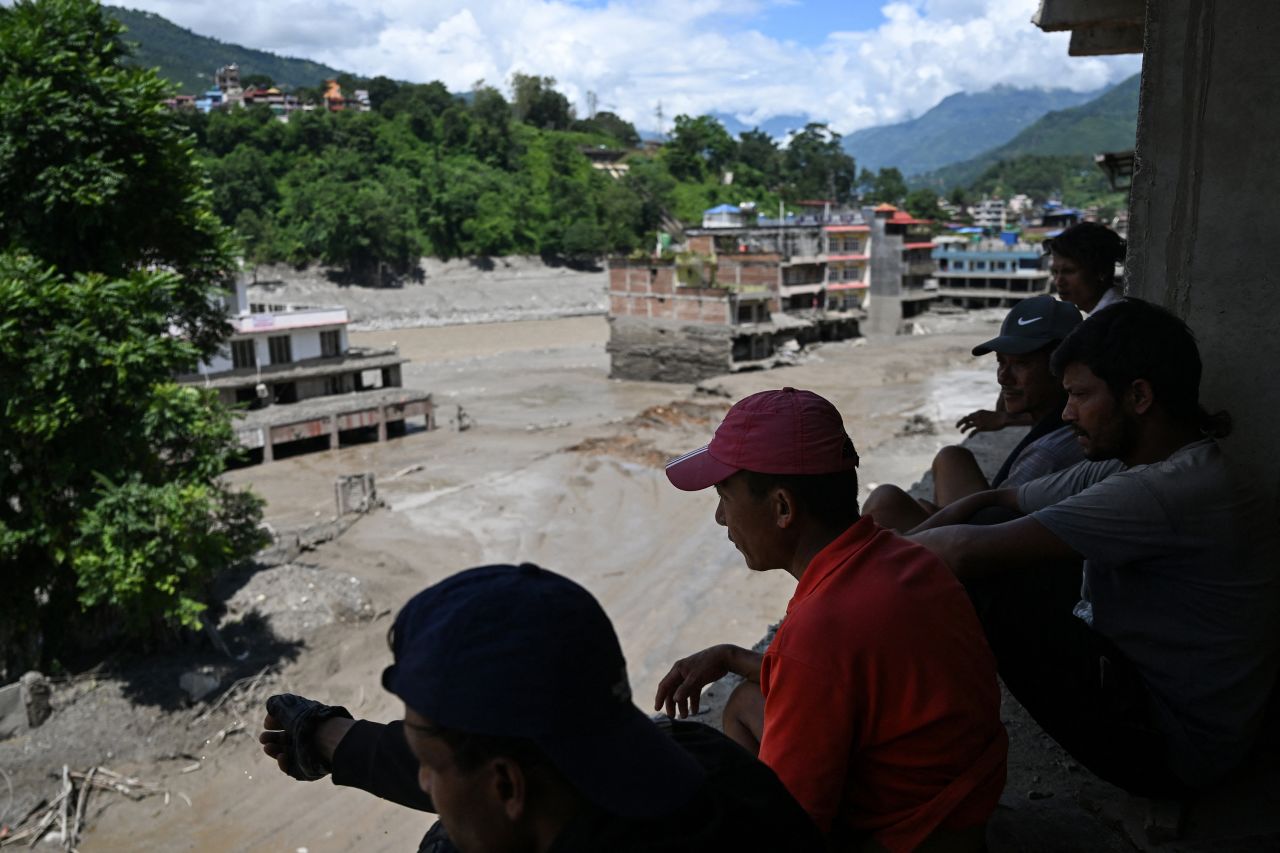
People watch from a rooftop as houses lie deluged in sludge after flash floods at Trishuli in Nepal’s Nuwakot district on August 27.
Nepali authorities are warning about another potential flood surge as water levels in a newly-formed lake rise.
They urged residents and rescue workers on the banks of the Bhote Koshi river to be vigilant and to stay in a safe place given the risk of the lake overflowing.
We reported earlier that Chinese authorities have issued warnings about this lake, which formed on the Nepal side of the border in a scar left by a previous landslide. They’ve said the lake is continuing to expand, and that another 3 million cubic meters of water is expected to flow into it, creating a high risk of a breach.
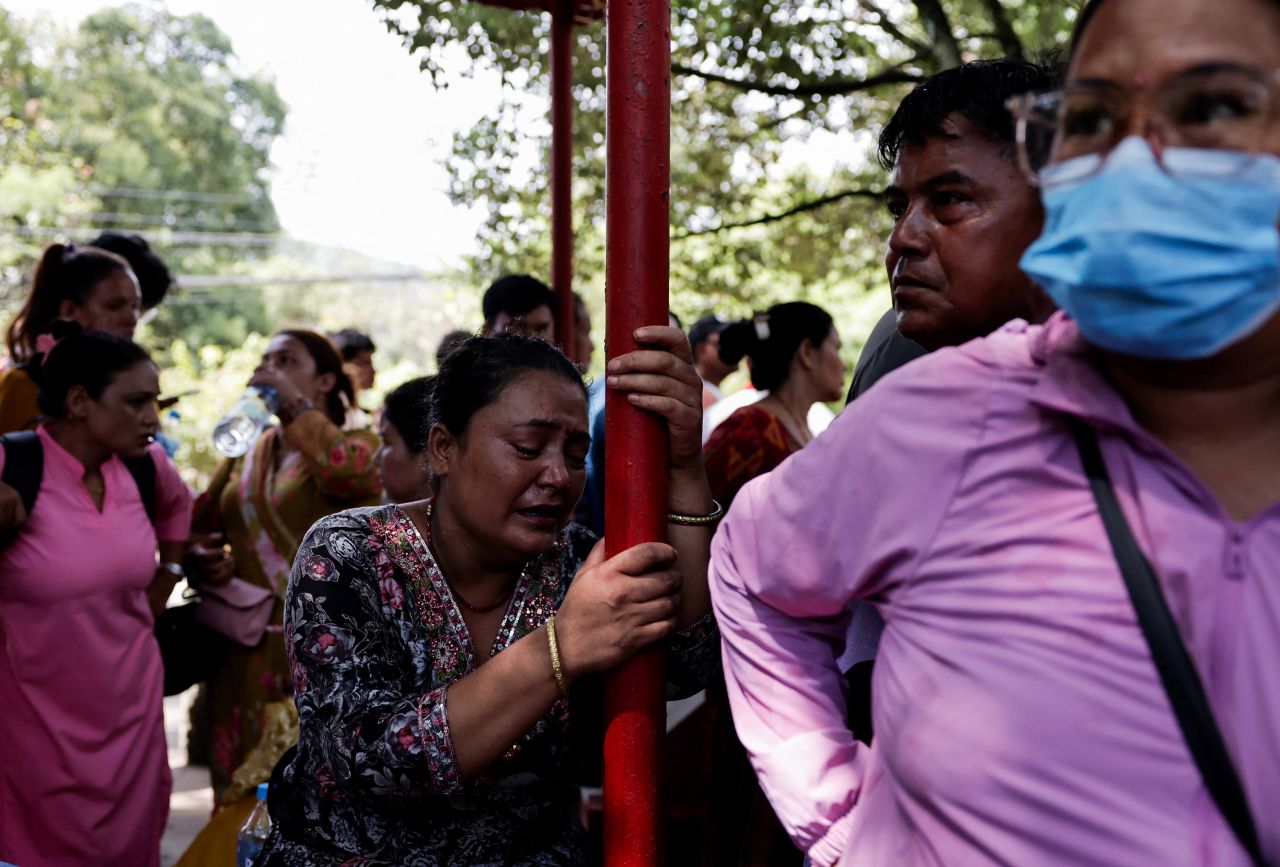
A woman cries as she waits for updates on whereabouts of her missing family member, in the aftermath of flash floods, outside the Maithali Barrack, an army training center in Trishuli, Nuwakot district, Nepal, on August 27.
The death toll in Nepal from the catastrophic flash flooding that hit the border area has climbed to 353, while 826 remain missing, according to police.
An earlier update put the number of confirmed deaths at 270 in Nepal. Search and rescue operations remain ongoing, with foreign nationals and pilgrimage groups among the scores that are still unaccounted for.
These figures do not include China’s Tibet, where state media reported that at least three people died and 558 were missing.
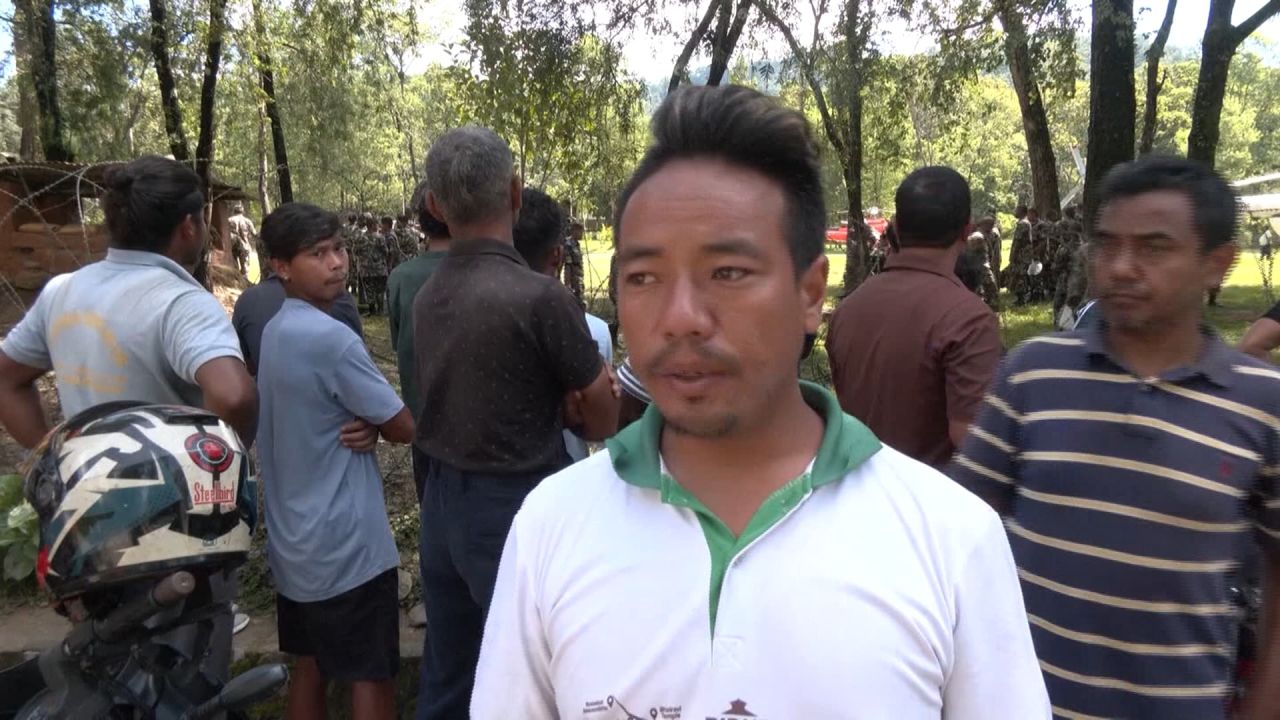
Nepali families worry about relatives while awaiting news
1:15•s
1:15
Nepali families in the flood-stricken region and abroad have been expressing their anxiousness as they await news on missing relatives.
“My father called my younger sister yesterday at around 7 p.m. and said he was going to Timure. By then, it was already around 7:30 or 8 p.m.,” said Nepal resident Bhim Bahadur Tamang.
“Later, when we tried calling him again, his phone was unreachable,” he continued. “Then we heard that a landslide had come down from that side.”
“We still don’t know whether he is alive because we haven’t been able to reach him,” Tamang added. “My brother has also gone there by car to see if he can find our father. We still have hope that our father may be alive.”
Some Nepalese families living abroad said they found out about the devastating flash floods through videos on social media and felt helpless.
In London, 18-year-old Nepalese shop worker Diksha Thapa said she saw videos in which a “whole village is getting swept out.”
In the “videos you can see, like, people screaming and some of the people are like, getting out of the flood, like they’re muddy all over and getting out of there and shaking,” Thapa continued.
“And I saw those videos and I was like, oh, I can’t do anything, but I can just pray. And I was, like, praying yesterday. And I did pray today as well at the morning. And that’s it, I can’t do anything, but I can just pray. That’s all I can do.”
A lack of connectivity, power and re any survivors from the flash floods that devastated riverside communities in northern Nepal
Even just trying to establish how many people are missing is proving difficult.
Locals say they have no power and no way of checking in with their friends and family to let them know that they are alive. Meanwhile, one mayor said they have no idea how many people are missing from that one town because there is no connectivity and not enough helicopters.
The river remains swollen and several bridges along it have been destroyed, meaning that locals cannot reach the other side and ascertain who needs rescuing. And some roads remain blocked with mud, restricting access to the worst affected areas.
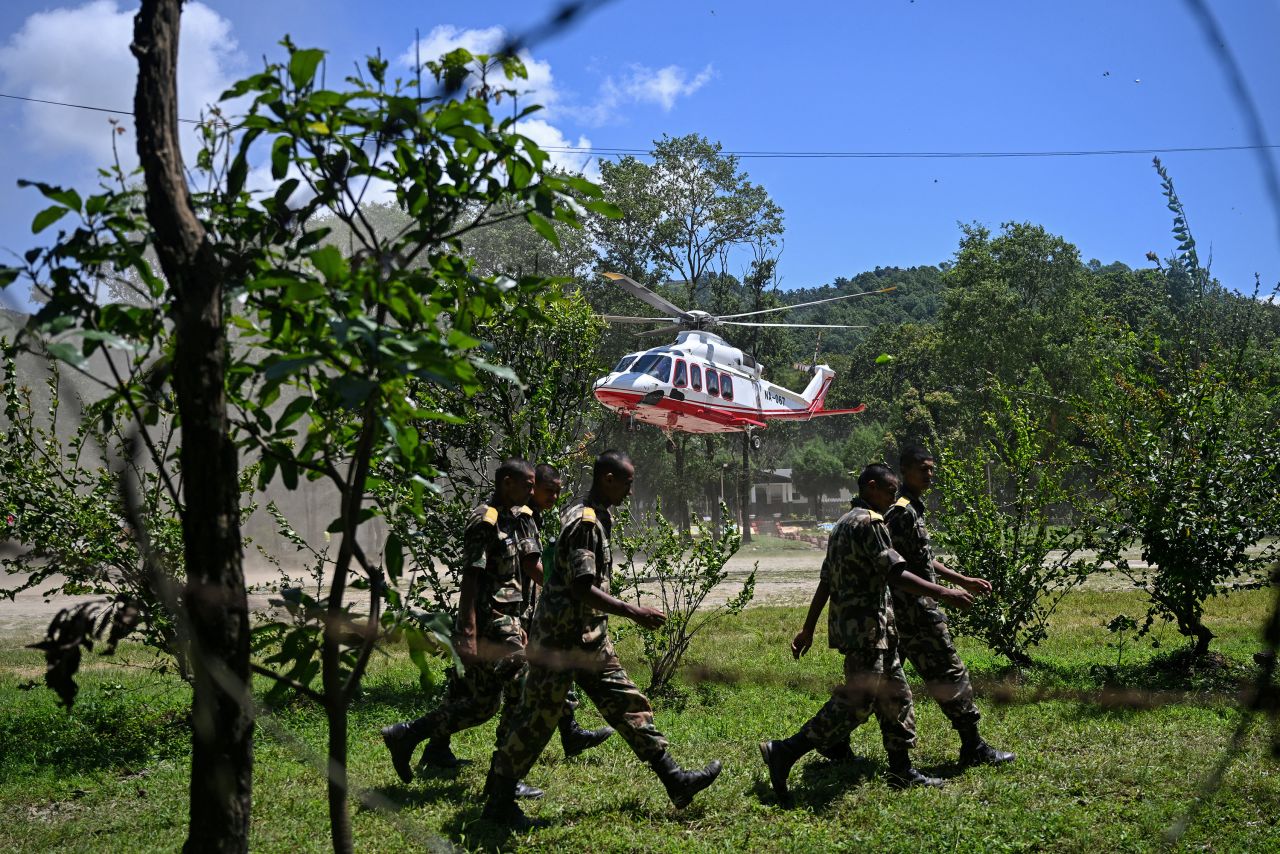
Army personnel walk past a helicopter landing with rescued flood-affected residents at an army camp in Nepal’s Nuwakot district on August 27.
Dozens of foreign nationals have been rescued amid intensifying efforts to find more flood survivors in Nepal and China.
The Nepal Tourism Board said 27 tourists had been rescued in the flood-stricken district of Rasuwa, including two US nationals, 11 Indian nationals, four South Koreans and two Italians.
“All efforts are underway to rescue/evacuate the injured and stranded people,” it said in a statement on X.
Italian authorities have been able to contact 130 nationals who were previously unaccounted for, Italy’s foreign ministry said.
At least 700 foreign nationals visiting the mountainous region are among the more than 1,300 people missing following the devastating flash floods that hit Nepal and China on Wednesday.
A forecast model shows the timing for rainfall in the area.
Thunderstorms are possible for at least the next couple of days in the flood zone, as a notoriously wet seasonal weather pattern continues.
The region is in its monsoon season, so daily chances of rain are the norm. Some places could pick up multiple inches of rain in a few hours, while others see much less or even stay completely dry.
It’s difficult to pinpoint exactly where the most drenching downpours will occur, but the hardest-hit areas could experience them, which could challenge search and recovery efforts.
Nepal’s monsoon typically lasts from June through September. The country sees about 80% of its rainfall during this time.
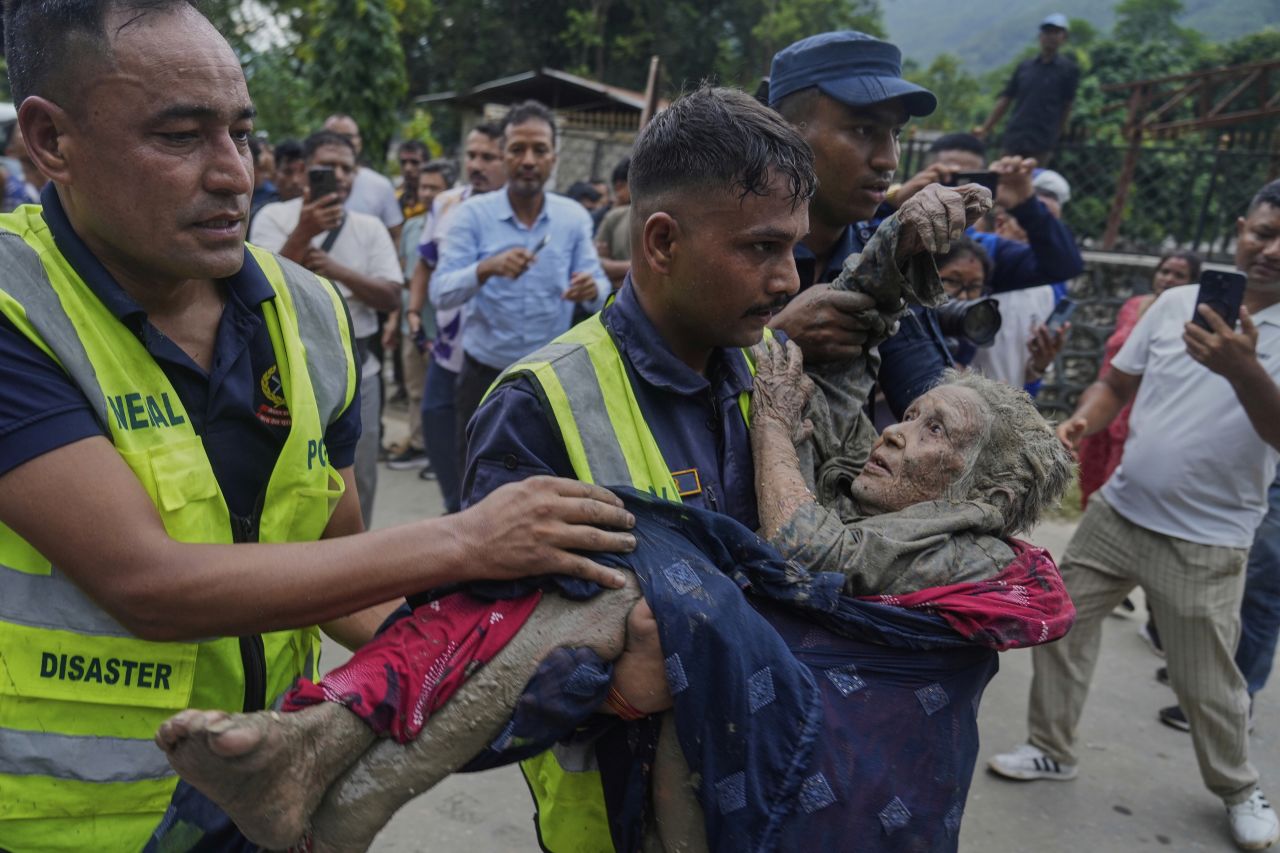
Rescuers carry a victim of flash flooding to safety along the Trishuli River in Nepal’s Nuwakot district, Wednesday, Aug. 26.
Rescue efforts are intensifying in Nepal and China, where at least 270 bodies have been found following devastating flash flooding,while more than 1,300 remain missing—including more than 700 foreign nationals who were visiting the mountainous region, authorities said.
A catastrophic wall of water crashed through a valley, sweeping aside critical infrastructure and making it difficult to access the area, rescue victims and assess the scale of the disaster.
Heart-wrenching appeals are pouring in as families desperately await news of loved ones who have been unreachable for more than 24 hours.
- Over 1,300 missing: The number of people listed as missing in Nepal rose to 826 – including 517 foreigners, according to Nepalese authorities. At least 558 are still missing on the Chinese side – including 260 foreigners – local officials said. This brings the total number of missing people to at least 1,384.
- Rescue efforts:Chinese emergency responders arrived at the core disaster zone along the China-Nepal border, where teams are contending with major road blocks from mud and debris. In Nepal, rescue helicopters are struggling to land in affected areas due to high floodwaters. The European Union and India are among those that have announced plans to send humanitarian aid.
- Flood trigger: A glacial collapse was behind the flash flooding in Nepal’s Rasuwa district, according to the US Geological Survey. Scientists said a huge chunk of ice plunged into the valley below, picking up sediment that was already waterlogged during the ongoing monsoon season. “No earthquake had occurred,” the USGS confirmed.
- Ongoing threat:China has warned of a potential secondary disaster, with more rain forecast for Gyirong County this week. The region is already prone to landslides, mudslides and flash floods, according to state broadcaster CCTV.
- Dalai Lama:TheDalai Lama offered his prayers on Thursday to those killed in the disaster and pointed to climate change as a possible underlying cause.
CNN’s Bhadra Sharma, Jerome Taylor, Laura Paddison, Lex Harvey and Sylvie Zhuang contributed reporting.
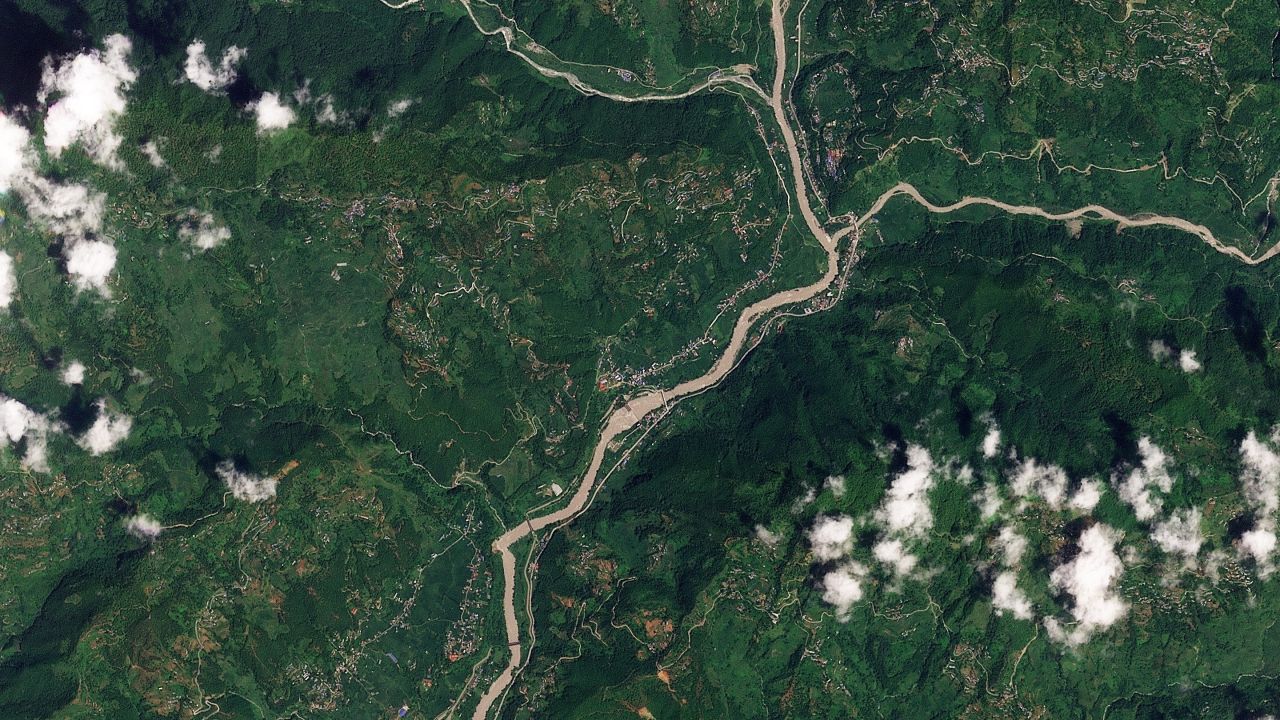
Satellite image shows before Trishuli river flooded in Betrawoti Bazaar, Nepal, on August 23, 2026
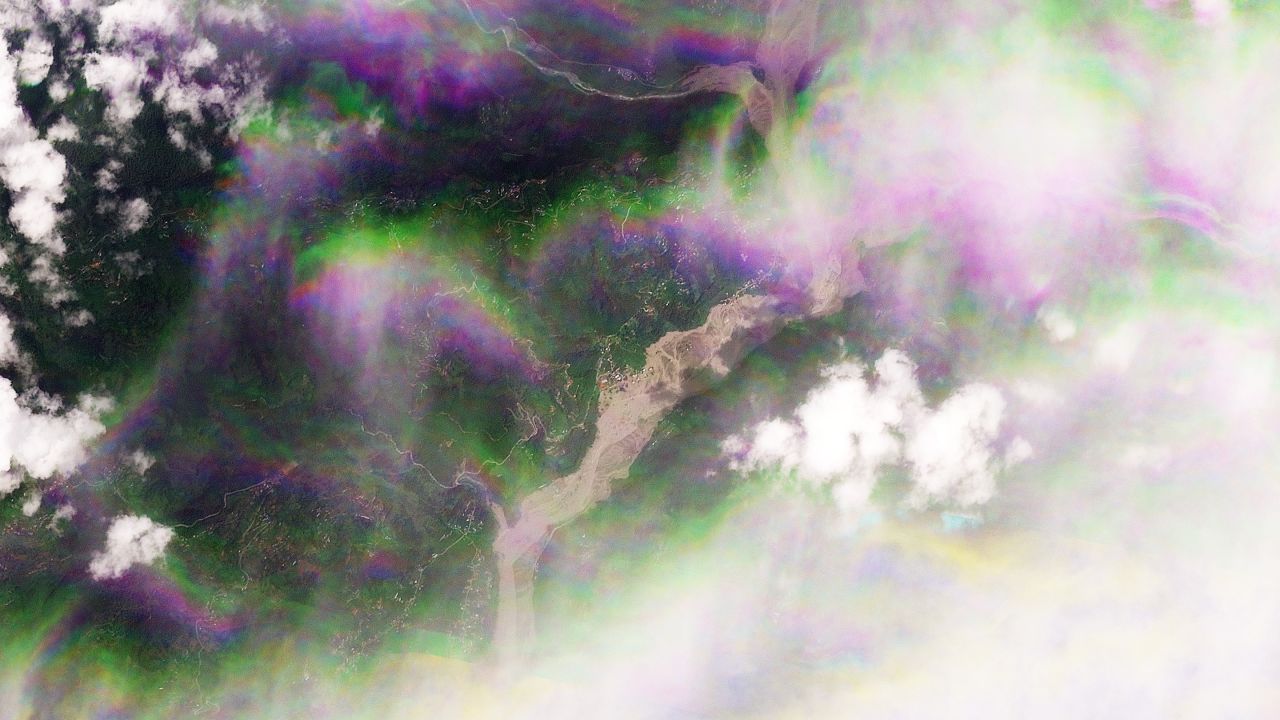
Satellite image shows after Trishuli river flooded in Betrawoti Bazaar, Nepal, on August 26, 2026
Satellite imagery from Planet Labs illustrates the extent of the flooding in Nepal, and how much it has devastated the landscape.
In images captured yesterday, Trishuli River is markedly swollen, with muddy water flooding buildings along its banks and a bridge no longer visible, seemingly swept away by the powerful force of the flood.
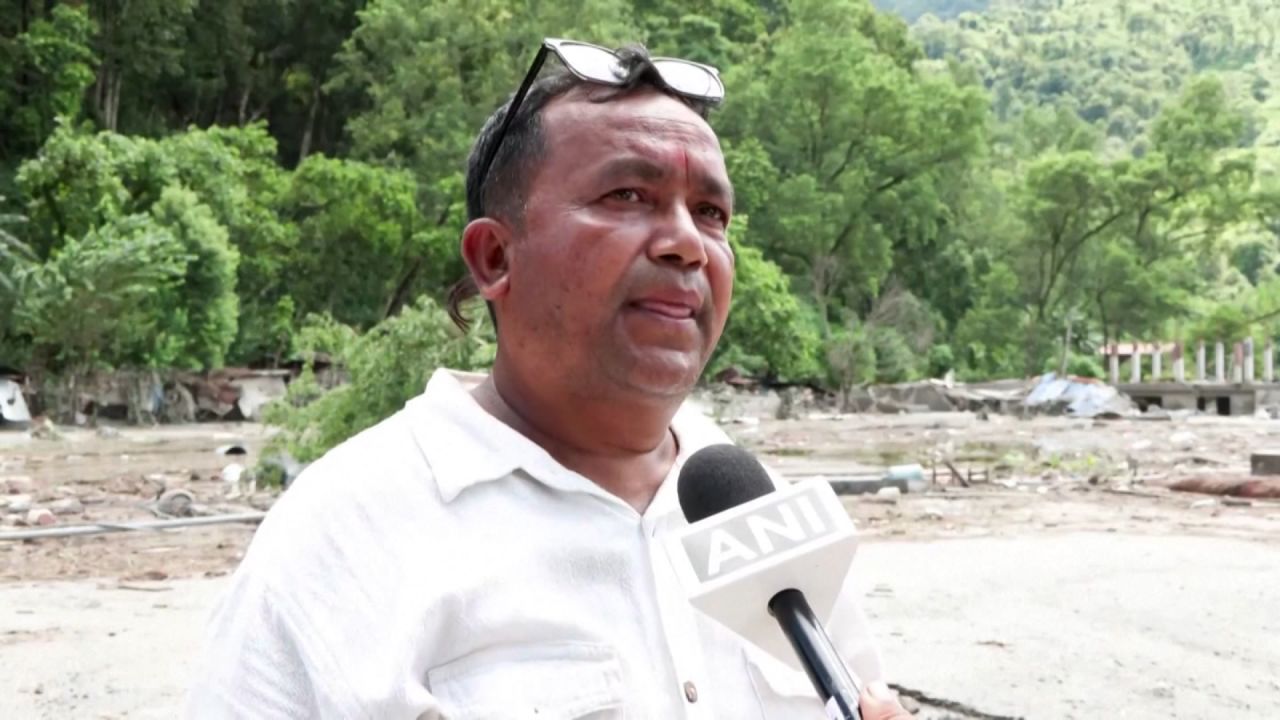
“Exploded like a bomb”: Survivors in Nepal detail devastating floods
0:27•ating floods
0:27
Survivors of the deadly floods in Nepal are recounting the horrors of its onset and detailing the challenges that lie ahead.
“It (floods) came in suddenly and exploded like a bomb,” flood survivor Janak Bahadur told Reuters. “The river looked small from distance but it suddenly started overflowing and swept through this place.”
“We are facing a lot of challenges and the biggest one being blocked roads… as of now, we are not able to tell how many people are still stuck or buried under the debris as there is no way to reach the spot,” said another survivor.
Rescue efforts in Nepal have been hampered by the destruction of many roads and bridges, with rescuers relying on helicopters to reach survivors stranded by the catastrophic flash floods.
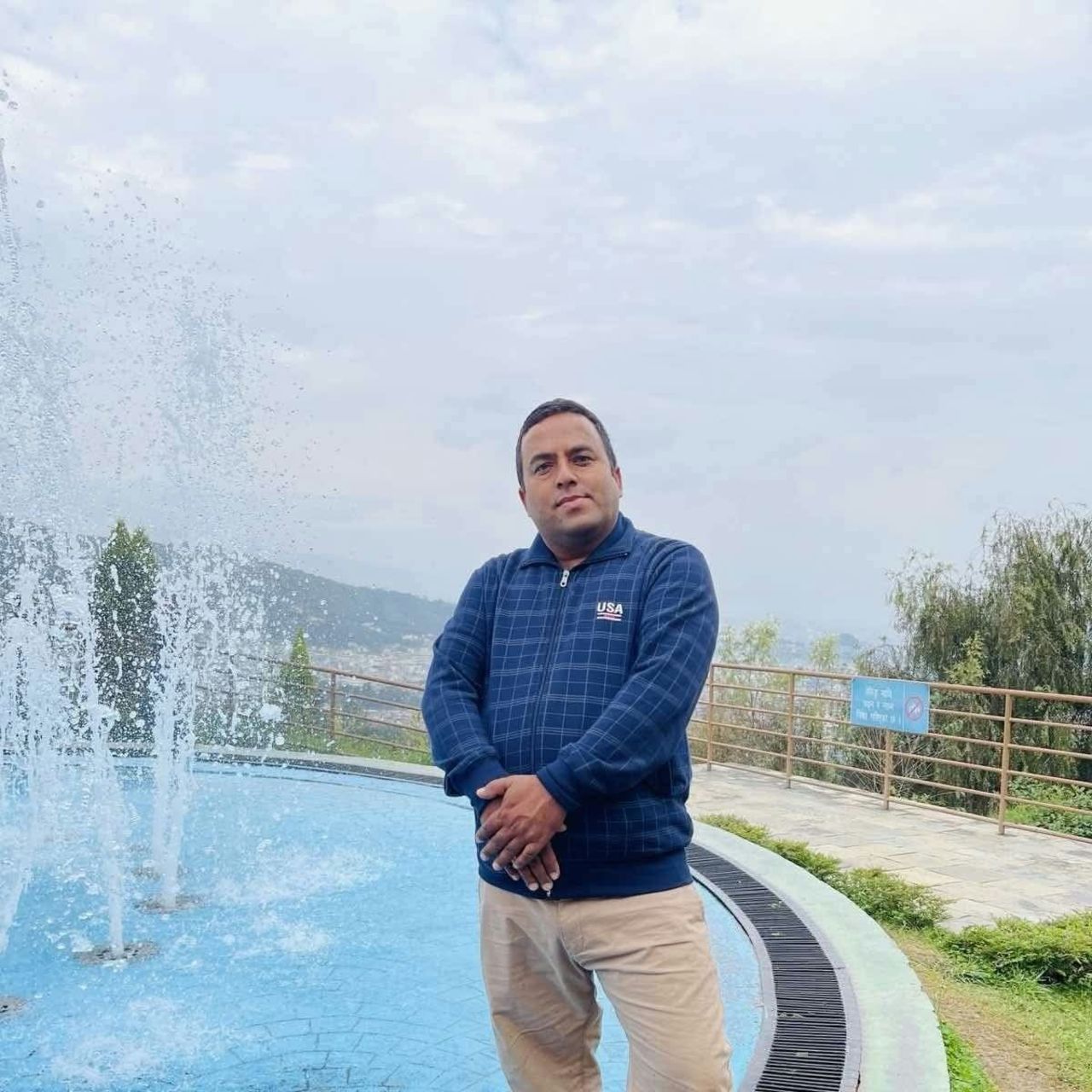
Navaraj Nepal, 42, has been missing since Tuesday.
Sumit Nepal issued a heartbreaking appeal for his father, whom he has been unable to reach since Tuesday.
“I don’t know what happened to him or whether he is alive,” Nepal told CNN through tears.
His father, Navaraj Nepal, 42, was working as an accountant for a local construction firm in the flood-stricken district of Rasuwa when the floodwaters swept through the area.
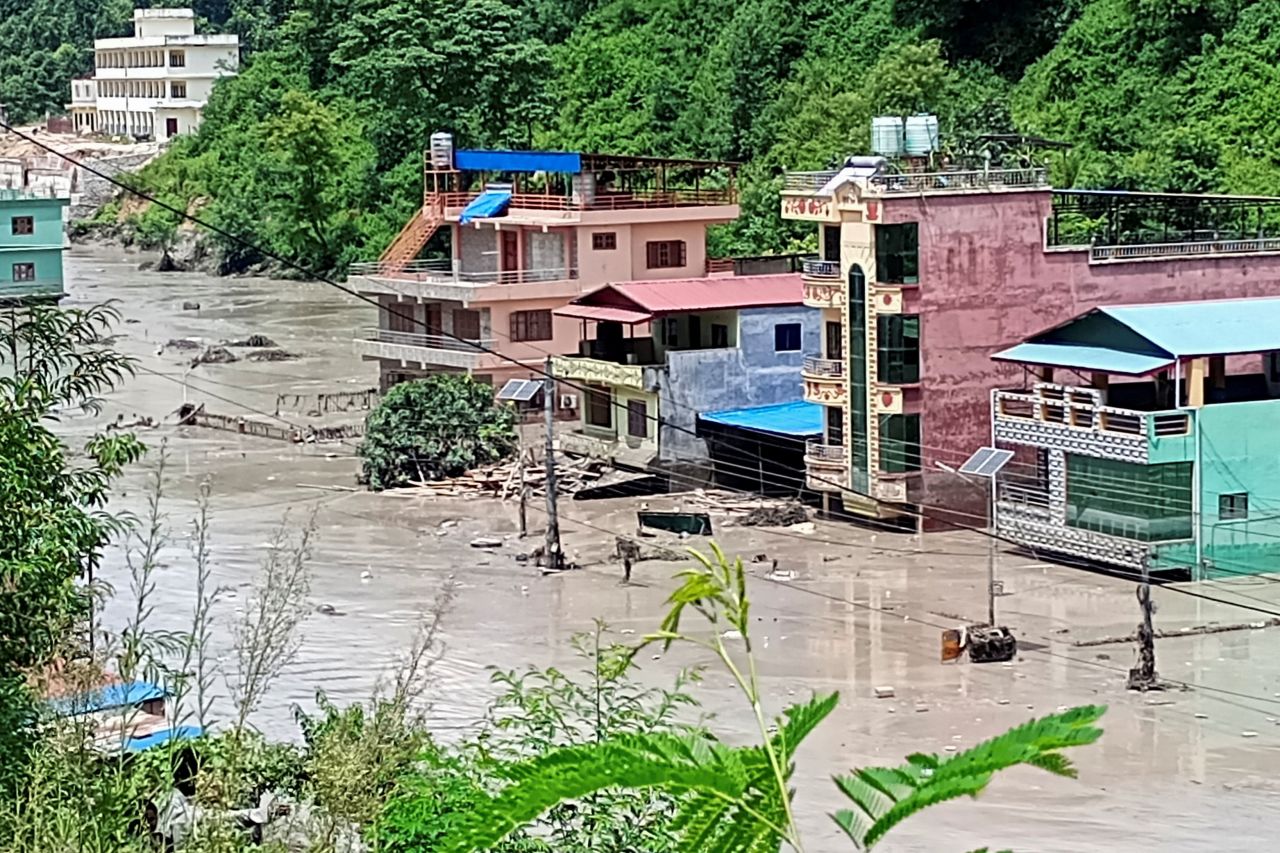
A flooded road following a flash flood in Galchhi in the Dhading district, Nepal, August 26.
The Prithvi highway that links Kathmandu to much of the rest of Nepal, as well as giant southern neighbour India, is usually full of trucks and buses bringing people and goods to and from Nepal’s capital.
But as of Thursday afternoon local time it was all but deserted, a CNN team saw, with just a few private vehicles navigating its twists and turns.
Police at a checkpoint on the outskirts of the capital told a CNN team that the road was passable at least up until Galchhi, around 50 kilometers west of Kathmandu.
At Galchhi the road splits, with the northern route heading up towards Nuwakot and Rasuwa municipalities and then the China border at Gyirong, the areas devastated by Wednesday’s flood.
Local media and officials have reported that several bridges linking settlements along that route were washed away by the flood yesterday.

Tom Fletcher, UN Emergency Relief Coordinator attends a conference in Berlin, Germany on April 15.
Emergency response teams have been mobilized and more are on standby following Wednesday’s devastating landslide and flood in Nepal, the UN’s humanitarian chief said, as governments around the world rushed to offer help.
The United Nations, which is coordinating international relief efforts, said earlier that World Health Organization staff are already on site with enough medical kits for 10,000 people for three months, as well as tents and logistics support.
“I’ve allocated initial 2m USD from UN Global Emergency Fund CERF to save lives with emergency medical care, shelter, water,” the UN Under-Secretary-General for Humanitarian Affairs Tom Fletcher wrote in a post on X, describing the flash floods as “horrifying.”
Save the Children has started deploying staff to Nuwakot District in Nepal, and the Nepal Red Cross has dispatched 200 emergency shelter packages, according to the UN.
Governments around the world have pledged emergency support to help rescue victims of the floods in one of the world’s poorest countries, as rescuers battle to reach hard-hit areas cut off by the disaster.
US Secretary of State Marco Rubio and Canadian Prime Minister Mark Carney both offered their condolences Wednesday and pledged support for the government. India and the European Union also pledged support for relief efforts.
Nepal’s army and police are on the scene already, while Chinese state media said emergency responders had arrived at the Gyirong border port, the core disaster zone, on Thursday, after they were delayed by blocked roads and poor weather.
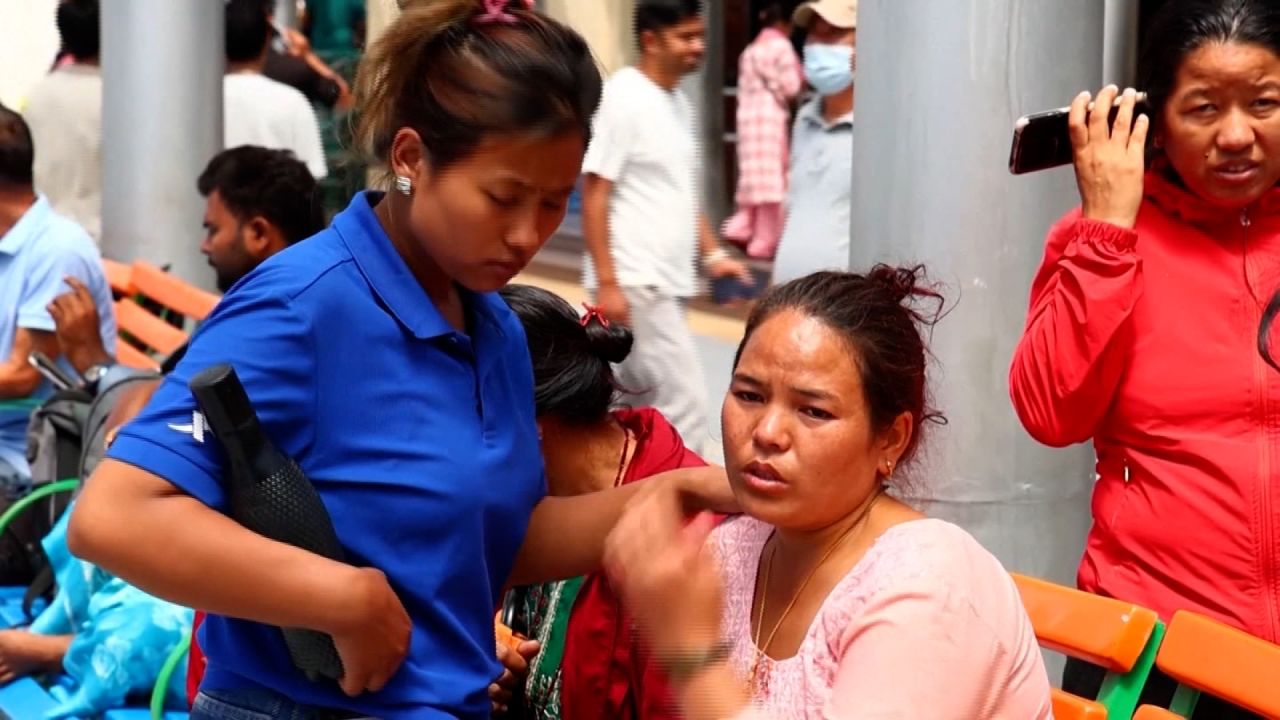
Families anxiously wait for news of their missing loved ones
1:12•ones
1:12
Thousands of families are waiting for news of their missing loved ones, remembering the seemingly ordinary conversations they last had with them.
When Subina Tamang spoke to her husband yesterday morning, he said he would send instant noodles, walnuts and chocolate for their children.
“He said he would be coming soon, but he didn’t,” Tamang told Reuters, breaking down while waiting outside a Kathmandu hospital. “All I want is that my husband comes back to me safely in one piece. I do not want anything else.”
People have gathered at the hospital to register the names of their missing loved ones and to check lists posted outside in the hope that they might, somehow, have made it to Kathmandu.
“My son is stuck in the floods,” Chamindi Shreshtha told Reuters. “He is a truck driver and he said he was driving. And we last spoke at around 8.30. After that there is no news of him. We are not able to find out anything.”

Mount Kailash is seen in the south west Tibet autonomous region of China.
The single largest known group of Americans caught up in the Nepal-China flooding disaster was on a trip organized by spiritual group the Isha Foundation.
Twenty-two Americans traveled to Mount Kailash in a group that consisted of 77 foreigners, including 12 Canadians, 11 Australians, nine Britons and others from Germany, France and other nations. Three Nepali volunteers were also supporting them, an Isha Foundation spokesperson told CNN.
The group was at the Gyirong immigration center, having just completed a journey to Mount Kailash, when floodwaters surged through the building and much of the town, the spokesperson said.
The organization’s leader Sadhguru said in a statement to CNN that he’d lost contact with the group and appealed for permission to reach Gyirong with a small volunteer team. He said the American embassy was among those working on access.
Isha Sacred Walks runs annual pilgrimages to Mount Kailash and other sacred sites. Logistics on the ground in Nepal and Tibet are handled by The Trekkers Society, a Kathmandu-based operator that has specialized in Kailash Manasarovar tours since the late 1990s.
The Trekkers Society said it lost contact with the tour group after the flood and has had no word from its people on the ground.
The Isha Foundation has a US presence, including operations tied to its Tennessee center, and coordinators said they have been in touch with families in the United States.
Authorities in Nepal say 65 US citizens are missing in the disaster, according to the latest count.

Rescuers carry the body of a victim of flash floods in Nepal’s Nuwakot district on Thursday.
A total of 270 bodies have been found in Nepal after deadly floodwaters swept the country, Nepal’s police said in an update on X Thursday.
Catastrophic flash flooding swept through the Himalayan border areas of Nepal and China’s Tibet on Wednesday. Previously authorities had confirmed over 177 people killed.

A satellite view shows collapsed glaciers in Langtang, Nepal, on Wednesday.
Scientists are still unpicking the exact causes of the devastating flooding on the Nepal-China border but here’s what we know so far.
At 8:37 a.m. local time Wednesday, an vast chunk of glacier sheared off the mountainside and plunged around 1 kilometer (0.62 miles) into the valley below, according to a team of international scientists, which has been poring over satellite images and other data.
The US Geological Survey says the event created the equivalent of a 5.2-magnitude earthquake.
A glacier collapse alone would not have been enough to generate such an enormous amount of energy, “so there had to be something else involved,” said Daniel Shugar, a geologist at the University of Calgary in Canada, who is part of the scientific group. They believe a landslide likely happened at the same time.
The force with which the ice and rock tumbled downward would have melted the ice, Shugar said. The torrent would also have picked up moisture-laden sediment as it went, creating an exceptionally-powerful wall of water able to swallow everything in its path.
Scientists say there is still work to be done to establish exactly what happened and what made the flooding so deadly. It’s “just a gobsmackingly unbelievable amount of water,” Shugar said. “Figuring out where that water came from is is actually probably the hardest thing about all this.”
Chinese Premier Li Qiang today visited one of the areas in Tibet worst affected by the deadly mudslide and floods that swept through the China-Nepal border regions yesterday.
Li, who is President Xi Jinping’s second-in-command, visited rescue workers and people displaced by the disaster in Gyirong Town, China’s state news agency Xinhua reported.
The first Chinese emergency responders arrived at the Gyirong border port, the core disaster zone, on Thursday, almost 22 hours after the deadly wave engulfed the area. They were delayed by blocked roads and poor weather.

Nepali bridge swept away by massive floods
0:29•
The deadly floods that coursed through Nepali villages swept up trucks, bridges and other infrastructure in the hilly, remote northern regions of the country, largely known for trade and tourism.
The districts of Nuwakot, Rasuwa and Dhading that sit along the Trishuli river are home to 635,790 people combined, or about 2% of Nepal’s total population of 29 million, according to 2021 census data.
Videos show people fleeing as floodwaters hit bridges in Bidur, the capital of Nuwakot with a population of about 59,000. Nuwakot, a district northeast of the nation’s capital Kathmandu, is a remote rural tourism destination known for its heritage sites and religious temples.
In Rasuwa, which is directly north of Nuwakot and home to fewer than 50,000 people, the natural disaster hit trading towns along Nepal’s border with China. The floods hit trucks, buildings and hydropower projects established along the river district. Viral videos showed rushing waters overtaking Gyirong Port in China, which connected to Rasuwa Port in Nepal.
In Dhading district, which travelers visit for scenic waterfalls, mountains and caves, the floods have also washed bridges away. One video showed the splintering of a bridge in Malekhu, a tourist stop for water sports, food stalls and a wide variety of fish.
