

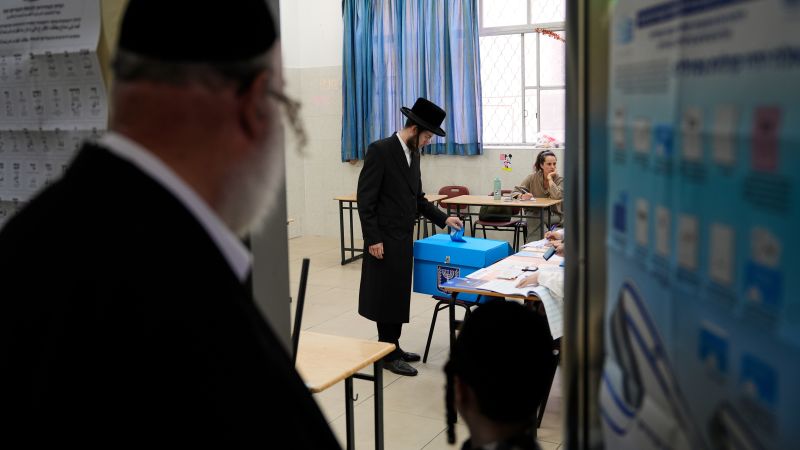
• Crucial election: Turnout in Israel’s election is at the highest levels in more than 50 years. Israeli Prime Minister Benjamin Netanyahu has cast his ballot in an election seen as a referendum on his leadership since the October 7, 2023 attacks.
• Key timings: Polls will close at 10 p.m. local time (4 p.m. ET). Opinion polls suggest a tight race between Netanyahu and his rival Gadi Eisenkot, a former military chief.
• Main issues: Security and accountability are powerful electoral forces after years of war. Opinion polls suggest the economy and cost of living are also leading concerns for many voters.
• Parliamentary make-up:No single party has ever won a 61-seat majority in Israel’s 120-member parliament, or Knesset. Instead, governments are formed through alliances, which can take weeks or even months to form.
Updates
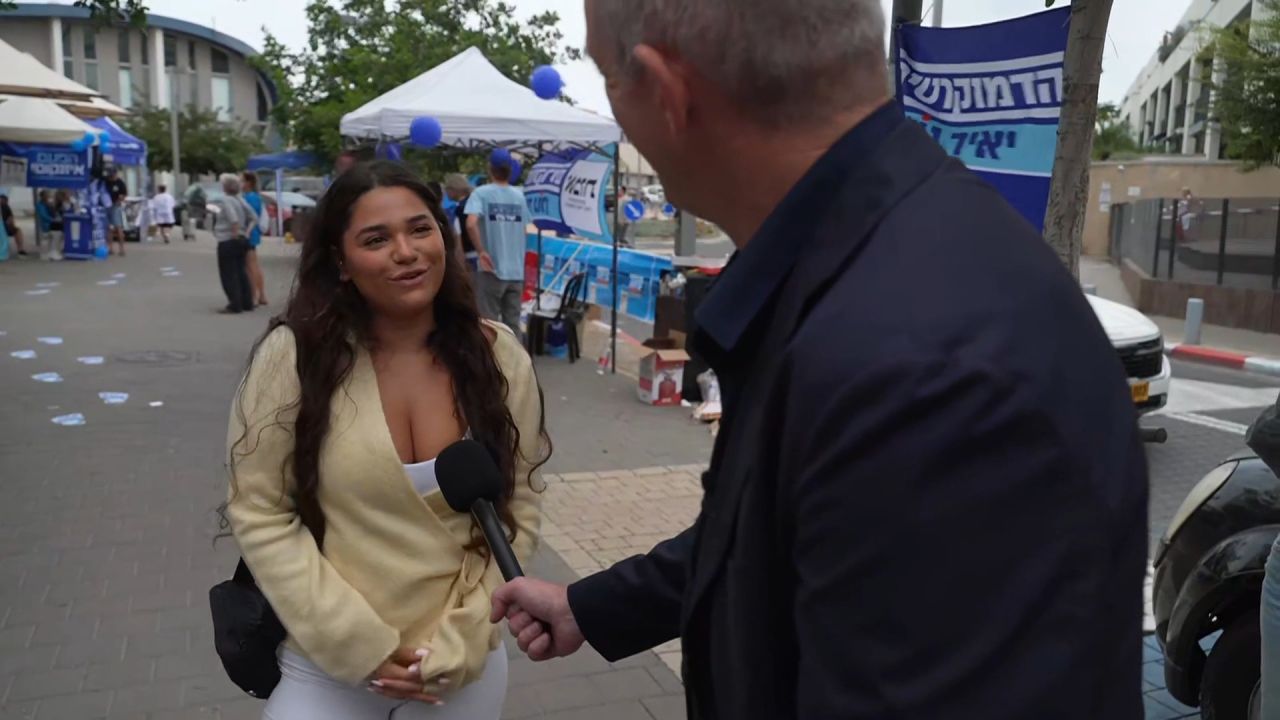
First time voters tell CNN why they’re backing either Netanyahu or opposition figures
0:55•tanyahu or opposition figures
0:55
Young Israelis who are voting for the first time have mostly known a country defined by political turmoil, conflict, and Benjamin Netanyahu.
Security, the economy and accountability rank among their top voter issues. Watch to find out who these young people are supporting – and why.
Israelis are heading to the polls this week in a high-stakes election that could imperil Prime Minister Benjamin Netanyhu’s grip on power. But what is motivating voters? And does the endorsement of US President Donald Trump make a difference?
If you’re on the go and want a deep-dive on the issues facing Israeli voters, listen to this episode of CNN’s ‘One Thing’ podcast.
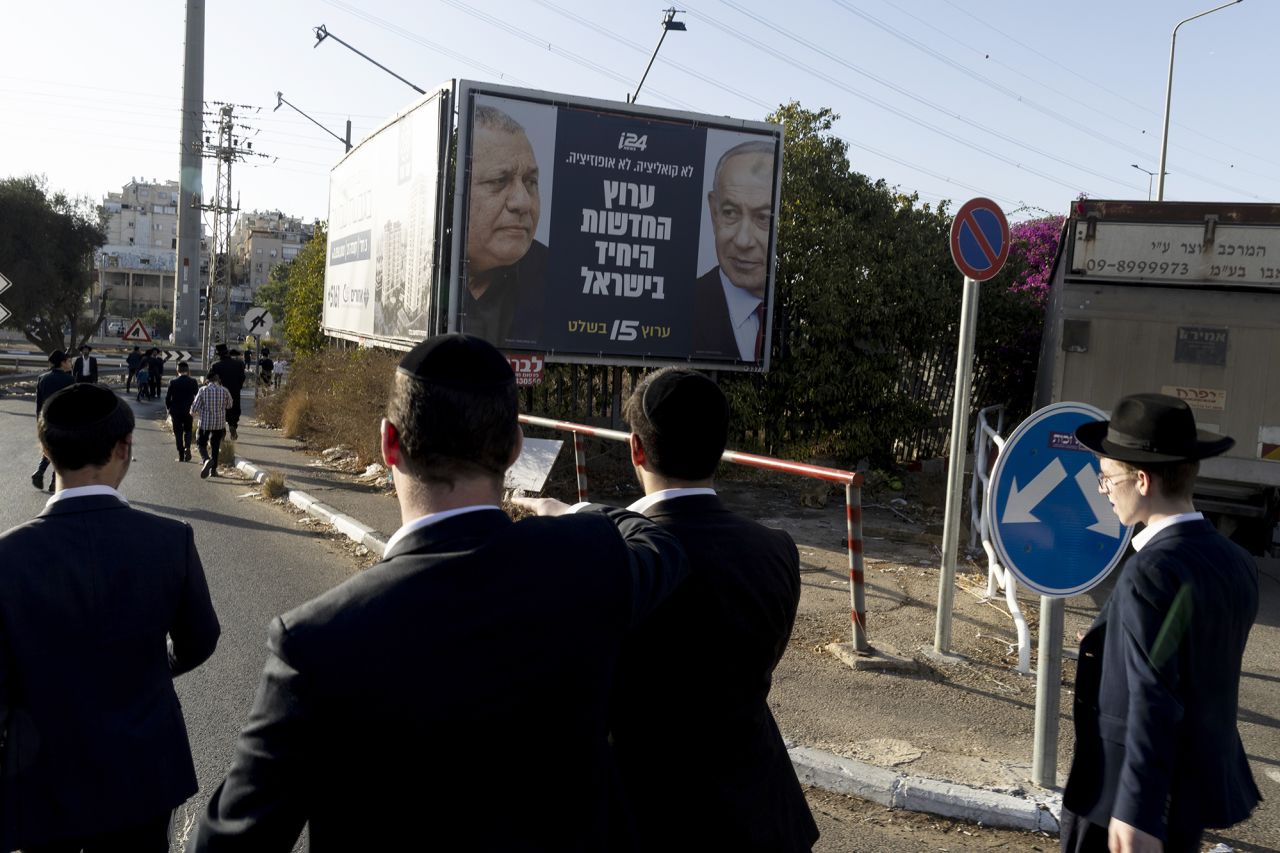
Ultra-Orthodox Jewish students pass by a sign with photos of Israeli Prime Minister Benjamin Netanyahu and head of the Yashar party Gadi Eizenkot during a protest in Bnei Brak, Israel, on October 8.
In Israel’s 120-seat Knesset, no single party wins enough seats to secure an outright majority of 61 seats. In past elections, the biggest party frequently emerges with 20 to 30 seats total.
From there, party leaders must assemble blocs from different parties that work together to create a coalition. The politician who can assemble a bloc of 61 seats is the prime minister. Prime Minister Benjamin Netanyahu’s bloc consists of far-right parties and ultra-Orthodox parties. Although there is some ideological difference between the parties, the bloc has proven itself to be incredibly durable these past four years, and fundamentally loyal to Netanyahu, allowing him to remain in power.
His main rival, Gadi Eisenkot, has a far more diverse bloc of parties with greater ideological differences. Eisenkot’s bloc spans right-wing, centrist and left-wing parties with different approaches to the occupied West Bank and other issues. If the latest polls are accurate, Eisenkot would likely have to rely on some form ofsupport from the Arab parties if he wants to oust Netanyahu, and that adds even more challenges to his political calculations.
The last politician to oust Netanyahu — Naftali Bennett, currently the head of the center-right B’Yachad party — was able to hold his government together for only about 13 months before it collapsed over ideological differences.
This is where Netanyahu has a clear advantage: He commands the loyalty of his bloc in a way that no other politician has.
People across the Middle East are watching the Israeli elections to see who might lead the Jewish state amid fears of further turbulence in the region.
The largest Arab broadcasters are providing rolling coverage of the elections, describing it as a “crucial test” with analysts laying out different scenarios.
In Iran, the largest newspapers avoided mentioning the elections on their front pages this morning — a deliberate move to signal disinterest in the consequential vote. Later, Iran’s state news agency IRNA published the different scenarios that could arise from the election.
“We’re following because we want to know if the Israeli people are actually tired of (Israeli Prime Minister Benjamin) Netanyahu as much as we are,” another 37-year-old Egyptian man, Karim, said.
In Syria, Sara, said she’s concerned over who the next candidate might be.
“It definitely concerns me and my people,” the 27-year-old added. “But whoever will come might just be worse.”
A Lebanese user on X posted a meme showing contestants at a popular gameshow awaiting results with the caption: “us waiting to see if the Israeli right or left will bomb us.”
“I’m paying attention to the elections and the news but nothing is going to change,” an Iranian resident from Tehran said. “They don’t like Iran and want war as a matter of state policy.”
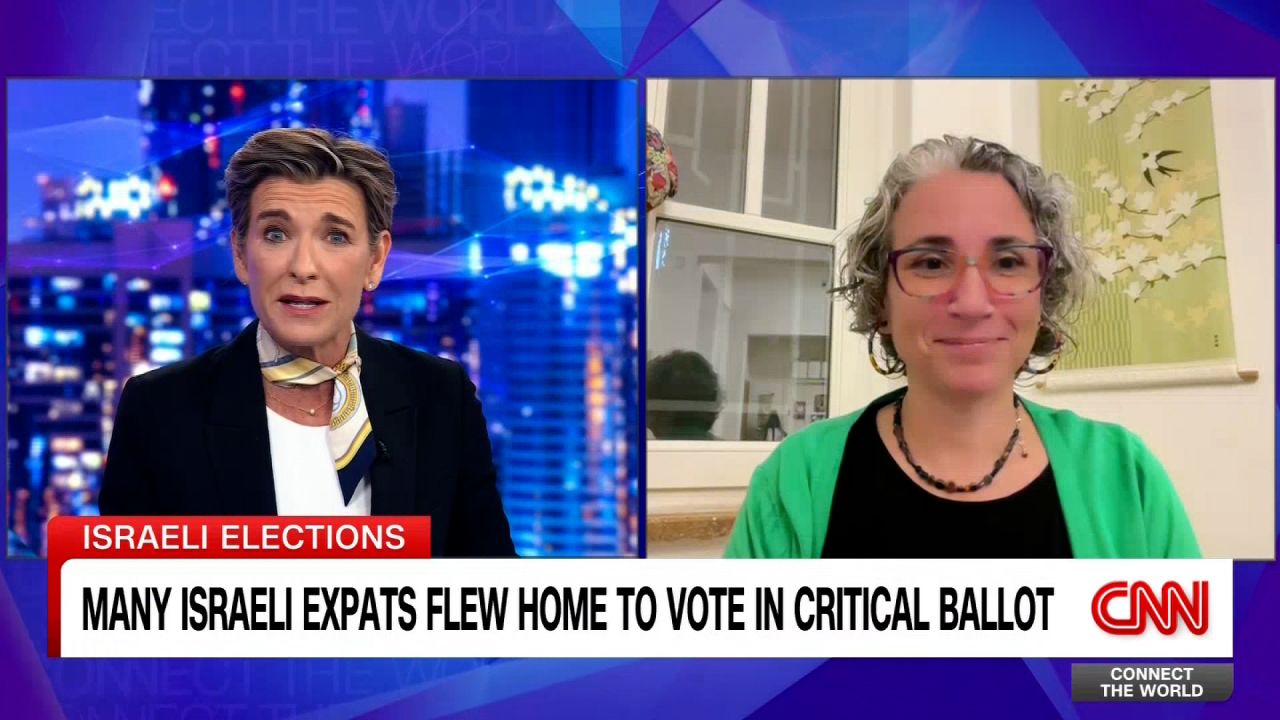
Israeli expat travelled from Boston to Jerusalem for one night to cast vote
6:06• night to cast vote
6:06
Rabbi Claudia Kreiman says she flew from Boston to Jerusalem for just one night – to cast her vote in an election she believes will determine the country’s future.
“I haven’t done this for another election. This election feels urgent in a way that nothing else has felt,” she said.
The senior rabbi at Temple Beth Zion in Brookline, Massachusetts, is among thousands of Israelis who flew back to the country to participate in the elections.
Kreiman told CNN it was “an honor” and “a privilege” to be able to cast her “vote for hope, for possibility, for peace.”
For her and many other Israeli voters there’s one thing we definitely need to talk about, she said. “Do we want to live forever in war? Or do we want to believe and imagine a different possible future security for Israelis?”
For Kreiman, that future means security for Israelis, “dignity for Israelis and Palestinians together side by side,” and leadership that cares for all its citizens.
Next Tuesday, she will vote again – this time in Massachusetts, “also fighting for democracy”.
Her commitment to democracy is rooted in her childhood in Chile, where she grew up under dictatorship.
“We have to fight for democracy. We have to do it joyfully,” Kreiman said.
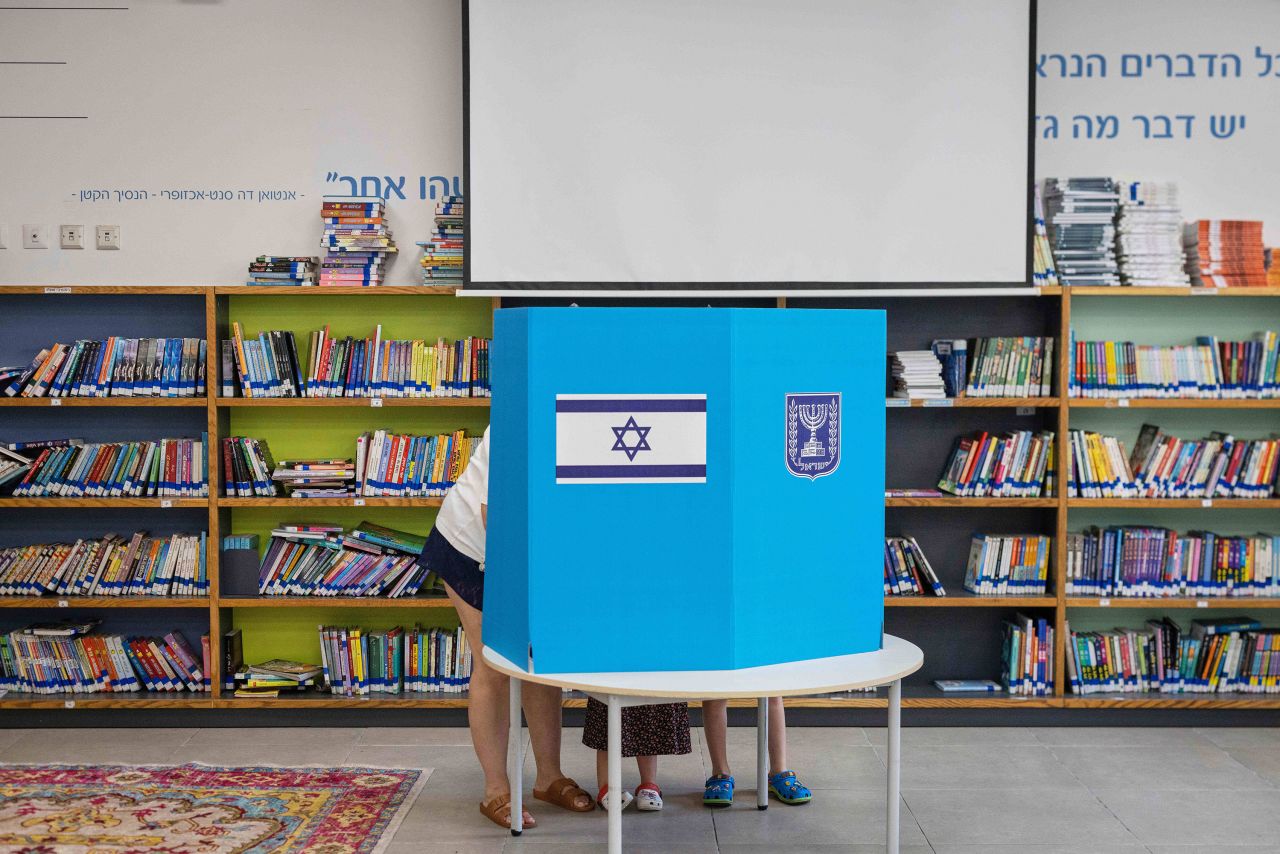
A woman casts her ballot in the Florentin neighborhood of Tel Aviv on Tuesday.
Voter turnout in Israel’s election is at its highest level since numbers were first recorded in 1973, according to the Central Elections Committee.
At 4 p.m. local time, 55.7% of voters had cast a ballot, the committee said, much higher than the same hour in the 2022 elections, when turnout stood at 47.5%.
A total of 4,085,075 voters out of approximately 7.3 million voted already, the committee said. There are still six hours of voting left until polls close at 10 p.m. local time.
High voter turnout poses a risk to the smaller parties running for the Knesset, putting them in danger of falling below the electoral threshold as the turnout rises. Parties need to secure 3.25% of the vote to cross the threshold; the total number of votes needed rises as overall turnout increases.
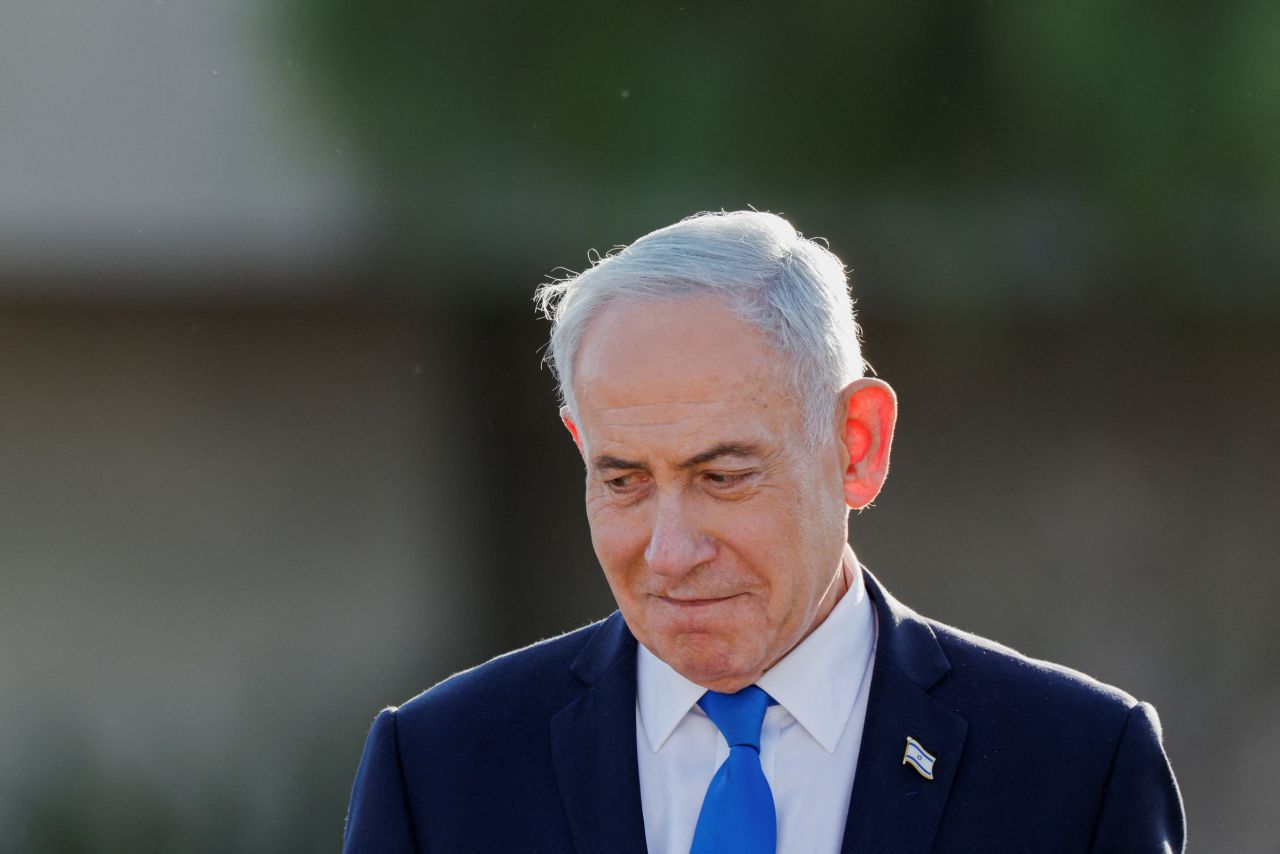
Israeli Prime Minister Benjamin Netanyahu near Mitzpe Ramon, Israel, October 21.
The final found of pre-election polls in Israel last week showed Prime Minister Benjamin Netanyahu falling short of a clear victory in the October 27 election.
The polls also suggested that his main rival, former Israeli military chief of staff Gadi Eisenkot, is also short of securing a clear victory and would likely need to rely on the support of Israel’s Arab parties to oust Netanyahu.
The poll from Channel 13 News found that Netanyahu’s bloc would fall from its current 64 seats to a much lower 50 seats in the 120-seat Knesset. Netanyahu’s right-wing and religious bloc needs to secure at least 61 seats for outright victory.
Meanwhile, Eisenkot’s bloc, which consists of right-wing, centrist and left-wing parties, would get 54 seats, beating Netanyahu while still falling short of a clear victory. The poll found that the two Arab parties could get a total of 16 seats.
Channel 12’s final pre-election poll found that Netanyahu’s bloc receives the same 50 seats while Eisenkot’s bloc has a total of 56 seats. The Arab parties in this poll are predicted to have 14 seats.
The poll from Kan 11 News also had Netanyahu’s bloc at 50 seats, but Eisenkot’s bloc had 52 seats, a narrow lead that still leaves both men short of outright victory.
In this poll, the Arab parties were predicted to have 14 seats, while a small party focused on Israeli military reservists and economics secured four seats. This small party, known as the Reservists, has not pledged to support either bloc.
These three major polls found that Netanyahu’s Likud would have 19 to 21 seats, while Eisenkot’s Yashar would secure 22 to 23 seats.
In the final round of polling, the right-wing Channel 14 showed Netanyahu with outright victory, predicting that he would secure 62 seats with his coalition, leaving Eisenkot with only 44 seats.
Channel 14, widely considered a Netanyahu mouthpiece, has repeatedly released polls showing that Netanyahu would secure a clear victory in the elections. These results have been an outlier from virtually every other major poll in the country, which has shown Netanyahu’s coalition falling below the total required for victory.
Arab voter turnout for Israel’s election is expected to be substantially higher than in the 2022 vote, when it was just over 50%. Pollsters have projected a turnout as high as 70% in the community, a surge that could prove significant as neither Prime Minister Benjamin Netanyahu nor his main challenger, Gadi Eisenkot, are expected to have a clear path to forming the next government.
The support of the two main Arab-majority parties – Mansour Abbas’s Raam and Yousef Jabareen’s Joint List – could be critical to doing so, even if the main parties have ruled out explicit cooperation.
As he cast his vote today, Raam leader Mansour Abbas urged Arab citizens to exercise their democratic right.
Candidates from Arab parties vote in Israeli election.
“This is essential to changing our situation and addressing the problems we face as an Arab community, such as violence, crime, home demolitions, fines, racism, and incitement,” he said.
“The vote is an important tool for changing the political situation. A government that came to power through the ballot box can be removed through the ballot box.”
CNN’s Oren Liebermann contributed reporting.
Prominent Israeli political figures have cast their ballots today, in one of Israel’s most significant elections in its history.
Current Israeli Prime Minister Benjamin Netanyahu cast his vote at a polling station in Jerusalem, calling it a “very moving and fateful moment,” while his main opposition, former Israeli military chief of staff Gadi Eisenkot, urged “all Israelis to go vote and stick to the mission of replacing the worst government since the state’s founding.”
Here’s a look at Netanyahu, Eisenkot, and other figures voting today:
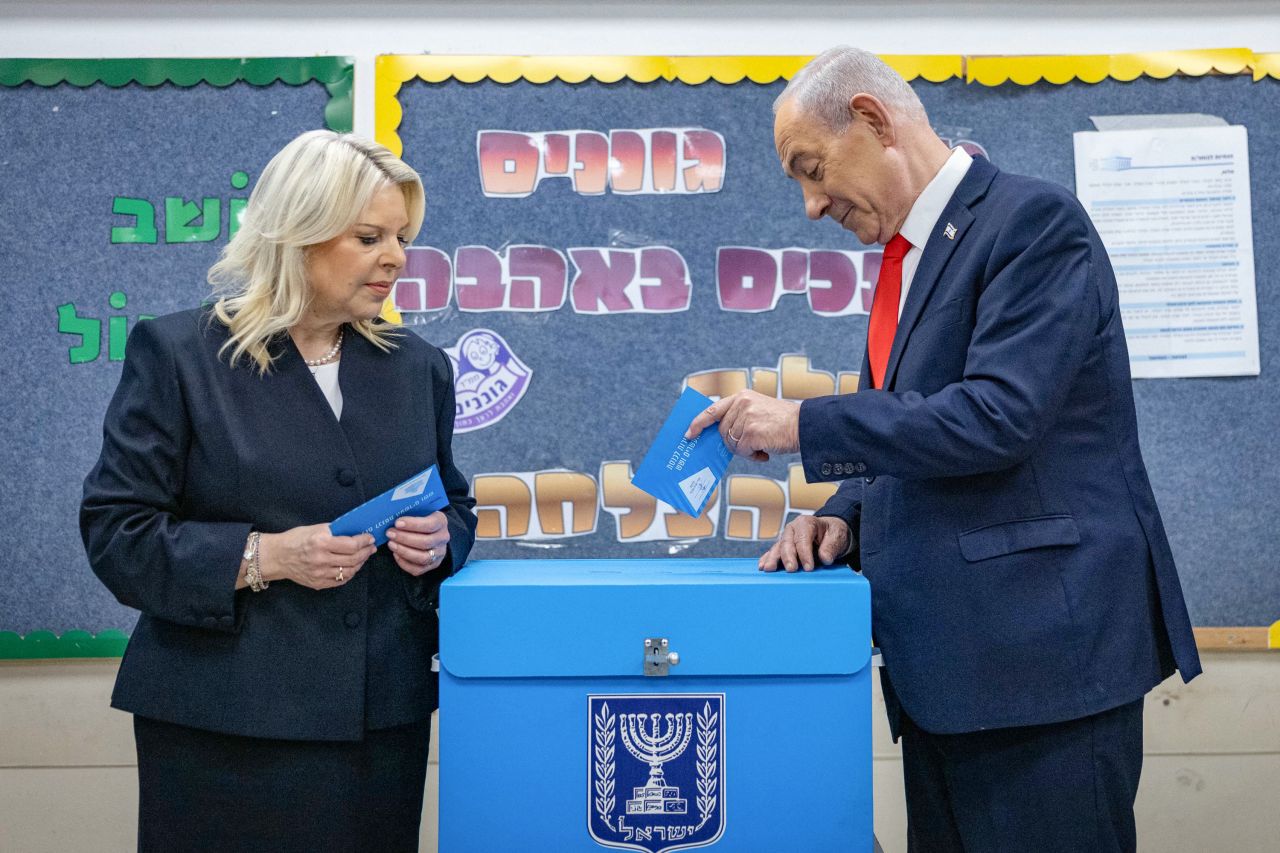
Israel’s Prime Minister Benjamin Netanyahu and his wife Sara cast their ballots in Jerusalem on Tuesday.
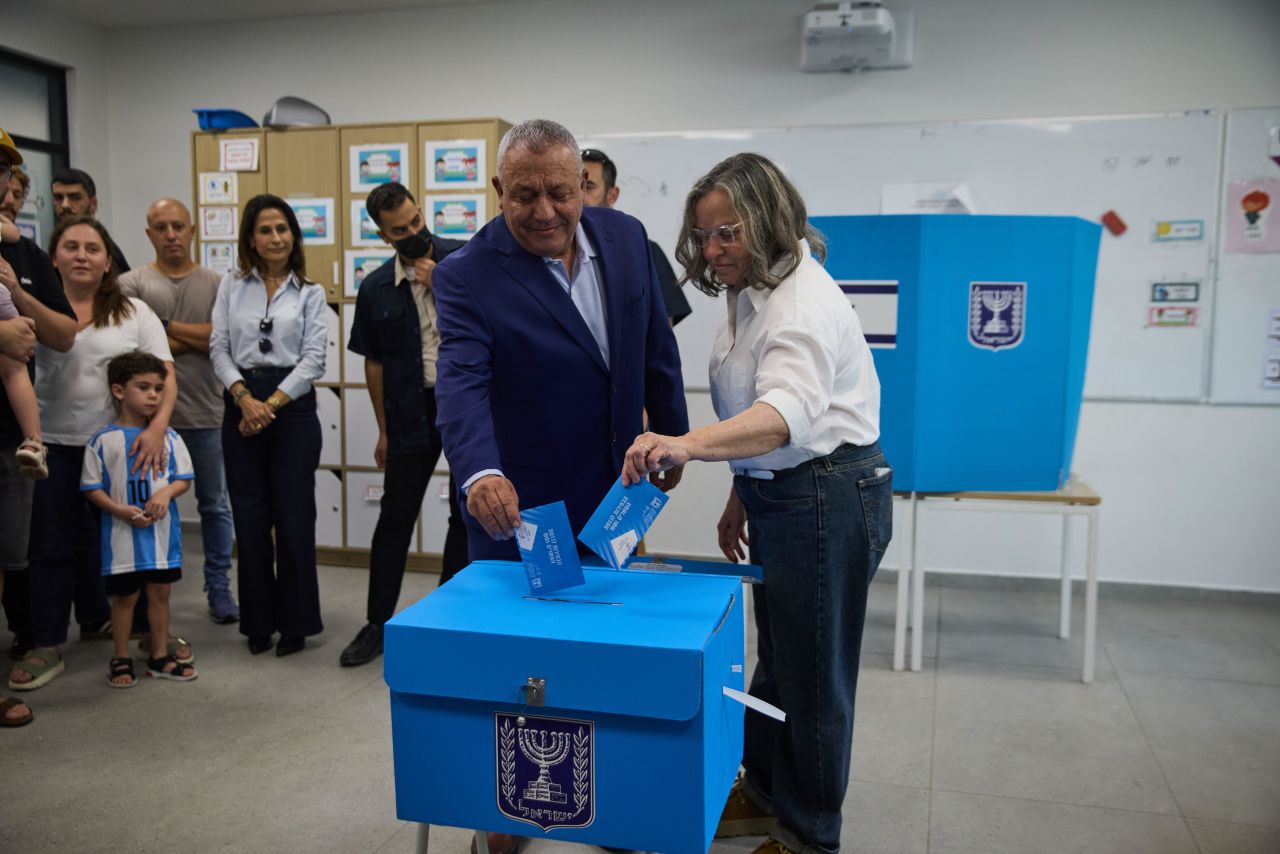
Former Israeli chief of staff, leader of the Yashar party and candidate for Prime Minister Gadi Eisenkot casts his ballot in Herzliya.
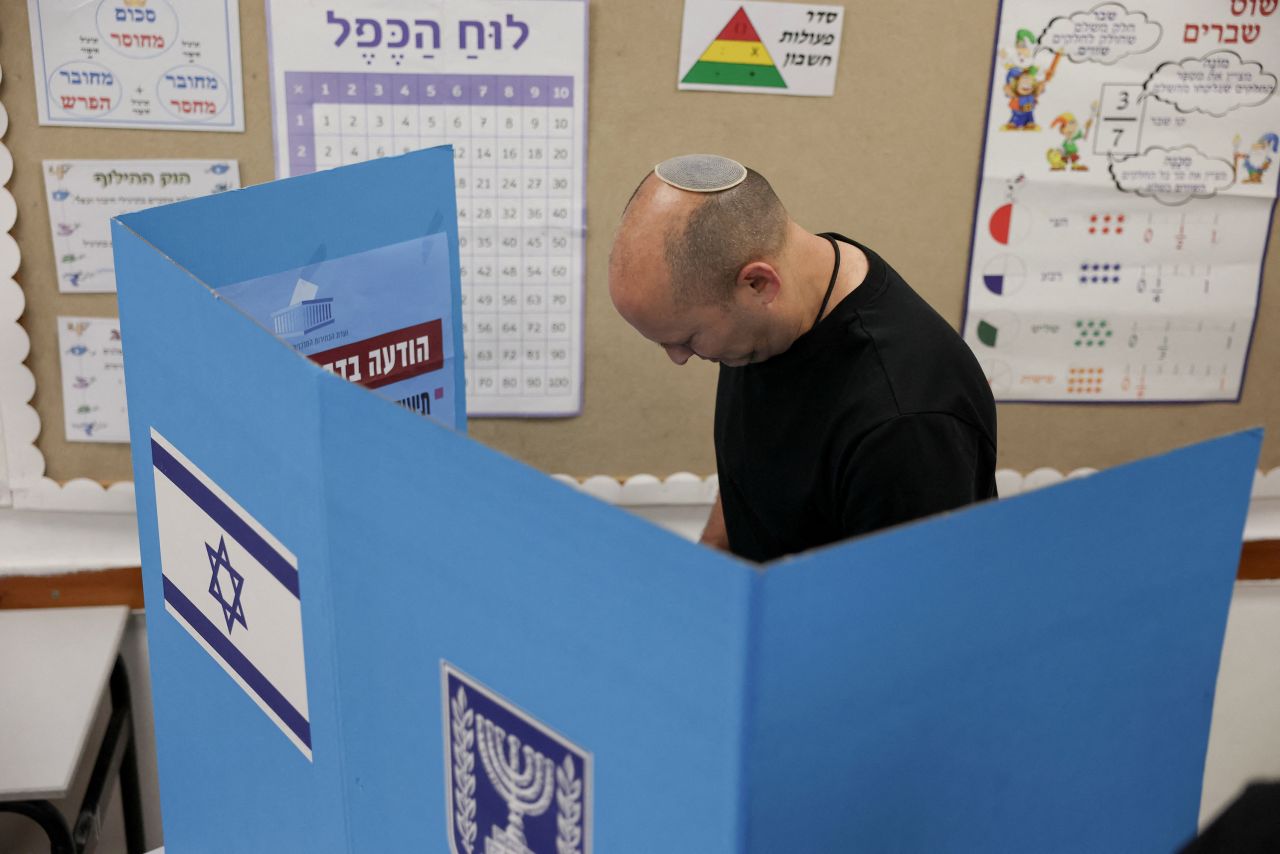
Former Israeli Prime Minister Naftali Bennett, leader of the Bennett 2026 party, votes in Raanana, Israel.
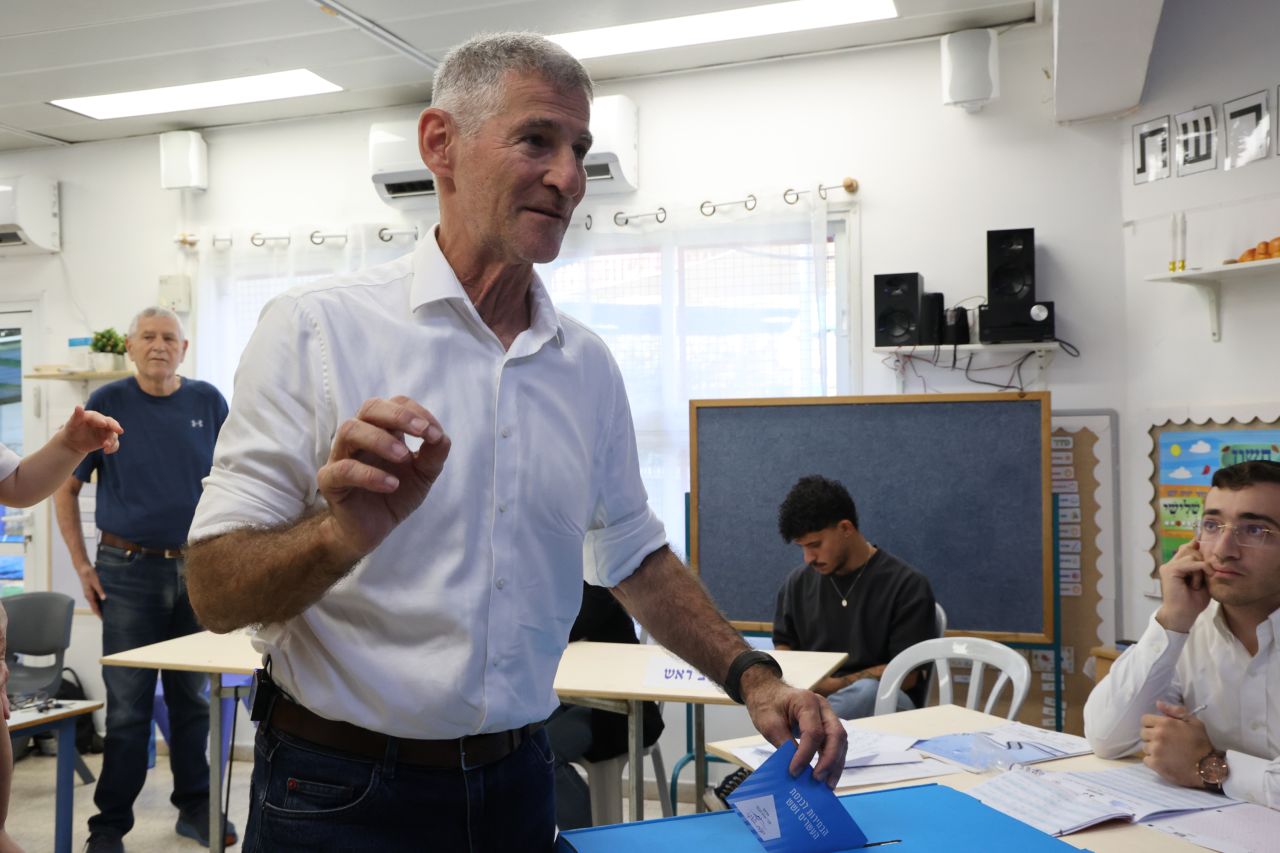
Yair Golan, leader of the Democrats party, arrives at a polling station in Rosh Haayin to cast his vote.
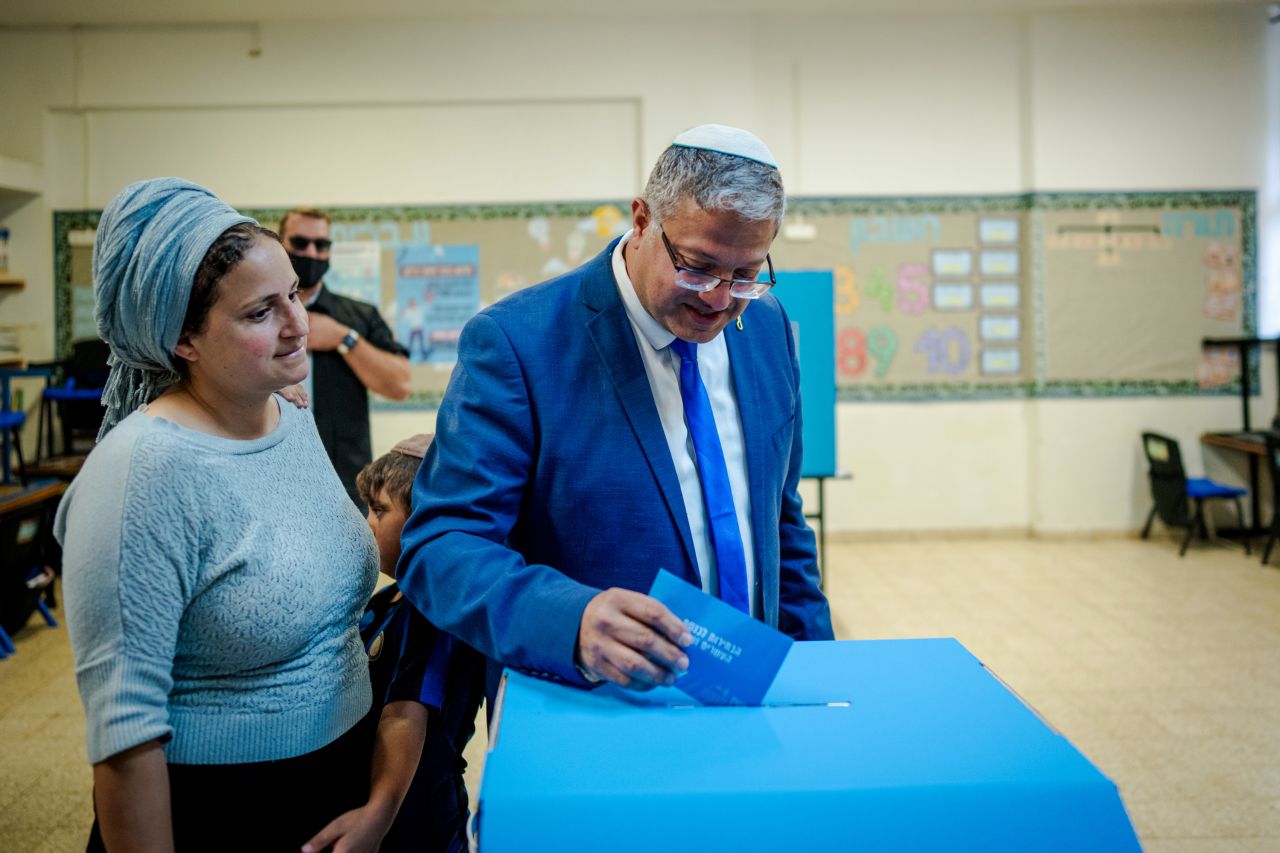
Israel’s National Security Minister and Otzma Yehudit party leader Itamar Ben Gvir casts his ballot in Kiryat Arba, an Israeli settlement in the Israeli-occupied West Bank.
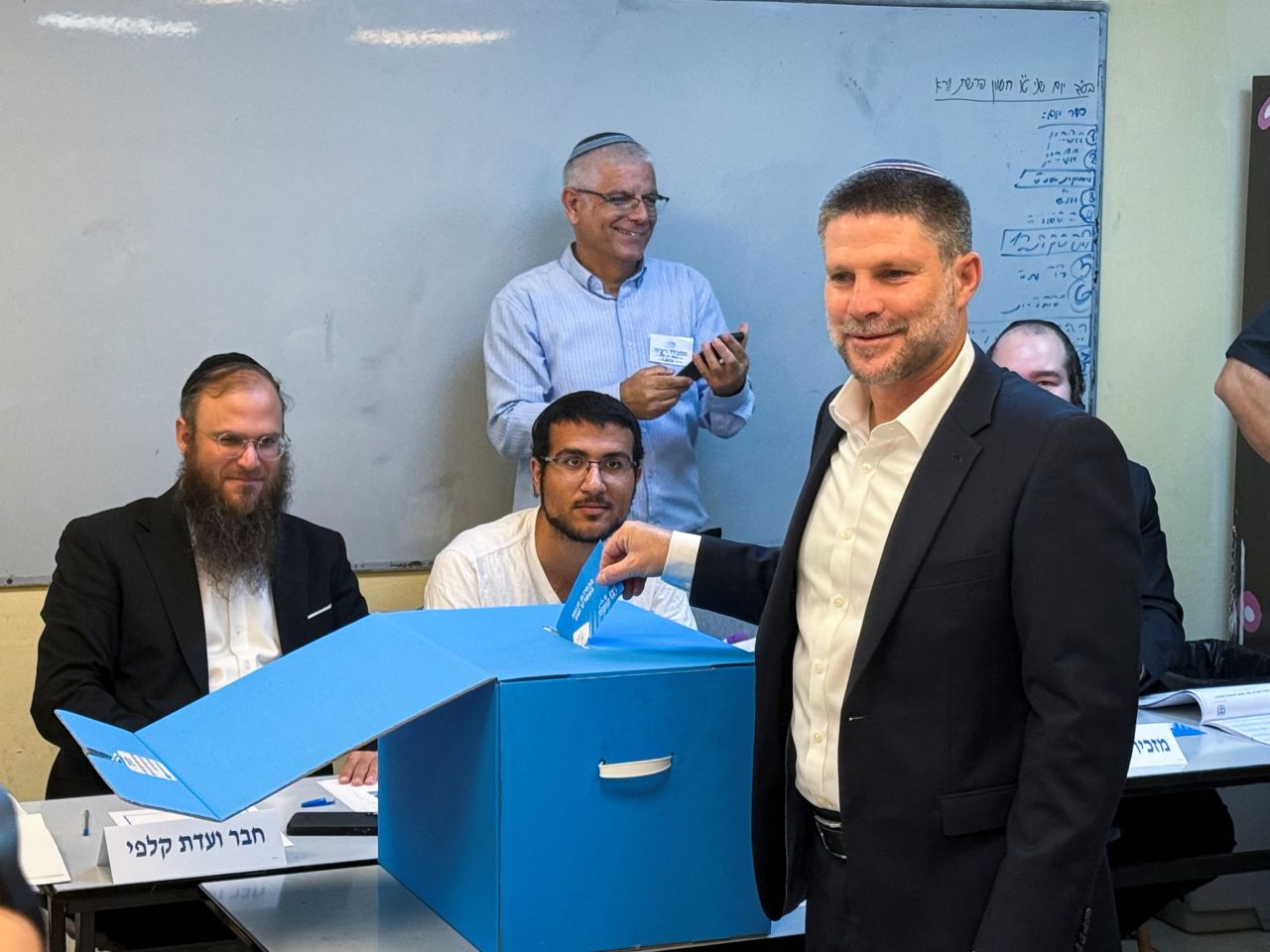
Israeli Finance Minister Bezalel Smotrich, leader of the Religious Zionist party, votes in the Israeli settlement of Kedumim in the Israeli-occupied West Bank.
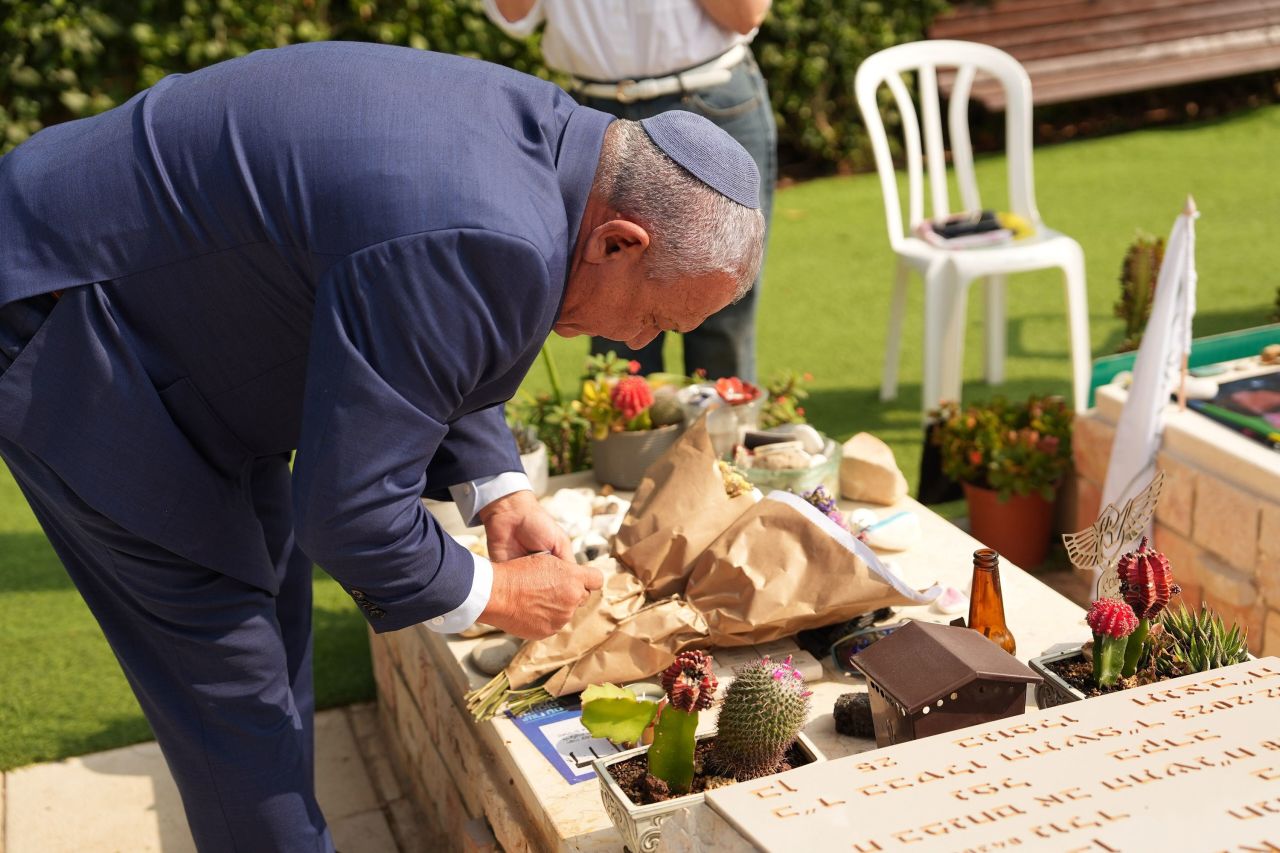
On their way to vote on Tuesday, Gadi Eisenkot and his wife Hannah visited the grave of their son Gal Meir at a cemetery in Herzliya.
Israel’s two leading candidates have made emotionally charged stops on their election day trail.
Gadi Eisenkot, the leading challenger to Israeli prime minister Benjamin Netanyahu, visited the grave of his son, Gal Meir, who was killed in Gaza in December 2023. Eisenkot and his wife Hannah made a stop at the cemetery in Herzliya on his way to vote.
“Over Gal’s grave, I swore that the price he paid, he and his friends, those he knew, and those he didn’t, would not be in vain,” Eisenkot wrote about his son in Yedioth Aharonoth in April 2026, calming that promise central to his political mission. Two other nephews were killed during the war.
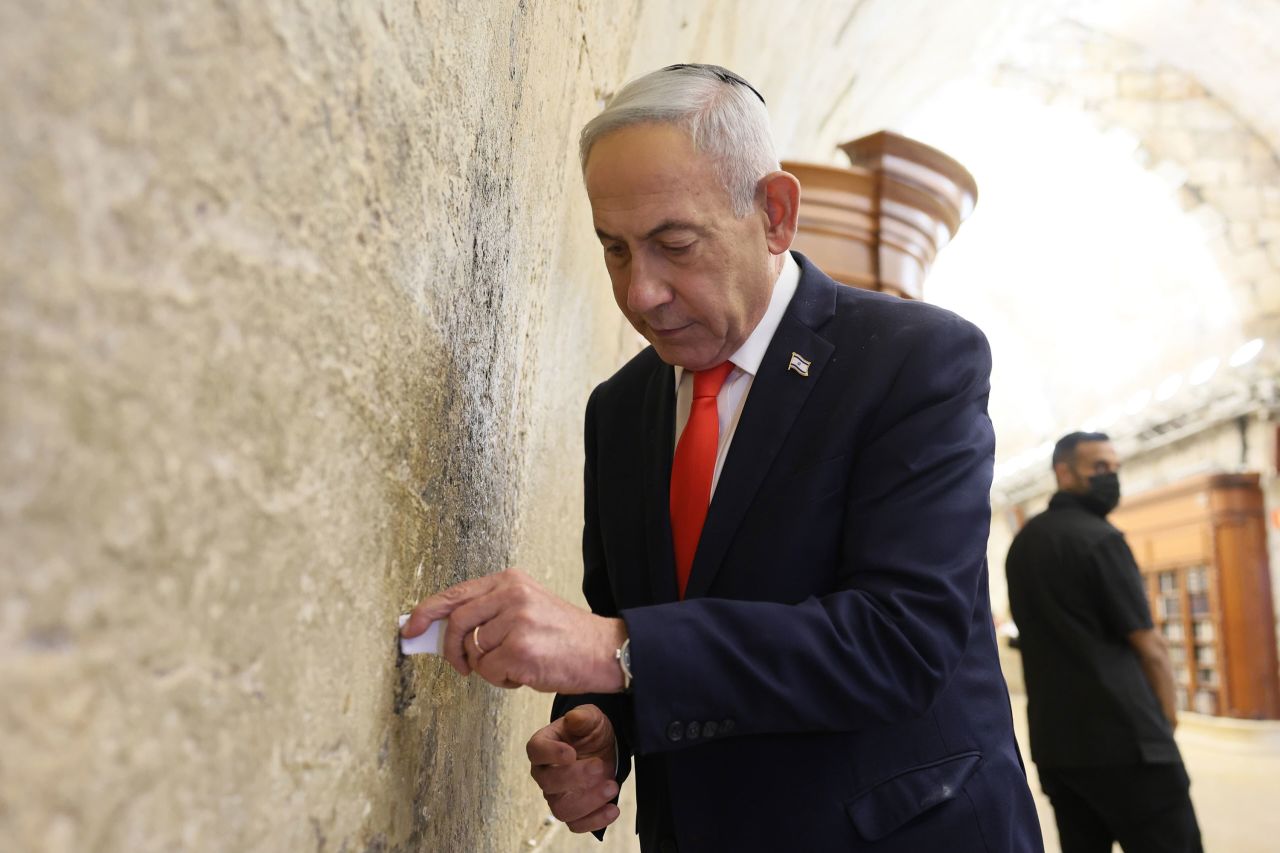
Prime Minister Benjamin Netanyahu at the Western Wall Monday evening.
On Monday, the night before the vote, Netanyahu visited the Jerusalem Western Wall, as did other right-wing party leaders, traditionally placing a prayer note between the stones.
‘To the lives of IDF soldiers, our heroes, To victory over our enemies. To the success of our people, The eternity of Israel will not lie,” he said.
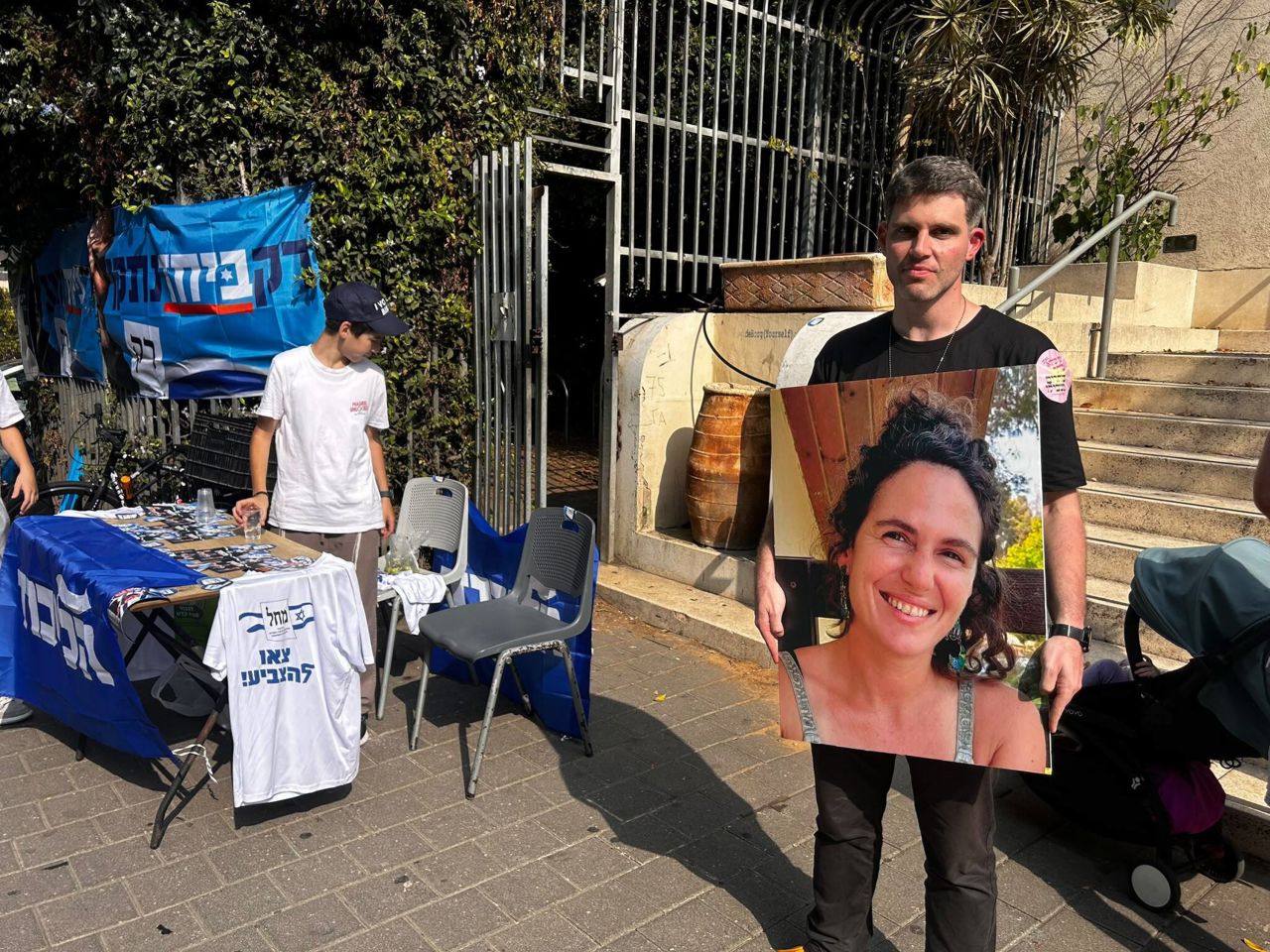
Gil Dickmann holds a photo of his cousin, Carmel Gat, who was killed in captivity after the October 7, 2023 attacks.
Families affected by the Hamas-led attacks on October 7, 2023 have held pictures of their loved ones outside of several polling places in Israel throughout the day.
Gil Dickmann is the cousin of Carmel Gat, 39, who was kidnapped from the kibbutz of Be’eri near the Gaza border and killed in Hamas captivity. Standing outside a Tel Aviv polling station holding a picture of Gat, he told CNN he came “to remind everyone that October 7 is still here.” Prime Minister Benjamin Netanyahu, he said, “did not admit that it was his responsibility that he was in charge of keeping us safe and secure, and he’s running again, for reelection. It’s unbelievable that he has the guts to run again.”
Outside a polling station in the coastalcity of Netanya, Ruby Chen held a picture of his son Itay, a soldier killed on October 7, whose body was kidnapped to Gaza for over two years.
Early Tuesday morning, families of October 7 victims and former hostages gathered at Tel Aviv’s Hostages Square to hold a somber minute of silence at 6:29 a.m. – the exact moment the Hamas–led attacks began – before calling to vote for political accountability.
Netanyahu casts vote and Eisenkot visits a polling station.
Voter turnout in Israel’s elections remains at the highest levels in more than 50 years, according to the Central Elections Committee. As of 2 p.m. local time, 44.9% of voters had cast a ballot, the committee said, the highest turnout recorded since 1973 at that hour.
A total of 3,290,480 voters out of approximately 7.3 million voted already, the committee said.
“It’s a historic high since measurement began in 1973,” said Ofer Kenig, a research fellow at the Israel Democracy Institute, “but of course we have to see whether turnout increase in all sectors and in all strongholds.”
Kenig told CNN that, from preliminary information, “In all sectors we have an increase, except for one, and a very significant one. Only in the ultra-orthodox cities, we see a decrease in voter turnout. In other segments of the Israeli society, we see an increase. Very, very cautiously we can see a higher increase in liberal strongholds rather than the Netanyahu coalition strongholds.”
Kenig cautioned that there are still hours of voting left and some groups may simply vote later in the evening.
Meanwhile, voter turnout amongst the Israel Defense Forces stood at 48% as of 1 p.m. local, the military said, an increase from the 2022 election in which 44.4% had voted at the same hour.
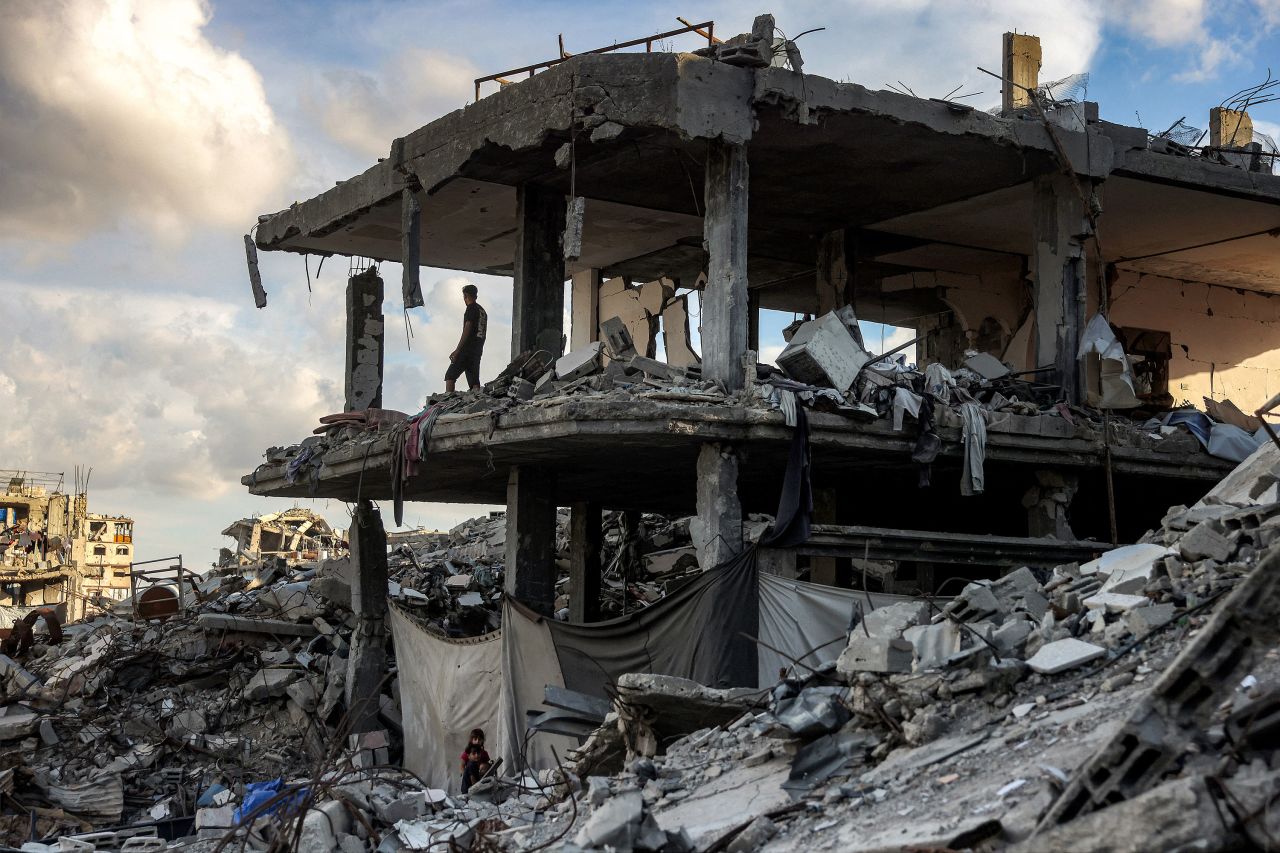
A man stands in a destroyed building in the Jabalia camp for Palestinian refugees in the northern Gaza Strip on October 20.
Palestinians in Gaza have no vote in Israel’s election. But its outcome will shape their future.
More than 74,000 people have been killed in Gaza since October 2023, with Israeli strikes a near daily occurrence, despite a nominal ceasefire agreed a year ago. Meanwhile, the humanitarian catastrophe continues to deepen, with severe food shortages, widespread displacement, and collapsing basic infrastructure.
Israeli Prime Minister Benjamin Netanyahu’s right-wing coalition and his main rival, Gadi Eisenkot, have both centered their election pitches on ending Hamas rule there.
But for many in the enclave, who wins the election is moot. Here’s what three people in central Gaza told CNN.
Ahed Ferwana:“The programs announced by the Israeli parties — whether parties of Netanyahu’s camp or parties of the opposition — all agree that there will not be an independent Palestinian state. They will not withdraw from the Gaza Strip and will continue military campaigns both in the Strip and even in the West Bank, as is currently seen in the city of Hebron.
“Therefore, these elections are not expected to produce significant results in favor of the Palestinian cause, especially since Eisenkot recently said frankly that he might return to war on the Gaza Strip because there is no quicker option, as he puts it. … As for Netanyahu’s camp … it has been committed to the war for more than three years.”
Musa Ubeid:“I do not count on the right, nor the left, nor anyone in Israel, because they consider our children terrorists, so how can we want or count on any party? They are two sides of the same coin.”
Tareq Abu Eweimeh:“Trump and Netanyahu have one policy, which is wars and their continuation and bloodshed. Therefore their goals are united and they are walking on one path.”
An ultra-Orthodox Jewish man holds his child as he casts his ballot at a school serving as a polling station during Israel’s general election in Jerusalem, on Tuesday, Oct. 27.
The polls in Israel’s pivotal national election – widely seen as a referendum on Prime Minister Benjamin Netanyahu – are still open for about seven more hours.
Turnout in the first few hours of voting is the highest it has been in 45 years, the country’s Central Elections Committee said.
Opinion polls suggest the race will be too close to call, with Netanyahu in a tight race against centrist opposition candidate Gadi Eisenkot. And many Israelis have said the choice is more consequential than ever.

Israel’s Prime Minister Benjamin Netanyahu sits on a bench after voting at a polling station in Jerusalem on October 27.
Voters wait in line to cast their ballots at a polling station in Tel Aviv, Israel, on Tuesday.

Former Israeli military chief and opposition candidate Gadi Eisenkot shakes hands with former hostage Gadi Moses in kibbutz Nir Oz, southern Israel, on October 27.

A man prepares to vote at a polling station in the Arab-Israeli town of Umm al-Fahm on Tuesday.
Ultra-Orthodox Jewish men work at the United Torah Judaism (Yahadut HaTorah) party headquarters in Jerusalem during the election on Tuesday.
Many other opposition candidates in Israel’s national elections have also already cast their votes.
In total, there are 37 parties running in the election, although most parties will fall below the threshold of votes needed to get into Israel’s parliament. Candidates can continue to campaign throughout the day, in last-minute pushes to turn out the vote.
Former Israeli Prime Minister Naftali Bennett, leader of the temporarily named Bennett 2026 party, said that it’s “a fateful day for the future of our country” as he dropped his ballot in the box. Bennett voted in the city of Ra’anana, Israel.

Yair Golan, leader of The Democrats party, arrives to cast his vote at a polling station in Rosh Haayin, Israel, on Tuesday.
The leader of the Democrats party, Yair Golan, cast his ballot in the city of Rosh Haayin, Israel. “A morning of great hope. In this morning, we begin the journey of rebuilding Israel (to be) better – better for its citizens, better for its prosperity and its renewed success,” Golan said as he voted
Meanwhile in Tel Aviv, opposition leader Yair Lapid voted alongside his wife.
Former Israeli Defence Minister and leader of the Yisrael Beiteinu party, Avignon Lieberman, voted in the village of Nokdim, in the occupied West Bank. Calling on everyone to “come out and vote,” Lieberman said, “I am confident that tomorrow we will wake up to a new morning, one in which we can form a Zionist coalition.”

Workers prepare a polling station as the country holds a national election, in the Arab city of Umm al-Fahm, northern Israel, on October 27.
Israelis vote for party lists, not individual candidates. In a society divided by nationality, religion, ethnicity and ideology, that produces a crowded field. There are 36 parties in play.
Dozens of lists register each cycle, but only those that pass a 3.25% vote threshold win seats and enter the 120-seat Knesset, Israel’s parliament.
Polls suggest 11 to 13 parties will meet the bar; seats are allocated through a proportional representation system.
The two largest parties are Netanyahu’s right-wing Likud and Yashar, a new centrist party led by Gadi Eisenkot, a former military chief of staff who has emerged as his principal challenger.
What do the polls say? The latest Channel 12 opinion poll puts Eisenkot first with 23 seats, ahead of Likud with 21, though other pollsters differ. On the pro-Netanyahu Channel 14, Likud is projected to take 30 seats and Eisenkot about 20.
In head-to-head matchups about who is better suited to be prime minister, Eisenkot has led Netanyahu by a steady margin.
But coming out as the largest party is not enough to win. A prime minister needs 61 seats to form a government, and no party has ever won that majority alone. So, election night usually settles very little. The real contest is the coalition calculus that follows, which can take days, weeks or even months.
A man casts his ballot at a polling station during Israel’s general election in Haifa, Israel, on Tuesday.
As voters across Israel head to the polls, some of the country’s leaders have already cast their ballots and are urging people to do the same.
Gadi Eisenkot, the main challenger to Prime Minister Benjamin Netanyahu in this election and head of the new Yashar party, went to the Gaza periphery to meet Gadi Mozes, one of the Israeli hostages captured during the October 7 attacks and later released by Hamas.
“I promise you that I will do everything to be worthy of your trust. That I will bring unifying leadership. That I will be prime minister of everyone – if you choose me.”
His opponents were also vocal online on Tuesday.
Defense Minister Israel Katz, a longtime Netanyahu ally, framed the election as a choice between a “decisive approach” to Israel’s security – or “a return to the policy of containment and restraint.”
President Isaac Herzog and National Security Minister Itamar Ben-Gvir both posted photos of themselves submitting their paper votes into the ballot box.
“I call on all female and male citizens of the country – we are all equal, this is our day to go, to influence and to vote,” Herzog said in a statement. “Tomorrow, we will all continue here together – we have no other country.”
People vote in Israeli elections in Jerusalem
Voting has begun in one of Israel’s most significant elections in its history, where voters are facing a familiar question: Should Benjamin Netanyahu, Israel’s longest-serving prime minister, stay in power?
It is the first national vote since the Hamas-led attack of October 7, 2023, the deadliest security failure in Israel’s history, and the wars that followed in Gaza, Lebanon and Iran — conflicts that have mobilized much of the country and subsequently deepened Israel’s international isolation.
Here’s what’s been happening so far today:
- Voter turnout is currently the highest it has been in 45 years, according to the country’s Central Elections Committee. It is the highest voter turnout since 1981, the committee said at a press conference.
- Israeli Prime Minister Benjamin Netanyahu – leader of the Likud party – cast his vote at a polling station in Jerusalem, calling it a “very moving and fateful moment.”
- Opposition candidate and former Israeli military chief of staff Gadi Eisenkot has also voted at a polling station in the coastal city of Herzliya, in the northern part of the Tel Aviv district. “I suggest not to get excited by Netanyahu’s scare tactics,” Eisenkot said outside the polling station.
- Family members of those killed and taken hostage in the October 7 attacks gathered at Hostages Square in Tel Aviv for a minute of silence at 6:29 a.m., marking the moment when Hamas-led gunmen began the attack.
CNN’s Tal Shalev, Oren Liebermann, Lauren Kent and Kathleen Magramo contributed to this reporting.

Former Israeli military chief of staff Gadi Eisenkot, leader of the Yashar party, votes in Herzliya, Israel, on October 27.
Opposition candidate and former Israeli military chief of staff Gadi Eisenkothas just voted at a polling station in the coastal city of Herzliya, in the northern part of the Tel Aviv district.
Eisenkot, the main rival to Israeli Prime Minister Benjamin Netanyahu, has spent the rest of the morning visiting other polling locations to greet voters.
“I suggest not to get excited by Netanyahu’s scare tactics. … He does this in every election campaign,” Eisenkot said outside the polling station after casting his ballot.
His new party Yashar – “straight” in Hebrew – is considered centrist, and Eisenkot has primarily campaigned on issues that are domestic and address government accountability.
You can read CNN’s full profile of Eisenkot and his policies here.
Israeli settlers line up to vote outside a polling station during Israel’s general election in the Jewish settlement of Efrat, in the occupied West Bank, on Tuesday.
In the prominent Israeli settlement of Efrat in the occupied West Bank, voters said they were focused on uniting a country that has grown more fractured and divided over the last four years.
“I hope my children will have a good place to grow up, that there will be brotherhood among us, not just wars,” Elinor Veinglas told CNN. She said she hopes “that we will remember to come together and that will be our foundation here in this country.”
Even so, Veinglas said she would only decide for whom to vote “when I see the ballots.”
Her husband, David Veinglas said he would vote for Prime Minister Benjamin Netanyahu’s rival, Gadi Eisenkot. “I believe whatever comes in the end will be fine,” he told CNN. “I hope for a united government.”
Meanwhile, Haviva, who declined to give her last name, said she prays for “the people of Israel, especially that there will be unity and that they will first find what they have in common between right and left.”
Just south of Jerusalem, Efrat is more ideologically diverse community than settlements deep in the West Bank that are aligned with far-right parties. Israeli settlements are considered illegal under International law by most of the international community and the United Nations.
Zvolon, who also declined to give his last name, said he was voting for far-right Finance Minister Bezalel Smotrich. “The people of Israel were exiled for 2,000 years living among the non-Jews. We had no government. Today we come and vote. I can say it seems my ancestors dreamed of this day,” Zvolon said.
