
• Iran sanctions:China says new US economic sanctions on Iran “will only further intensify tensions,” after US Treasury Secretary Scott Bessent threatened measures against Tehran’s trading partners. Iran claimed it was “fully prepared” to counter the sanctions.
• Under pressure:Among the sanctionsare measures that will impact people in the US who send moneyto family members living in Iran. Amateur and professional sports activities and academic exchanges have also been suspended. Shipping firms now risk penalties for responding to information demands from organizations Iran has set up to manage the Strait of Hormuz.
• Talks latest:Meanwhile, Pakistan, a mediator in the US-Iran conflict, said it had a “very positive and productive meeting” with Iran’s president and that “significant progress” was made in talks regarding the war and wider Middle East tensions.
As the United States readies to further squeeze Iran economically, experts say that inflicting more pain on the Islamic Republic is unlikely to lead to the policy change Washington hopes for.
US President Donald Trump said he will launch “Operation Economic Outcast,” which he has dubbed as an “economic D-Day” amid a nearly six-month-long military conflict with Iran.
But with a high threshold for pain and some 47 years of various forms of international sanctions, Iran is likely to escalate as opposed to capitulate under Trump’s new measures, experts say.
Parsi said that this is the same miscalculation Trump made at the outset of the war, believing that increased pressure would lead to Tehran’s surrender.
It did not. And the D-Day sanctions are likely to have the same effect, Parsi wrote on X.
The new measures “are more likely to elicit Iranian counter-escalation and, as a result, turn out to be yet another round in this long-standing escalation cycle.”
Danny Citrinowicz, the former head of the Iran branch of Israeli military intelligence, said on X that the US had gone to war with Iran without sufficiently understanding the country they were confronting, warning that recent economic measuresmay not lead to the desired outcome.
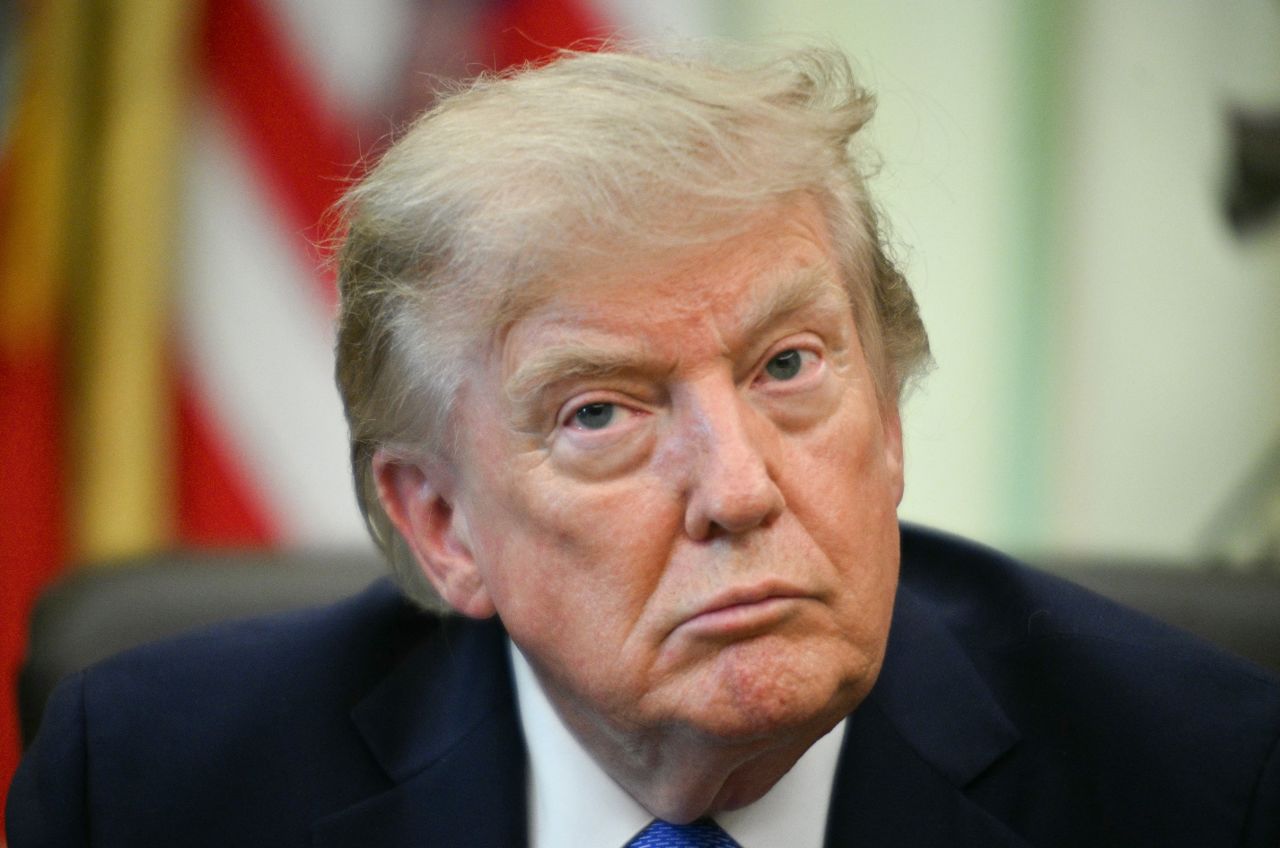
US President Donald Trump speaks in the Oval Office of the White House on August 6.
President Donald Trump on Tuesday accused Iran of failing to pay large portions of its military while killing protesters, describing the situation as a “humanitarian crisis of epic proportions” as the US continues to pressure Tehran amid an ongoing war.
“The failing Islamic Republic of Iran is not paying large segments of their military, while at the same time killing protesters, even when they are not protesting, at levels not seen before,” Trump claimed in a Truth Social post.
“It is a humanitarian crisis of epic proportions, and must be stopped, NOW,” the president added.
While Trump did not provide evidence for his claims, an uprising in Iran was met with high-intensity violence in January 2026, while reports continue to highlight the severe risks facing dissidents.
Trump’s post comes as the US has intensified its economic pressure campaign against Iran, including the launch of “Operation Economic Outcast,” which Trump has dubbed as an “economic D-Day” amid a nearly six-month-long military conflict with Iran.
US Treasury Secretary Scott Bessent on Monday threatened new sanctions against countries that refuse to cut economic ties with Iran, though stopped short of announcing major new penalties.
U.S. Treasury Secretary suggests UAE decision to suspend trade with Iran was “not coincident”
0:48• trade with Iran was “not coincident”
0:48
United States Treasury Secretary Scott Bessent told Iran’s trading partners on Monday to cut economic ties with the country or face sanctions, suggesting that actions taken earlier by the United Arab Emirates were “not a (coincidence).”
“Actions that they (the UAE) took last week were not a (coincidence) but likely causal, and I would expect that we would see a broad array of countries taking similar actions as we continue our engagement,” Bessent told reporters.
Bessent said President Donald Trump has been calling world leaders with specific asks regarding the administration’s demand to work with the US to isolate Tehran economically. However, he refused to name which countries Trump has been in communication with.
The UAE has historically been one of Iran’s largest commercial partners. However, it announced last week that it was suspending all trade and financial transactions with Iran “until further notice.”
China, India, Turkey and Iraq are also at risk of US sanctions, with China being Iran’s largest trading partner and the leading purchaser of Iranian oil.
Anwar Gargash, adviser to the UAE president, said on Tuesday that the US-Iran conflict has moved “to a new phase” marked by “escalating economic pressure.” He added that the only way out of this war is not to target Gulf Arab states.
Iran has repeatedly targeted the UAE and other Gulf Arab nations throughout the conflict, saying they harbor US bases used to attack the Islamic Republic.
The US Treasury has begun its new campaign to tighten sanctions against Iran with five targets: a and technology
The goal: “to restrict the revenue that the Iranian regime uses to attack its neighbors, support terrorism abroad, brutally oppress its own people, and hold the global economy hostage.”
Even though the designations target the regime, ordinary Iranians will inevitably be affected. The measures are designed to choke off the ability of the regime to generate revenue and hard currency.
Less access to foreign currency will put further pressure on the beleaguered Iranian currency – the rial – and lead to higher import costs and even higher inflation.
Crypto-channels have helped Iran make money from oil exports. One individual sanctioned on Monday, a Ukrainian named Ivan Obukhov who is based in the United Arab Emirates, “has processed over $100 million of cryptocurrency payments to facilitate oil sales” for the Islamic Revolutionary Guard Corps (IRGC) since 2023, according to the US government.
But ordinary Iranians also turn to cryptocurrency as a way to opt out of a failing system. Iran’s crypto eco-system was worth $7.78 billion in 2025, according to blockchain data platform Chainanalysis.
The US campaign does not automatically blacklist every Iranian crypto company.
The Treasury said Monday that “as Iran’s formal financial sector collapses, the regime is increasingly attempting to stabilize the rial with gold to hedge against rampant inflation.”
Removing access would likely further ravage the spending power of ordinary Iranians.
Another measure that will impact ordinary Iranians: the Treasury suspended several licenses that had authorized certain remittance payments to Iran. This makes it more difficult for the huge Iranian diaspora to send money to relatives, forcing them to use third-country intermediaries and crypto or stable-coins.
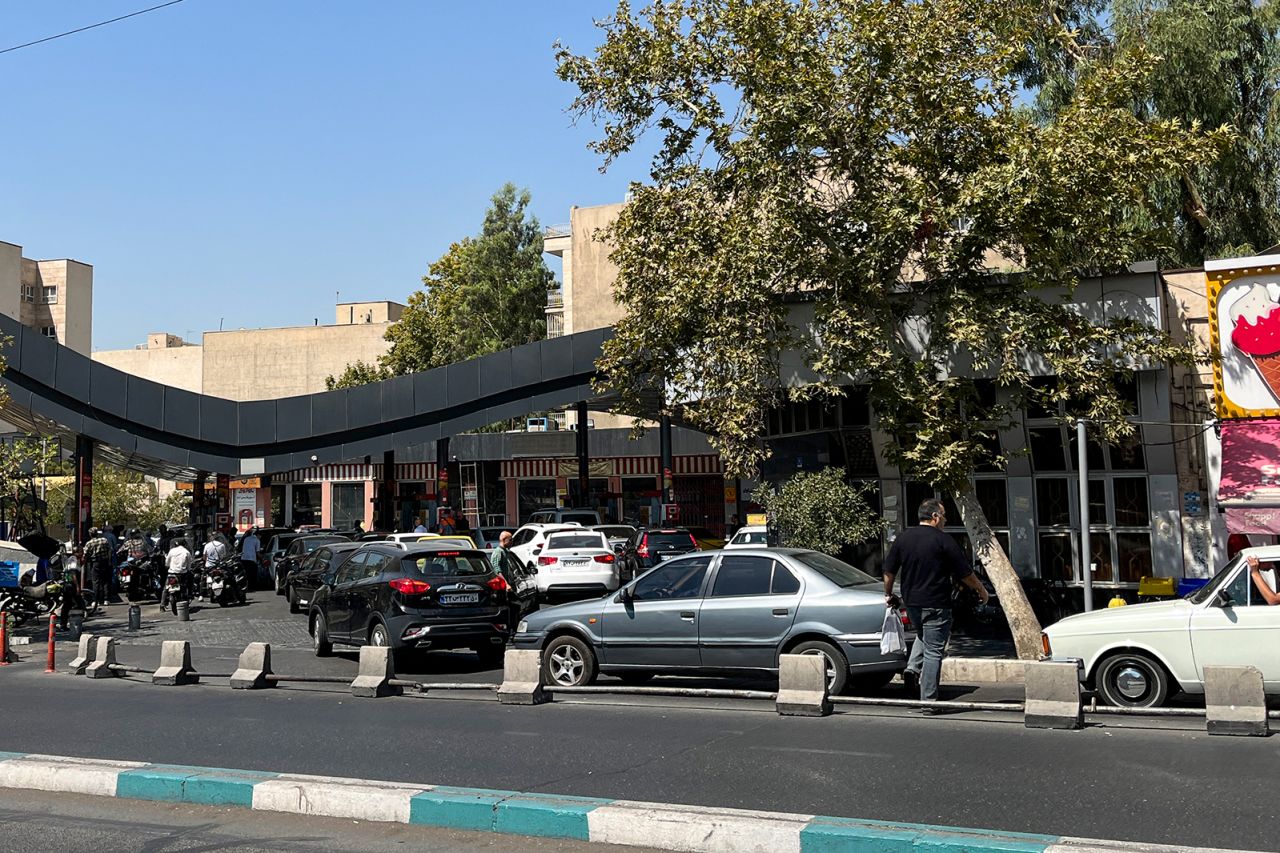
Drivers line up at a petrol station in Tehran on Tuesday.
Drivers in the Iranian capital of Tehran are experiencing long lines at gas stations and temporary fuel shortages although authorities have insisted the overall fuel supply chain remains stable
It comes as US strikes on Iranian oil storage infrastructure, the US blockade and fears of rising inflation are believed to be triggering fuel shortages and subsequent rushes on gas stations.
Iranian news agency Rokna reported that people in Tehran said some petrol stations had no gas available, forcing them to temporarily close, while other stations had long lines on Monday and Tuesday.
Tabnak, another news agency, published a similar report on Monday, saying it received comments from readers who were experiencing restricted fuel availability in eastern and southern Tehran.
Social media users in Tehran also reported gas stations without petrol in more urban, northern neighborhoods. And outside of the capital, reports of diesel and gas shortages in Mazandaran province and Fars province have emerged on social media. CNN is unable to independently verify those reports.
The National Iranian Oil Products Distribution Company (NIOPDC) has said the country’s fuel supply chain remains stable, and the shortages and long lines are being caused by rumors that lead to panic buying, as well as delays in fuel deliveries. The distribution company said the issue “should be resolved within the next few days,”
The Tehran region director of the NIOPDC also said that damage inflicted on Tehran’s petroleum product storage and distribution infrastructure during the war has created some constraints on fuel distribution.
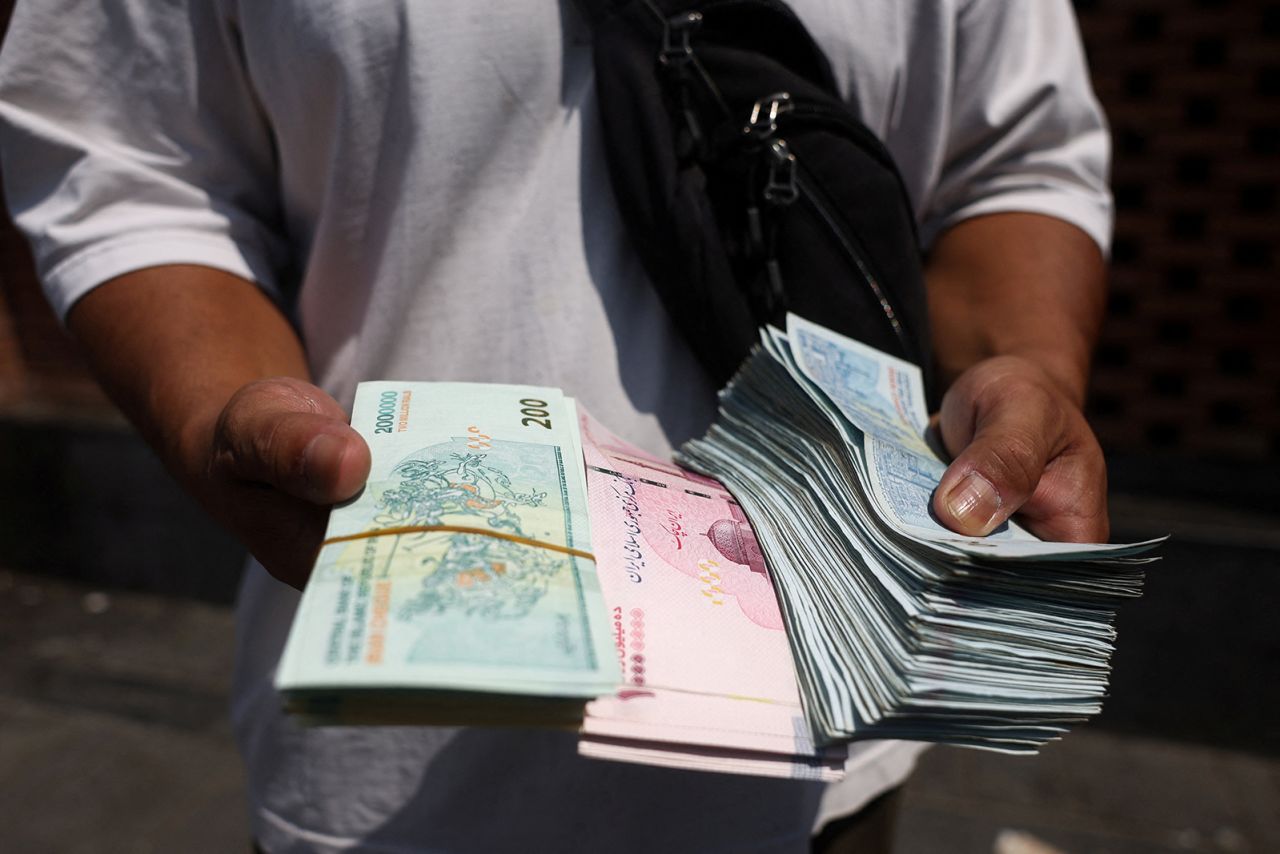
A currency dealer holds Iranian Rial in the Grand Bazaar in Tehran, Iran, on August 17.
Iranian workers have seen their base wage more than halve in the last decade, plunging from $232 to $83 per month in real terms, as sanctions, crises and war have squeezed Iran’s economy, according to state-affiliated media.
Iran’s currency – the rial – is incredibly weak and dropped to a record low of two million against the US dollar yesterday. That means the base wage of 16.625 million tomans amounts to just $83, said the Iranian Labour News Agency (ILNA), using the toman unit which is equal to 10 rials.
This marks “an exceptionally steep and unprecedented decline,” ILNA said. It is also well below the globally recognized $10 a day benchmark, below which international organizations classify people as living on low-incomes and at risk of hunger.
Even though wages have risen during this time, because so many consumer goods are imported at dollar-dominated prices, workers’ “real wages” have fallen, ILNA said.
“The clearest evidence can be seen on working families’ dinner tables. Ten years ago, we used to buy several kilograms of red meat every month. Now, months go by without us seeing any meat on our tables,” he told ILNA.
ILNA’s assessment comes as a reminder of the decade-long economic crisis in Iran, and the severity of the sanctions the US has already imposed on the regime.
Global oil prices dipped on Tuesday despite the United States threatening “economic D-Day” on nations doing business with Iran as traders wait for more concrete details.
Brent futures, the global benchmark, declined 2% to trade at $90 a barrel just before 5 a.m. ET. Meanwhile, WTI futures, the US benchmark, dropped 2.4% to $83 around the same time.
The dips came even after US Treasury Secretary Scott Bessent announced fresh economic sanctions against Iran and its trading partners on Monday. Shipping firms also risk penalties if they respond to demands for information from Iranian organizations managing the Strait of Hormuz.
But the US administration has not yet imposed any sanctions and it has neither named affected countries nor provided a specific timeline. Brent and WTI both closed down 2.4% on Monday.
“There were no concrete new steps other than sanctioning 60 Iran-linked entities and individuals,” Deutsche Bank analysts wrote in a Tuesday note.
“In the absence of material escalation and amid continuing grey flows through the Strait of Hormuz, oil markets remained mostly in a wait-and-see mode,” they added.
Some analysts have theorized that meaningful amounts of crude oil are “leaking” out of the Strait of Hormuz, helping to prop up the global market. These tankers may be turning off their tracking signals to avoid detection, experts told CNN.
Matt Egan contributed reporting.
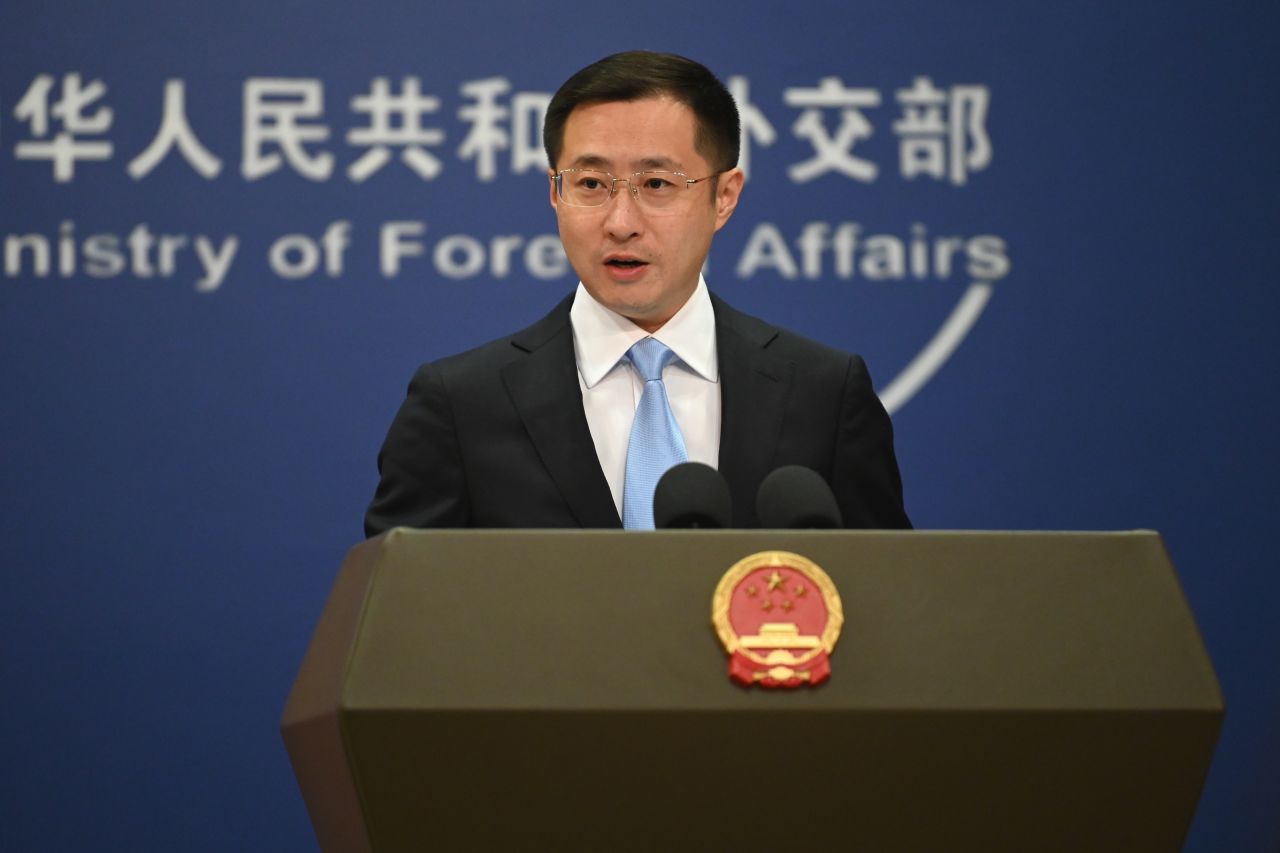
Lin Jian, a spokesperson for China’s Ministry of Foreign Affairs, speaks during a press conference on Tuesday.
Beijing on Tuesday warned new US economic sanctions on Iran “will only further intensify tensions” and that China’s cooperation with Iran should not be disrupted.
“Economic warfare and maximum pressure will not help resolve the issue. They will only further intensify tensions and conflicts, create spillover risks…” said China’s foreign ministry spokesperson Lin Jian during a regular press briefing.
“China’s cooperation with Iran has always been conducted within the framework of international law and should not be disrupted or undermined.”
Lin added: “China is closely following relevant developments and will take all necessary measures to firmly safeguard its own rights and interests.”
US Treasury Secretary Scott Bessent on Monday vowed an “economic D-Day” for countries that buy oil from Iran.
Tehran likely shipped $3.9 and $4.2 billion worth of oil in September 2025, one analysis found;China, the world’s largest energy consumer, buys the vast majority.
Thirty-eight percent of China’s oil and 23% of its liquified natural gas transits through the Strait of Hormuz, a focal point of the Iran war, according to a Nomura report in April.
US Treasury Secretary Scott Bessent on Monday threatened new sanctions on countries refusing to cut economic ties with Iran, but stopped short of imposing new big penalties.
Shipping firms now risk penalties for even responding to information demands from organizations Iran has set up to manage the Strait of Hormuz.
Washington’s new measure will also impact people in the US who send money to family members who live in Iran.
Here’s what to know about the sanction threats:
- US President Donald Trump has been calling world leaders with specific asks regarding the administration’s demand that they work with the US to isolate Tehran economically, according to Bessent. The secretary did not outline any specific timelines.
- The Treasury secretary declined to name the countries. However, China, India, Turkey, Iraq and the United Arab Emirates could be most at risk for US action, experts told CNN.
- Bessent declined to say whether the US is willing to target Chinese banks with sanctions.
- After Bessent’s announcement, Iran’s top negotiator, Mohammad Bagher Ghalibaf, said the US is not in an economic position to restrict its relations with other countries. Iranian Finance Minister Ali Madanizadeh said Tehran is “fully prepared” to counter US sanctions.
Other top headlines in the region:
- Pakistan’s Interior Minister Mohsin Naqvi said he and army chief Asim Munir had a “very positive and productive meeting”with Iranian President Masoud Pezeshkian and that “significant progress” was made in talks about the conflict.
- An unidentified projectile struck and disabled an oil tanker about nine nautical miles northeast of Oman’s Ash Shishah, the United Kingdom Maritime Trade Operations reported.
- Meanwhile, the US also officially lifted its state sponsor of terrorism designation on Syria.
CNN’s Hanna Ziady, Mohammed Tawfeeq, Adam Cancryn, Alayna Treene, Matt Egan, Betsy Klein, Aida Karimi, Jennifer Hansler, Eyad Kourdi and Mitchell McCluskey contributed reporting to this post.
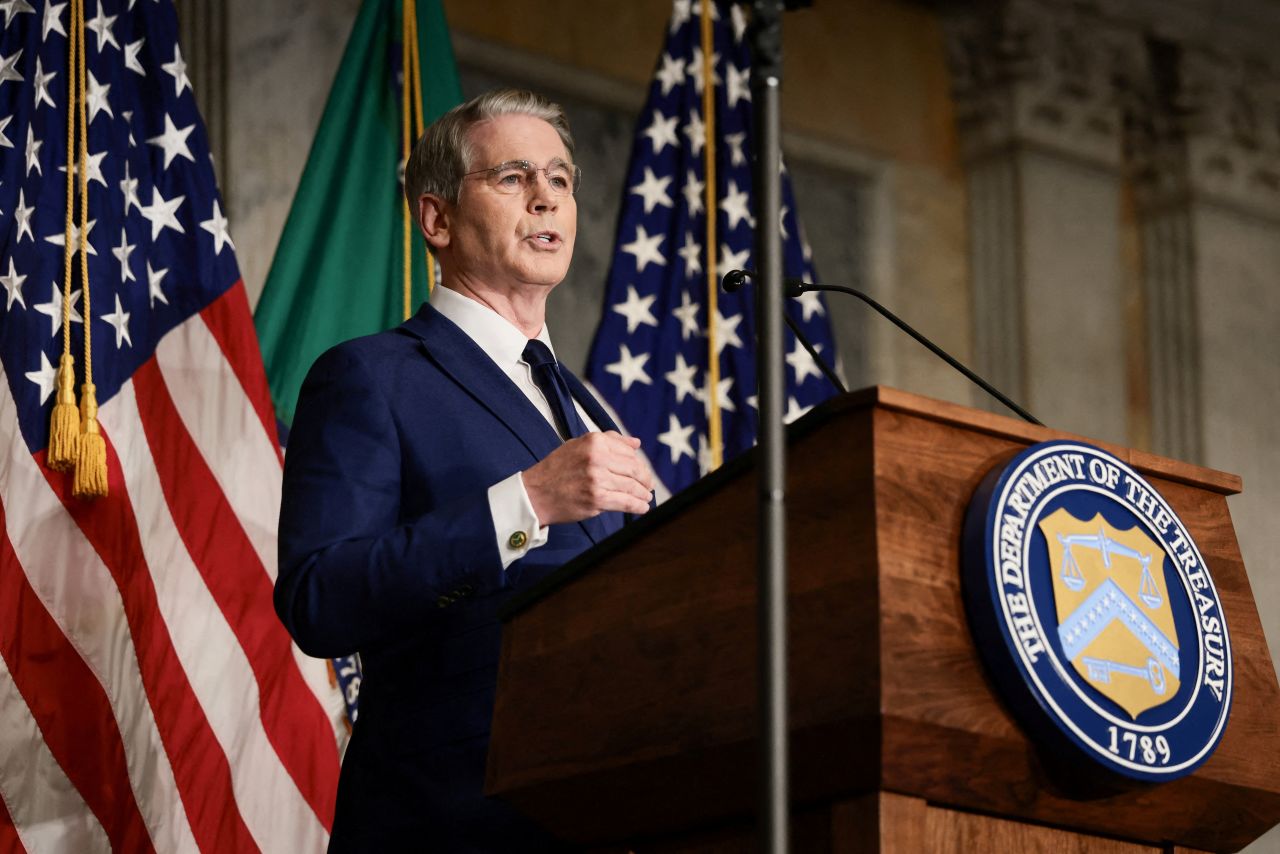
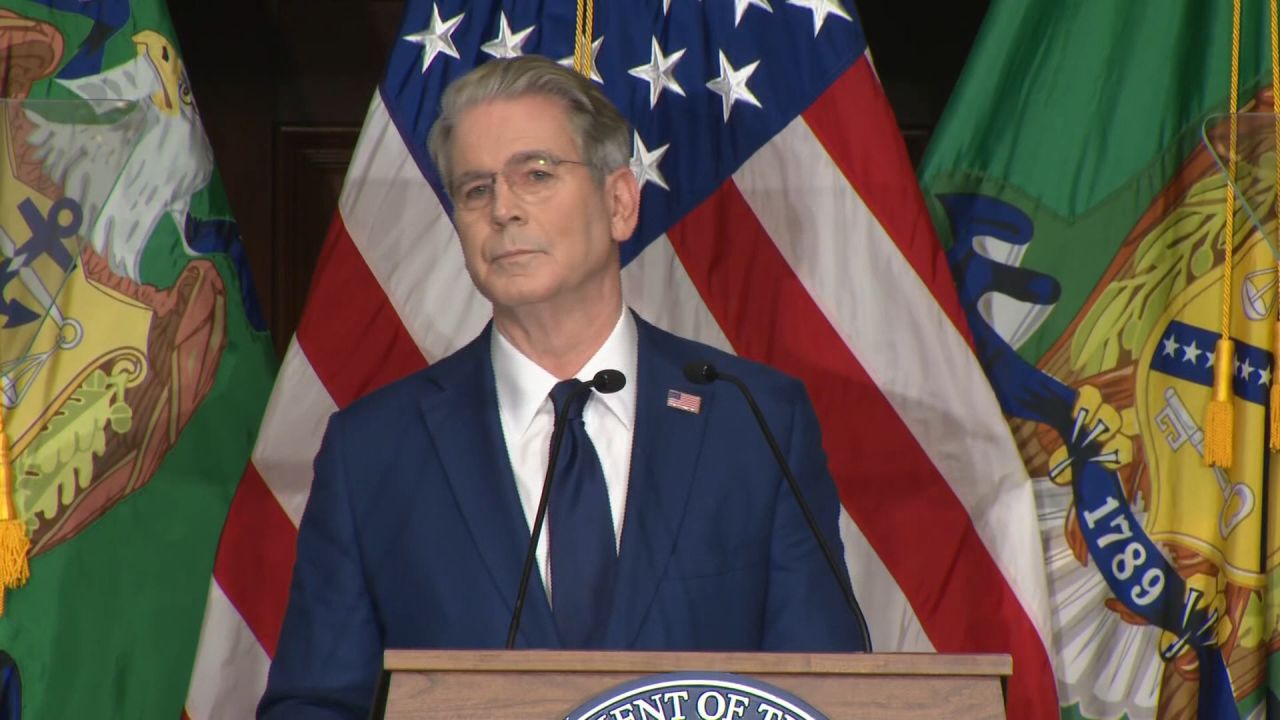
U.S. Treasury Secretary Scott Bessent speaks during a press conference to outline further sanctions against Iran, at the Treasury Department in Washington, D.C., U.S., on Monday.
US Treasury Secretary Scott Bessent on Monday vowed an “economic D-Day” for countries that buy oil from Iran. Experts say that means one country in particular: China.
Bessent didn’t name China on Monday, but he left little room for doubt.
“We find that the best way to engage with countries is through quiet diplomacy, and we are level-setting with every country to tell them our expectations,” Bessent said on Monday. “We know who they are. They know who they are.”
But while Bessent’s threat could put China front and center, the repercussions could reach across the world – even for American consumers, who could find their own energy costs rising as a result.
Washington’s new measures to put economic pressure on Iran will impact people in the US who send money to family members who live in Iran.
The US Treasury has suspended a longstanding mechanism that has allowed for personal remittances to and from Iran, according to a document published late Monday.
Iran has been heavily sanctioned by Washington for decades but a general license carve-out has allowed for noncommercial, personal remittances to Iran
With that general license now suspended, people wishing to make such transactions would need to apply for a specific license from the Office of Foreign Assets Control, according to the Treasury notice.
The United States has indefinitely suspended all amateur and professional sports activities and academic exchanges with Iran, according to a statement Monday by the Office of Foreign Assets Control.
Tensions between the US and Iran had already spilled over to the sporting arena before the suspension.
Iran’s soccer team faced extensive hurdles during the 2026 World Cup, which was co-hosted by the US. The team was forced to move itstraining basefrom Arizona to in Tijuana, Mexico, at the last minute, and faced restrictions on how long it was able to stay in the US before and after games.
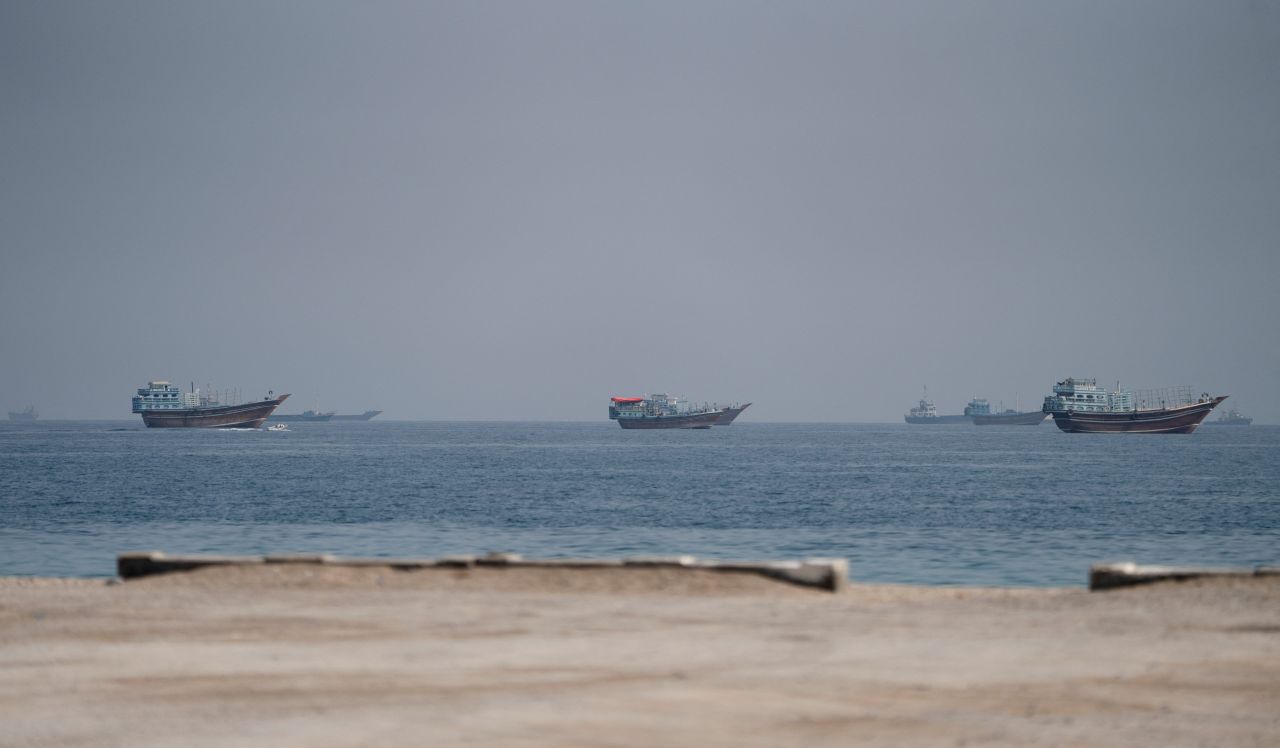
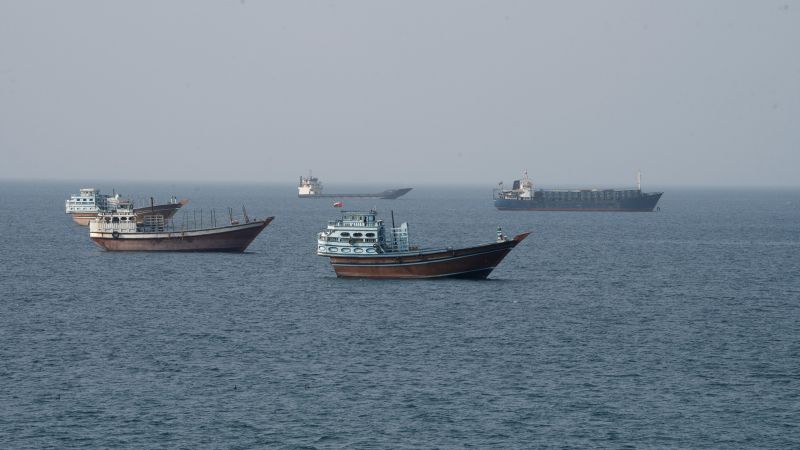
Vessels near the Strait of Hormuz, as seen from Musandam, Oman, on Monday.
Mariners and shipping firms now risk sanctions or penalties if they respond to information demands from organizations Iran has set up to manage the Strait of Hormuz, the US government has warned.
The Office of Foreign Assets Control (OFAC) had previously said that anyone who paid tolls to Iran for passage of the critical waterway would risk being caught by sanctions, but according to a new notice posted late Monday that risk now applies even to those “responding to information demands … even if there is no associated payment.”
It applies to dealings with Persian Gulf Strait Authority (PGSA), Persian Gulf Marine Insurance Company (PGMIC) and HormuzSafe Marine Services Authority (Hormuz Safe) –– three organizations set up this year by an Iranian regime determined to push its claimed right to control the strait.
In recent months, Iran has repeatedly attacked ships that it said had not liaised with the its Hormuz organizations.
The OFAC alert was published on what Washington dubbed ‘economic D-Day,’ as it ramped up its maximum pressure campaign on Tehran.
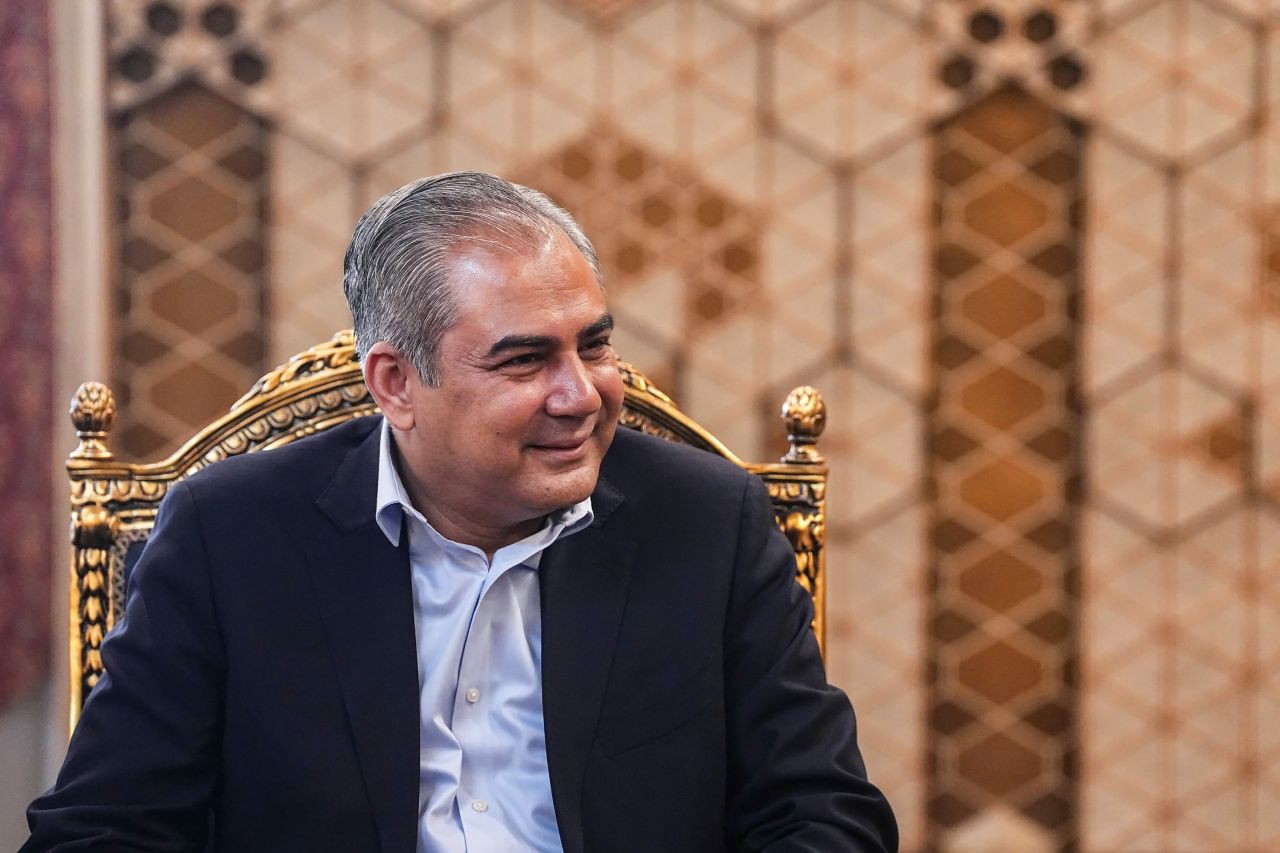
Mohsin Naqvi attends a meeting in Tehran, Iran on May 23.
Pakistan’s Interior Minister Mohsin Naqvi said he and army chief Asim Munir had a “very positive and productive meeting” with Iranian President Masoud Pezeshkian and that “significant progress” was made in talks about the conflict.
“Our discussion focused on the Iran US conflict, tensions in the Middle East and the way forward, as well as the steps needed by both sides for restoration of the Islamabad MoU (memorandum of understanding) thereby leading to comprehensive settlement of the conflict,” Naqvi wrote on X on Tuesday.
“The Iranian President candidly shared his Government’s perspective and concerns, and we had a very constructive exchange on the issues involved,” he said, noting the meeting ended positively.
On Monday, Iran’s state-run Islamic Republic of Iran Broadcasting (IRIB) reported Mohammad Bagher Ghalibaf, Iran’s parliament speaker and head negotiator, criticized Washington for failing to uphold its commitments in a meeting with Munir.
Ghalibaf, IRIB reported, said Tehran remains committed to implementing MoU but that the US must honor its commitments as well.

Tomoko Akane speaks at an event at Nagoya University in Nagoya, Aichi Prefecture, Japan on July 29.
The Japanese government said it will continue to support International Criminal Court President Tomoko Akane, sanctioned last week by the US, following criticismfrom rights groupsthat Tokyo’s response had been weak.
“Japan has consistently supported the ICC, a permanent International Criminal Court, in order to punish and eradicate the most serious crimes in the international community and to ensure the thorough implementation of the rule of law,” Japan’s Chief Cabinet Secretary Minoru Kihara said Monday in response to repeated questions from reporters.
“We have maintained close communication with Director Akane and we intend to continue providing the necessary support,” Kihara added.
Akane, the first Japanese to lead the Court, and Senegal’s Abdoulaye Seye, an ICC senior trial lawyer, were sanctioned by the US last week as part of the Trump administration’s broader campaign against the Hague-based Court, which it has called corrupt and politicized.
In a statement last week, US Secretary of State Marco Rubio said Akane and Seye had “directly engaged in efforts by the ICC to investigate, arrest, detain, or prosecute officials whose government has not consented to ICC jurisdiction.”
Japanese Prime Minister Sanae Takaichi, who has developed a close relationship with Trump, has faced backlash for merely expressing regret and refraining from criticizing the US.
The US has never signed the Rome Statute, the treaty which established the ICC, which prosecutes the world’s most egregious crimes, including genocide.
An unidentified projectile struck and disabled an oil tanker about nine nautical miles northeast of Oman’s Ash Shishah, the United Kingdom Maritime Trade Operations (UKMTO) reported early on Tuesday.
The tanker’s engine room was damaged, but the crew was reported safe, UKMTO said.
The environmental impact is not yet known, according to the organization.
“Vessels are advised to transit with caution and report any suspicious activity to UKMTO. Authorities are investigating,” UKMTO said.
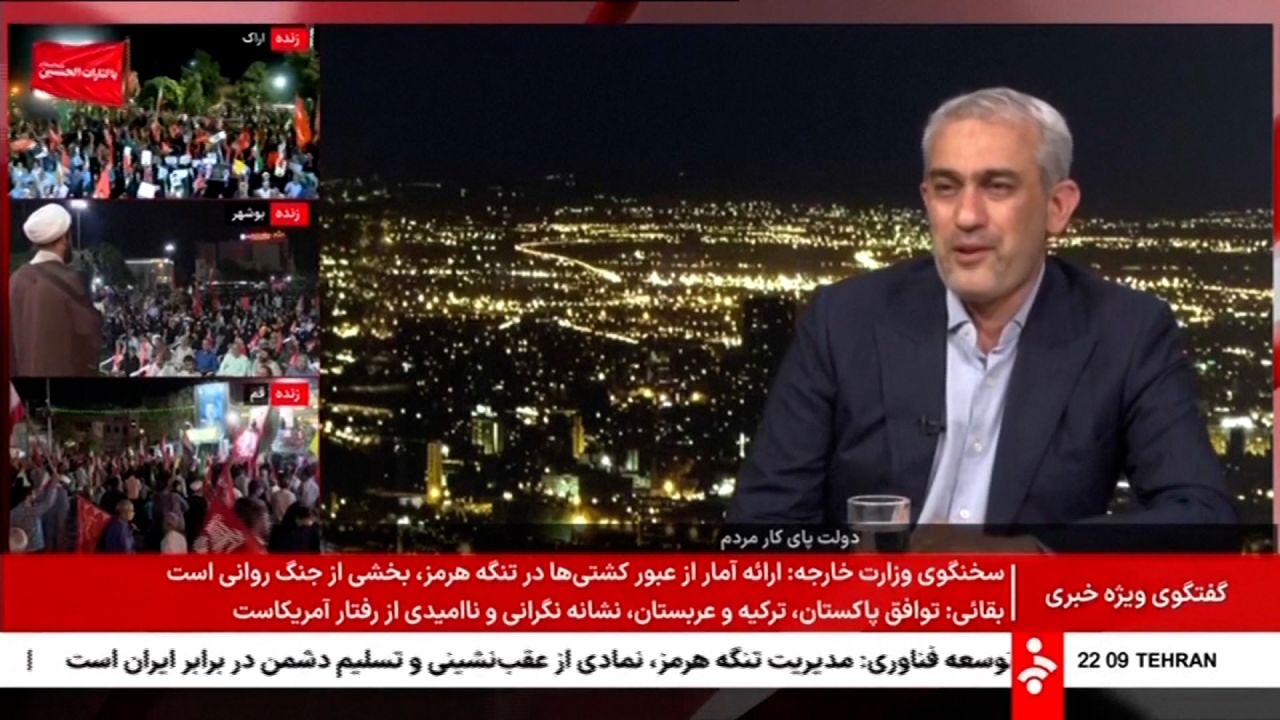
Tehran is “fully prepared” for impending sanctions, Iran’s finance minister says
0:28•’s finance minister says
0:28
Tehran is “fully prepared” to counter US sanctions targeting countries that maintain ties to Iran, Finance Minister Ali Madanizadeh told the state-run Islamic Republic of Iran News Network (IRINN) on Monday.
United States Treasury Secretary Scott Bessent announced the planned measures during a press conference on Monday as part of what he has dubbed an “economic D-Day” against the regime.
“Apparently, (the US) have now decided to try another failure. We have long been expecting these days and were well aware of the plans they had. The government has a two-year plan and is fully prepared, and has been prepared, for these developments,” Madanizadeh said.
The official accused the US of wanting to “ wage economic terrorism” against Iran.
“We know how to play this game. This time, they should not think our response will be purely defensive and that we will only defend ourselves. They should also expect us to go on the offensive,” he added.
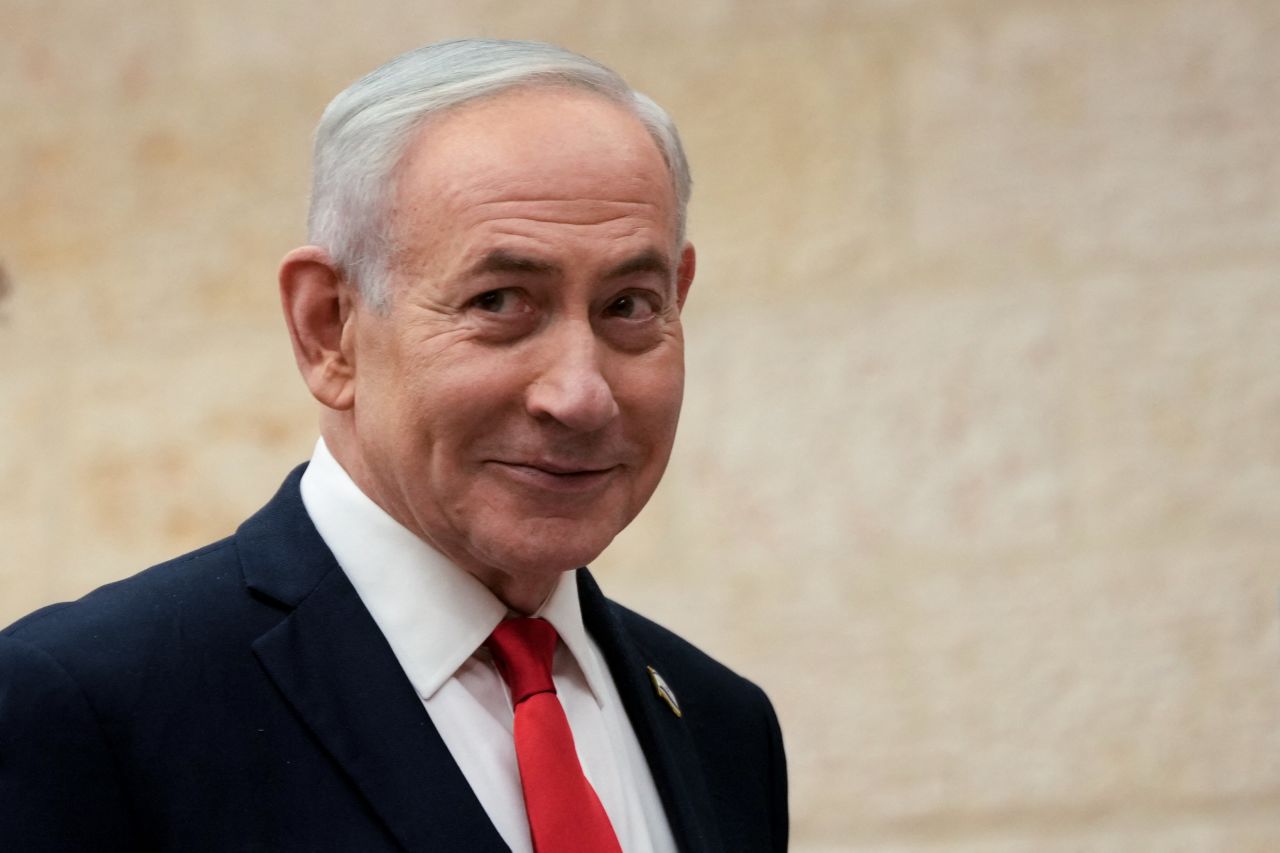
Israeli Prime Minister Benjamin Netanyahu arrives to cast his ballot in Jerusalem on August 17.
Israeli Prime Minister Benjamin Netanyahu congratulated President Donald Trump and Treasury Secretary Scott Bessent after the US threatened new sanctions targeting countries with ties to Iran.
Bessent announced plans at a news conference today to place sanctions on countries that refuse to sever economic ties with Iran, but he stopped short of imposing new major penalties.
Netanyahu prasied the move in a post on X.
“You justly exact a steep price from that cruel dictatorship and from those who assist its continued aggression,” Netanyahu said.
US Treasury Secretary Scott Bessent has warned of potential dire consequences for countries with economic ties to Iran.
“Every country has a defined timeline to shut down activities we have identified. If they do not take action, we will do so unilaterally through Treasury authorities,” Bessent said at a news conference.
Bessent declined to name the specific countries. However, China, India, Turkey, Iraq, and the United Arab Emirates could be most at risk for US action, experts told CNN.
“China, by far, is the most impactful one if you really wanted to make a dent in Iran’s ability to continue to finance their activities,” said Daniel Tannebaum, a nonresident senior fellow at the Atlantic Council.
According to the US-China Economic and Security Review Commission, China is Iran’s largest trading partner and purchaser of Iranian oil.
Iran sent $22.4 billion in exports to China and imported $15.6 billion from there in 2022, per the World Bank.
However, experts are skeptical that the administration will act strongly against China, especially ahead of Xi Jinping’s expected visit.
“The US government has never gone hard on economic sanctions on China,” said Tannebaum, who is also a partner at management consulting firm Oliver Wyman.
Turkey has been a robust key trading partner for Iran, with more than $5 billion in bilateral trade in 2024, according to its Ministry of Foreign Affairs, and it imported 13% of its natural gas from Iran last year.
Iraq and Iran have historically traded billions, with Iraq being dependent on Iranian electricity and gas.
India’s trade with Iran has fallen in recent years, standing at around $1.6 billion in 2025-2026, according to India’s Department of Commerce.
