
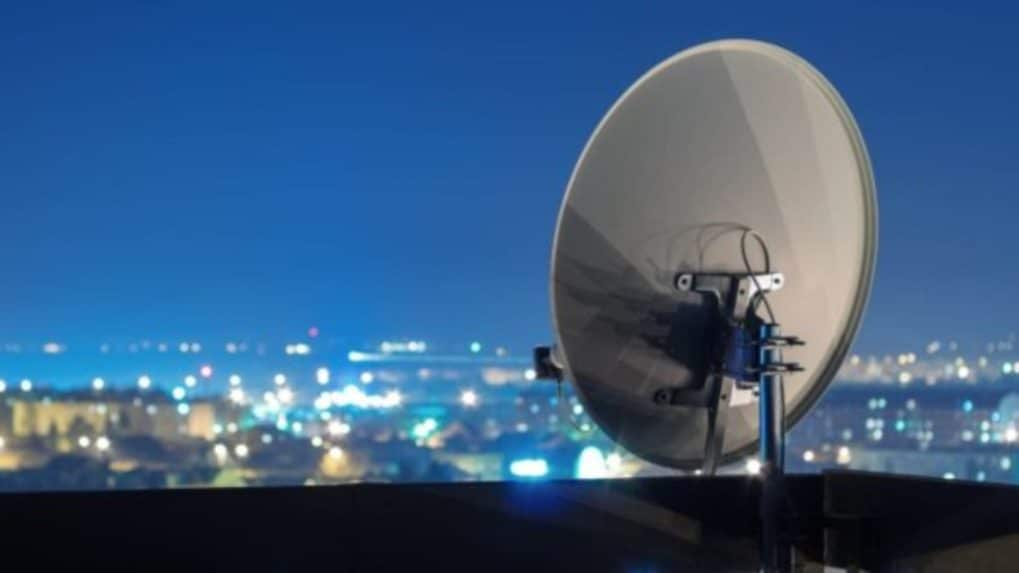
The number of licensed DTH operators remained unchanged at four in FY26, the same as in the previous financial year.
The government’s revenue from Direct-to-Home (DTH) operators declined to Rs 442.33 crore in FY26, while the number of new television channel permissions issued during the year increased by 52.6% to 29, according to the Ministry of Information and Broadcasting’s (MIB) Statistical Handbook on Media and Entertainment Sector 2025-26.
The government had earned Rs 651.91 crore from DTH operators in FY25, indicating a decline of 32.1% in FY26. However, the FY26 figure is based on collections for only three quarters, up to March 31, 2026, as clarified in the handbook. The comparison, therefore, is not on a like-for-like full-year basis.
The longer-term data shows a decline in DTH licence revenue over the past few years. Collections stood at Rs 744.26 crore in FY23, before falling to Rs 669.14 crore in FY24 and Rs 651.91 crore in FY25.
Trending Topics
Jio IPORohit PatelKuldeep SehrawatMS DhoniPM Modi
DTH licence revenue had peaked at Rs 1,132.33 crore in FY18, when India had six licensed DTH operators. The number subsequently declined to five in FY19 and four in FY20, where it has remained since.
New TV channel permissions recover, but revenue declines
Meanwhile, the number of new television channel permissions issued by the government increased to 29 in FY26 from 19 in FY25, marking a 52.6% rise. This comes after a consecutive decline in new permissions over the preceding two years, from 29 in FY23 to 23 in FY24 and 19 in FY25.
Despite the increase in permissions, revenue generated through them declined. The government earned Rs 86.81 crore from new TV channel permissions in FY26, compared with Rs 105.39 crore in FY25, registering a fall of around 17.6%.
In FY24, revenue from new channel permissions stood at Rs 75.56 crore. It subsequently increased to Rs 105.39 crore in FY25 before declining in FY26.
The number of new permissions had been considerably higher in earlier years. The government issued 63 new TV channel permissions in FY17, 44 in FY18 and 36 in FY19. The number stood at 36 in FY21, 34 in FY22 and 29 in FY23.
The figures highlight contrasting trends in the government’s broadcasting-related licence and permission collections, withDTH revenues continuing to moderate and new television channel permissions witnessing a recovery in FY26, even as the revenue generated from them declined.
The data is part of MIB’s Statistical Handbook on Media and Entertainment Sector 2025-26.
Follow Storyboard18 on Google for the latest and breaking media & entertainment news and industry updates, along with in-depth coverage of digital media and trending news. Stay informed with the latest perspectives only on Storyboard18.
Tags
First Published onNovember 2, 2026, 10:52:13 IST
SPOTLIGHT

Special CoverageGen Z is rewriting the media-to-commerce funnel, forcing brands beyond traditional cohorts
The conversation highlighted a fundamental shift underway in the relationship between audiences, platforms and brands. Rather than treating Gen Z as a uniform consumer segment, marketers are increasingly having to account for individual behaviours, fragmented content consumption and a stronger expectation
SAC 2026: Swiggy, Nestlé, HDFC, Flipkart, Puma, Lahori Zeera shine | Why Piyush Pandey remains India’s creative North Star
Storyboard18 brings you top five news updates from the world of advertising, marketing, and business of brands.