

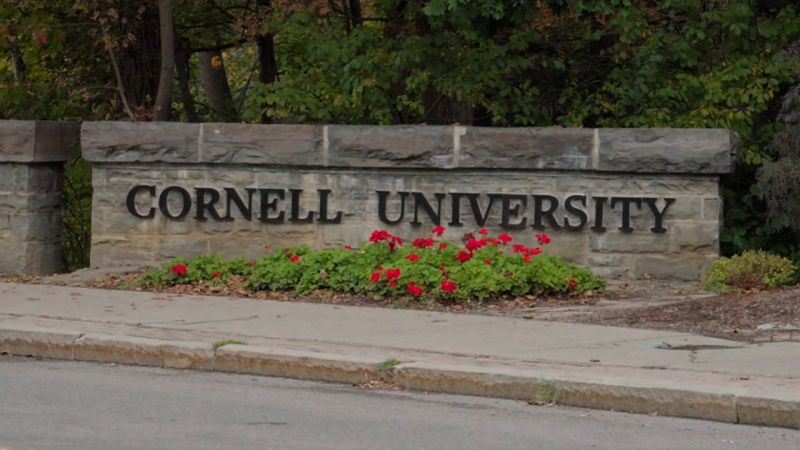
• New York Gov. Kathy Hochul said she is “deeply disturbed” with the original investigation conducted by Cornell police following gang rape allegations at the Chi Phi fraternity house in 2024, vowing to unravel the investigation’s failures. “I will not allow anyone to sweep this case under the rug,” Hochul said at a news conference.
• Attorney General Letitia James, who will be taking over as special prosecutor in the case, said there is now “an active criminal investigation.” Cornell University said it supports the governor’s decision to assign the case to the New York Attorney General’s Office.
• Hochul also said she supports closing a “loophole” in New York law that can make it nearly impossible for survivors to seek justice if they voluntarily consumed alcohol or drugs before an assault.
Editor’s Note:This coverage contains some graphic and disturbing descriptions of sexual violence. For help in the US, call the National Sexual Assault Hotline at1-800-656-4673or chat 24/7 ononline.rainn.org.
Updates
Cornell University student groups are holding a protest on campus Monday to “hold our university responsible” and “demand change,” according to an Instagram post from Students for a Democratic Cornell and several other campus organizations.
“The Cornell Administration upholds a system that allows rape culture to go unpunished,” the post reads.
The post lists several demands for the university, including the expulsion or degree revocation of “all perpetrators complicit in the gang rape of Jane Doe” and an investigation of the Cornell administration.
“We won’t be silenced anymore,” the caption says. “Our university needs to start protecting us, like they should’ve with Jane Doe and all other survivors on campus.”
Calls to the national sexual assault hotline run by the Rape, Abuse & Incest National Network (RAINN), a nonprofit anti-sexual assault organization, have increased more than 80% since the news about Jane Doe’s lawsuit in the alleged Cornell gang rape emerged.
“We’re hearing from survivors who are realizing and understanding, for the first time, that maybe their experience is considered rape or considered sexual assault,” Megan Cutter, Chief of Victim Services with RAINN told Pamela Brown on CNN’s Situation Room.
“All of this coverage is making them kind of consider their own experience,” Cutter said. “Particularly this week, people are coming forward and saying, ‘This happened. My friend did this to me. I thought he was my friend. Now I’m wondering more about … I didn’t consent the whole time, or I didn’t feel I could say no.’”
“We want to be here to support folks in whatever moment that they reach the hotline,” Cutter added. “It’s really layered and complicated and can also be very different for each individual and each situation.”
Tompkins County District Attorney Matthew Van Houten said Friday he supports the appointment of a special prosecutor to oversee the case in which a woman alleges she was sexually assaultedat a Cornell University fraternity house in 2024.
New York Gov. Kathy Hochul announced Thursday she would appoint state Attorney General Letitia James a special prosecutor in the case.
“I support the appointment of Attorney General James and I trust that she will examine the facts and apply the law,” Van Houten said in a release. “It has become clear that we were not provided the full picture by the university.”
Over the past few days, revelations have come to light showing Van Houten did not receive all investigative documents. There are also conflicting accounts of what was provided to Van Houten and when. Van Houten declined to bring criminal charges in the case in 2024 after saying Jane Doe had described her actions on the night of the incident as “consensual.”
The appointment of James means Van Houten will no longer have authority over the case.
“The focus has been and should continue to be on the victims. My office with cooperate fully with the attorney general,” Van Houten said.
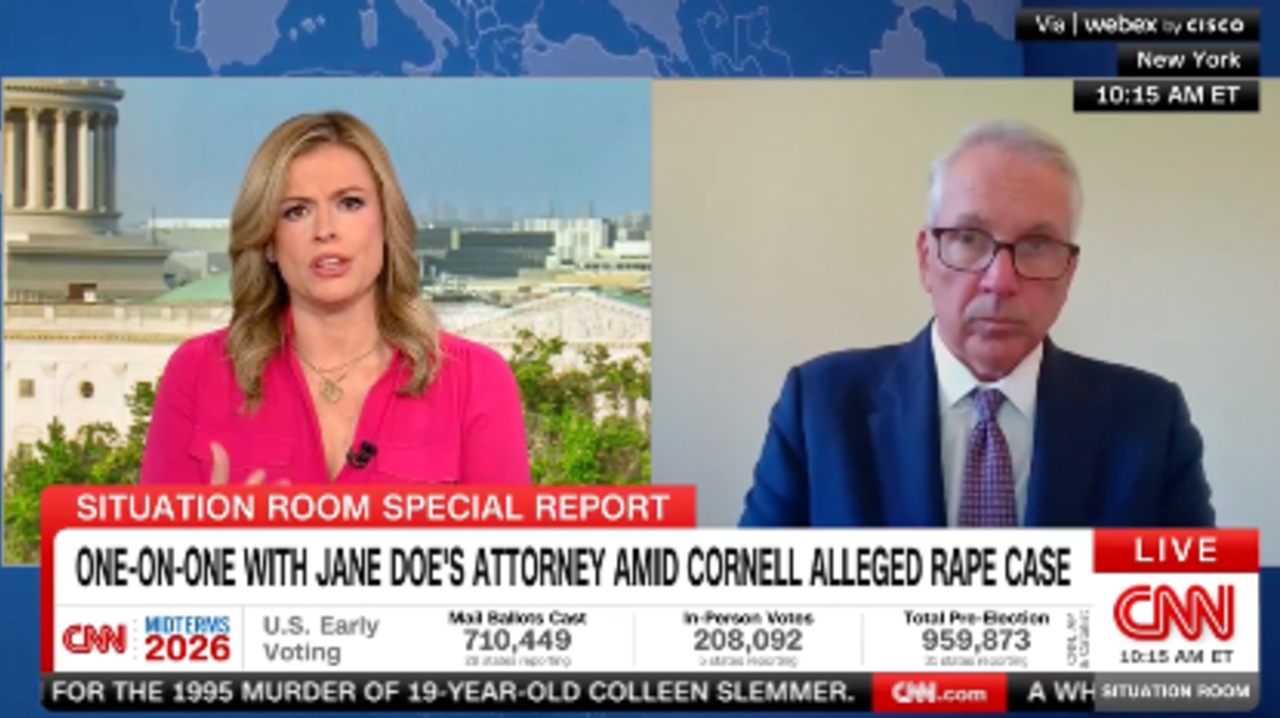
“I don’t think it was ever consensual,” Jane Doe’s attorney says
1:51•ney says
1:51
Jane Doe’s attorney says he believes she did not consent to any of the sexual encounters that are the focus of her allegations that she was drugged and gang raped at a Cornell University fraternity house in 2024.
“I don’t think it was ever consensual,” Giuffra told CNN said when asked about encounters to which Doe testifiedin documents.
“She showed up at the Chi Phi house, heavily intoxicated. There was testimony not just from the people involved in the assault, but there was a lot of testimony from people who were around that time, saw her that day. And by all accounts, she was completely, completely intoxicated. She couldn’t consent to anything,” Giuffra said.
“So I don’t think she ever consented and was incapable of consenting because of the level of intoxication, and the fact that she was plied with drugs. She couldn’t consent to anything,” he said.
Key context:In a 2024 statement to Cornell police, obtained by CNN from a source familiar with the investigation, Doe said she was asked to participate in a threesome while at Chi Phi on October 19. She told police she was “pretty ok” with aspects of an initial encounter, but that later in the night she did not consent to other sexual activities, according to the statement. She said she “was unable to make any decisions because of how intoxicated I was”; described being “horrified” as more men entered the room; and said she “finally gave in” to one later encounter after she was asked “to have sex so many times,” describing it as “coercion,” according to the statement.
But a separate document — a transcript of a November 2024 interview with campus police, according to WCBS — shows Doe made a more explicit accusation. “I can say with 100% confidence I was raped,” Doe said in the transcript This transcript was not initially given to prosecutors, according to the local district attorney and the governor
Giuffra on Friday also referred to a Cornell document that summarizes key evidence included in a university disciplinary panel’s decision. In a hearing months after the alleged assault, she told Cornell investigators she “felt like bait” and “felt like lions around me” at the house, according to a heavily redacted version of the 99-page document obtained by CNN.
“I mean, that’s being trapped. That’s physically helpless,” Giuffra told CNN.
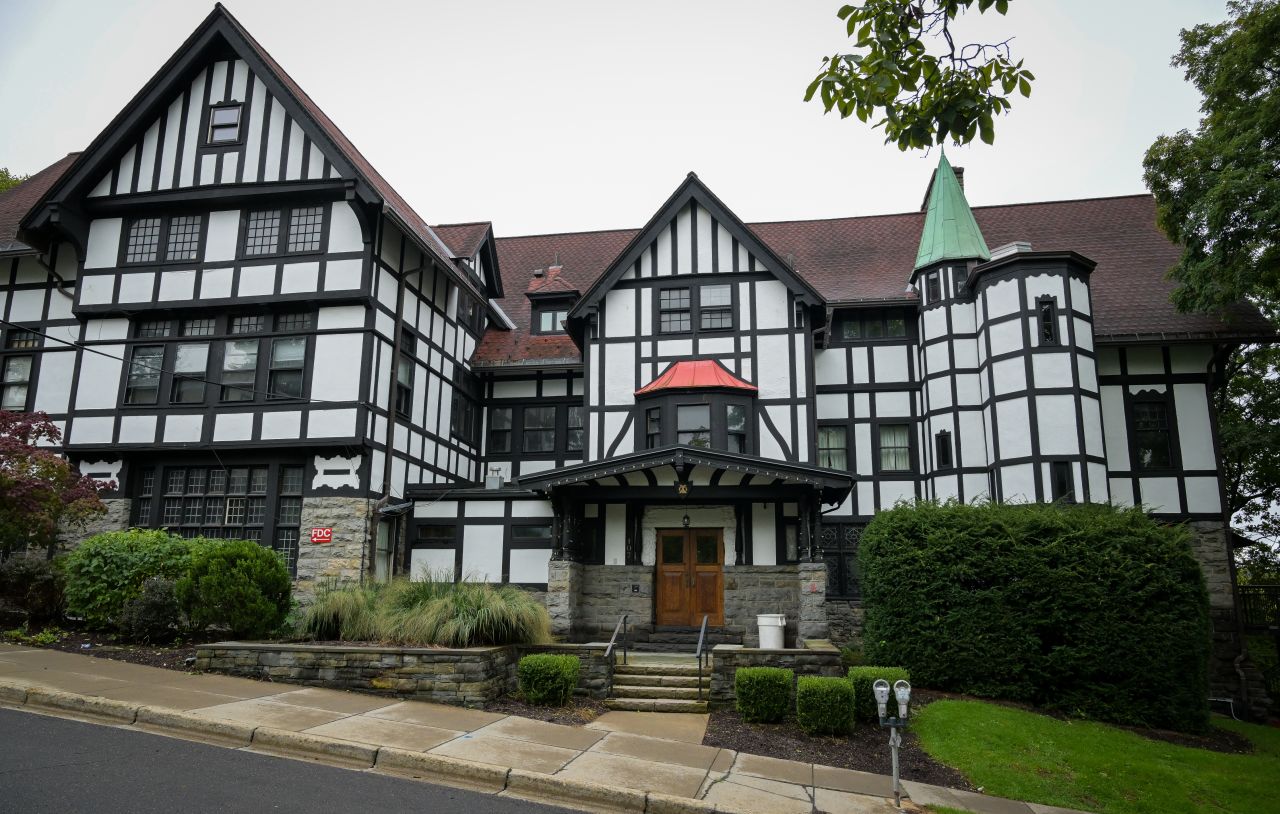
The Chi Phi fraternity house at Cornell University in Ithaca, New York on Monday.
In the early morning hours of October 19, 2024, Cornell police arrested an individual at the Chi Phi fraternity for a drug-related offense, police records show. Jane Doe’s alleged assault, which involved numerous substances including ketamine, took place later that night.
According to a daily crime log reviewed by CNN, the drug arrest was referred to Cornell’s Office of Student Conduct.
Ketamine was used by multiple people at the Chi Phi house, including an unnamed individual who overdosed on the drug on Oct. 18, one day prior to that arrest, Title IX investigators wrote in their 99-page summary decision, which CNN obtained this week.
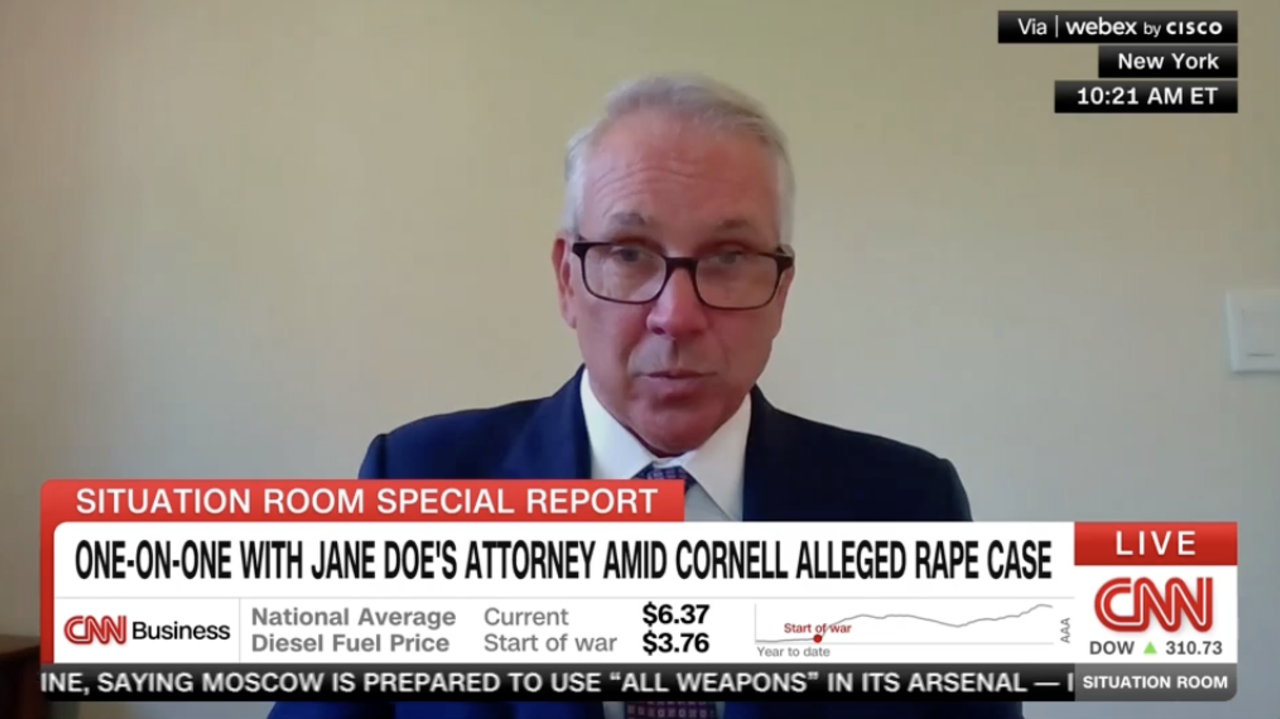
Jane Doe was initially “in denial” about what had happened to her, according to attorney
0:46•ed to her, according to attorney
0:46
Jane Doe was initially “in denial” about what had happened to her, before starting to feel ashamed and finally realizing she had been raped, her attorney Thomas Giuffra told CNN.
“Anybody who’s an abuse survivor is in denial. Nobody wants to be labeled with the idea of they were a victim of a sexual assault. It’s just not the way the human mind works,” Giuffra told Pamela Brown on CNN’s Situation Room.
After going to Cornell Health two days after the alleged assault and telling a healthcare provider she had gotten a UTI “from a traumatic event,” then being told to talk to somebody, “she came into the realization that look — I was raped,” the attorney said.
“I know I was raped, and I have to own it, accept it,” Giuffra explained his client’s realization, adding she then cooperated with police.
For context:“Trauma impacts memory storing and memory recollection, Sandi Johnson, senior legislative policy counsel with anti-sexual assault organization RAINN, told CNN. “So it’s not like if you have something traumatic happen to you that it’s seared into your brain,and you remember every single detail,”she explained.
“Trauma actually impedes the ability of the brain to even record some of what is happening, which leads to memory gaps. It leads to survivors not remembering certain aspects of what happened, because the brain was incapable of even recording what was happening,” Johnson explained.
The Cornell University chapter of the American Association of University Professors is speaking out against Cornell University’s handling of the case in which a student alleges she was sexually assaultedat a fraternity house in 2024.
“We are deeply disturbed by Cornell University administration’s response and communications to the community, initially in 2024 and now,” the group wrote in a statement. “Cornell administrators point community members to ress the harm, the outrage, and to change the culture of misogyny. In moments of crisis such as this, we need leaders, not administrators.”
The Cornell chapter of the AAUP represents faculty, adjuncts, librarians, post-doctoral candidates and academic staff at Cornell University. The AAUP is a non-profit membership association and union that focuses on advancing academic freedom and shared governance in higher education.
In its statement the group said the administration’s response to the alleged sexual assault reveal the school’s “failures to understand and respond appropriately to actual harm and threats of safety on campus.”
“When it comes to sexual violence, Cornell’s communications have been oblique or silent, leaving the community frustrated, fearful, or angry about the administration’s lack of transparency about how it will take effective responses,” the statement reads.
“She wants justice,” Joe Doe’s attorney says
0:22•
Jane Doe’s attorney said his client is looking for accountability both through the civil lawsuit and any potential criminal lawsuits.
Doe’s attorney, Thomas Giuffra told CNN his client remains committed to working with Attorney General Letitia James’ investigation and is encouraged by her appointment.
“She wants justice, and she’s happy that somebody who shares that desire is now involved in the prosecution,” Giuffra said.
Jane Doe’s attorney, Thomas Giuffra, told CNN he is appreciative that New York Attorney General Letitia James has gotten involved in the investigation into the alleged gang rape of his client, because he believes “there was a lot of protection of the university and its reputation.”
“One of the things that struck me is, there’s not much in Tompkins County, other than Cornell,” Giuffra told CNN’s Pamela Brown on The Situation Room.
“I would have expected the full report, everything that happened, to go to the DA, and that either happened or it didn’t happen. I don’t know the answer to that. But it’s very odd to me what went on. Very odd,” Giuffra added.
CNN has reached out to Cornell University for comment.
“I had a real issue with this district attorney,” Jane Doe’s attorney says
1:18•oe’s attorney says
1:18
Cornell University issued a statement Friday expressing support for a change in New York law that would update the sexual assault statutes and make it easier to prosecute cases if a victim was voluntarily intoxicated.
Sex crime survivor advocates and experts often refer to a legal “loophole” in New York’s — and other states’ — sexual assault laws, which can make it nearly impossible for survivors to seek justice if they voluntarily consumed alcohol or drugs before an assault.
“If someone is too intoxicated to consent, it should not matter whether they chose to use drugs or alcohol,” New York Gov. Kathy Hochul said at a news conference today.“Voluntary intoxication is not a license for sexual assault or gang rape, period.”
Lawmakers in New York have for years tried to make changes to the law, but the bill has failed to move through the State Assembly for a full vote.
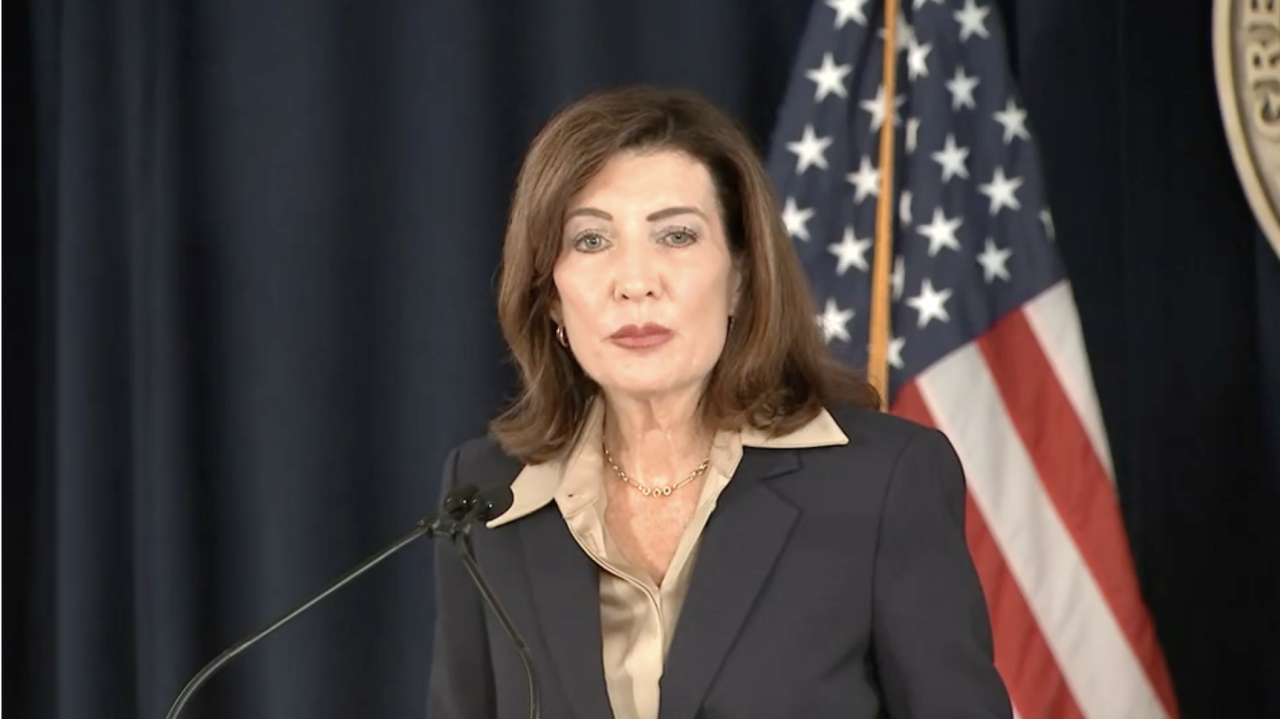
“I want the truth,” New York Governor Kathy Hochul said about the Cornell case at a Friday press conference.
0:34•about the Cornell case at a Friday press conference.
0:34
“We don’t know enough, but what is coming out beyond what everyone was told initially, or … two years ago, it is very contradictory and conflicting,” New York Gov. Kathy Hochul said during Friday morning’s news conference about gang rape allegations at a Cornell University fraternity house in 2024.
“I want the truth. I think every parent in this state, every New Yorker, wants the truth in this case, and that is why Attorney General James will be the one who puts a spotlight on this case,” Hochul said.
The governor said state Attorney General Leticia James, who will be taking over as special prosecutor in the case, will be the one to ask questions such as, “Who knew what when?; “What did they do wrong?”; “Why didn’t they come forward?”; and “How was this woman denied justice?”
Hochul said she has “every confidence” in James “to get it right.”
“I had a real issue with this district attorney,” Jane Doe’s attorney says
1:23•oe’s attorney says
1:23
The attorney for Jane Doe in the alleged Cornell University gang rape case says Tompkins County District Attorney, Matthew Van Houten, tried to throw his client “under the bus.”
“He goes out and files his press release, basically throwing my client under the bus,” attorney, Thomas Giuffra, told CNN’s Pamela Brown on The Situation Room, adding that Van Houten implied Jane Doe’s sexual encounters had been consensual. “So I had a real issue with this district attorney.”
Giuffra said the district attorney reached out shortly after the civil lawsuit was filed, wanting Doe to testify before a grand jury in October.
“I paused when I heard that because look: I’m an experienced trial lawyer. I’ve tried well over 150 cases in my life. I couldn’t prepare a case in a month and do a good job in presenting it,” Giuffra explained. “So that raised the question in my mind.”
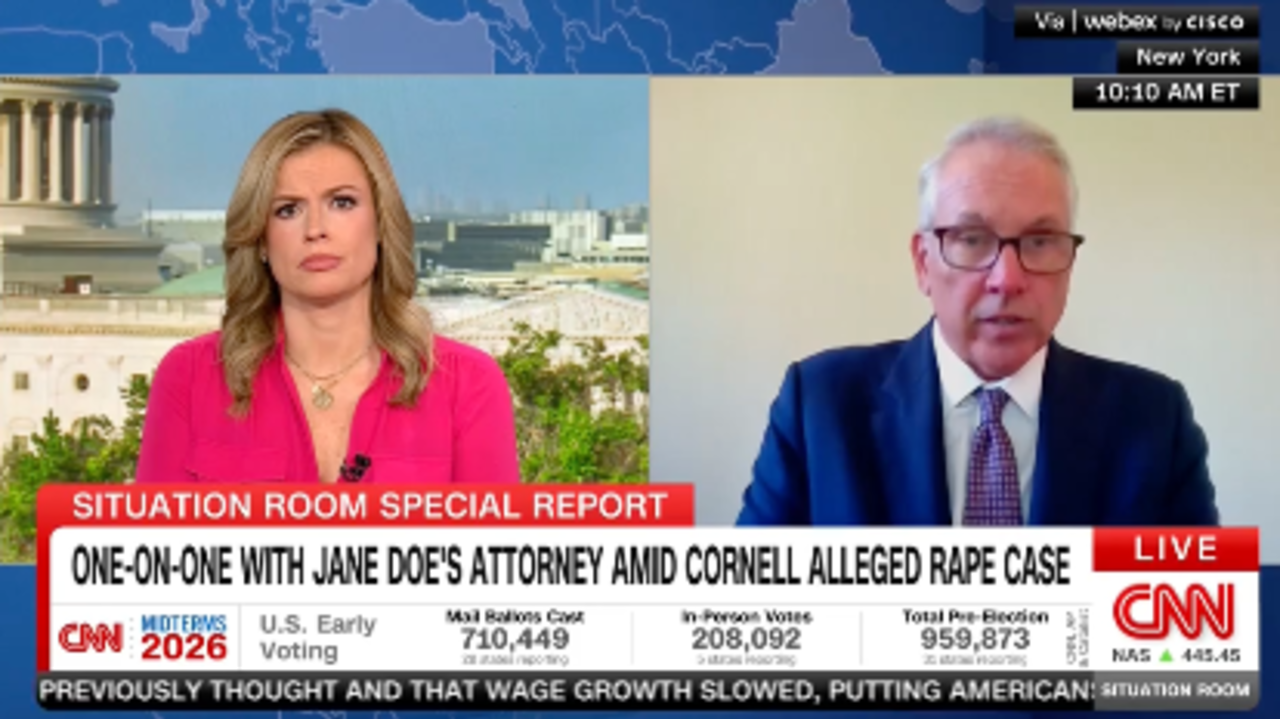
“She’s not doing well,” Jane Doe’s attorney tells CNN
1:17•17
The attorney for Jane Doe in the alleged Cornell University gang rape case says his client is “not doing well.”
“She’s under siege on social media, where people are trying to identify her; some false court postings, attempting to identify her,” attorney Thomas Giuffra told Pamela Brown on CNN’s “Situation Room.”
Jane Doe has also received “overwhelming support of people all over the world,” the attorney said. Messages of support, which he has shared with his client, “really helped to know that she’s not alone because throughout this process, she felt like she was alone,” he said.
Cornell University has changed its answer explaining what information the school shared with the local district attorney’s office about Jane Doe’s allegations.
Cornell is named as a defendant in Doe’s civil lawsuit, which claims the school failed to adequately respond to Doe’s report of an alleged gang rape at a fraternity house in October 2024.
On Tuesday, Cornell launched an FAQ page to answer frequently asked questions from the media and public. The questions include:
Did Cornell Police adequately investigate the incident? Why didn’t they bring in the Ithaca Police?
Cornell initially said campus police “investigated the matter in 2024 and shared all investigatory information with the Tompkins County District Attorney’s Office,” according to a Wednesday morning screengrab of the page kept by CNN.
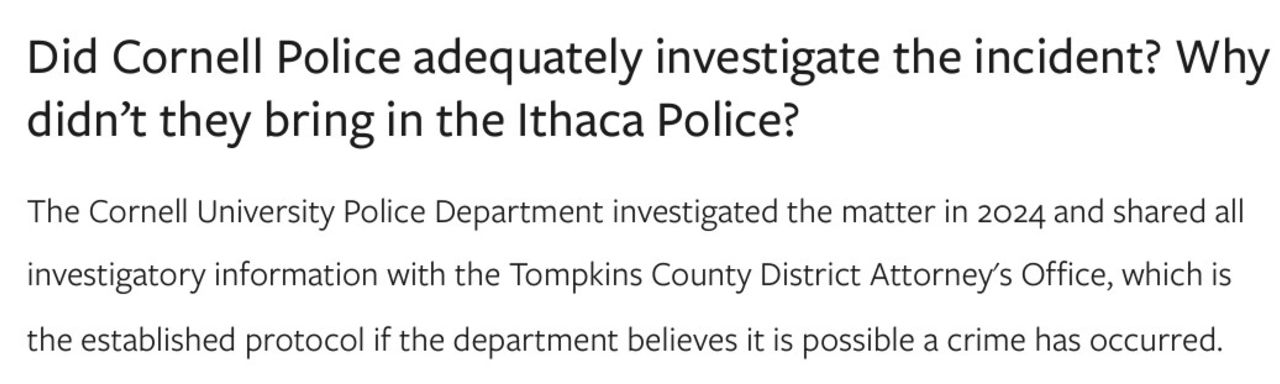
Cornell’s answer as it appeared Wednesday morning.
But by Friday, a different answer appeared under the same questions. It said Cornell police “investigated the matter in 2024 and shared the victim’s sworn statement and the Snapchat screenshot with the Tompkins County District Attorney’s Office.”
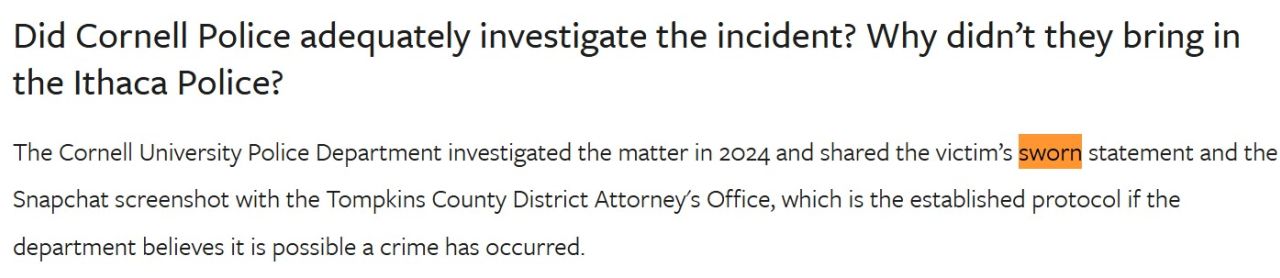
Cornell’s amended answer as it appeared Friday.
The change came after CNN’s repeated requests for clarification about what materials were handed over to the district attorney’s office.
The nuance is important because Cornell and the district attorney’s office are under scrutiny over what information the school shared with prosecutors and whether Doe’s complete accusations were reflected.
Earlier this week, the district attorney said an initial, signed statement from Doe that Cornell police provided to his office described events that did not constitute a crime. But Doe made a more explicit accusation of rape in an interview with Cornell police, which was documented in a transcript, according toCNN affiliate WCBS. The district attorney told CNN on Wednesday that his office never received that transcript.
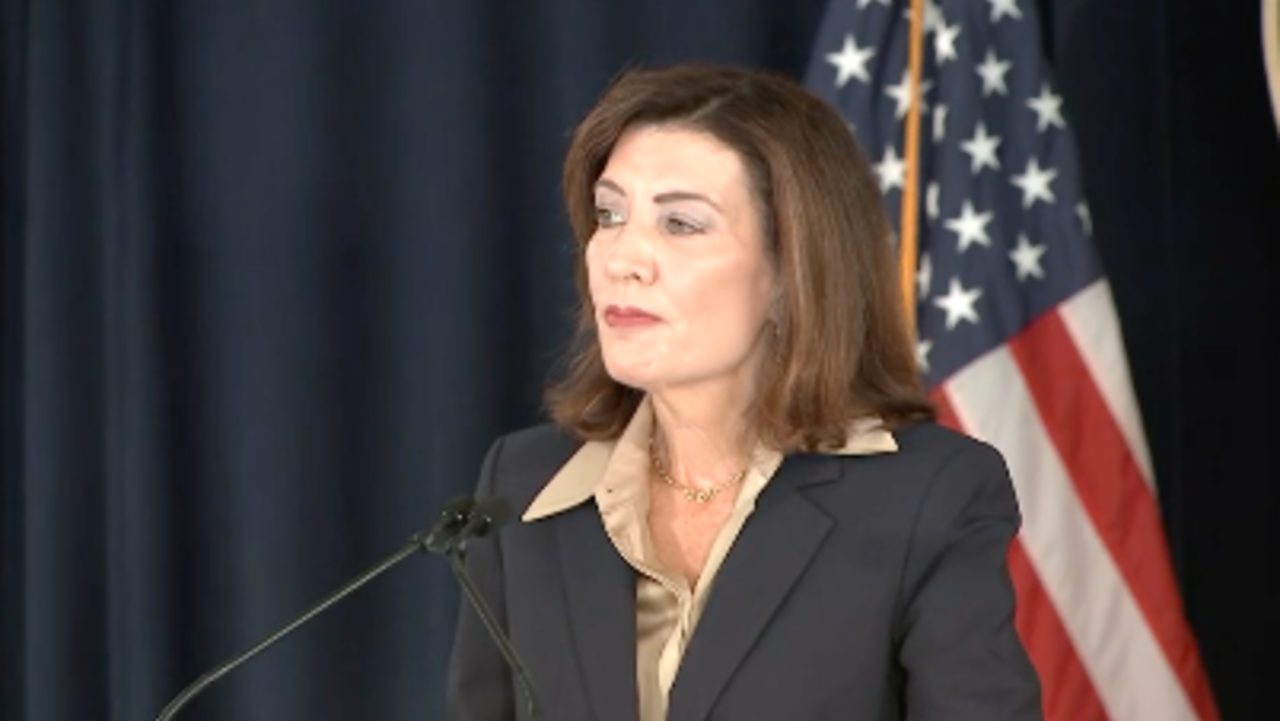
NY governor wants to close “loophole” in state sex assault law
0:31•lt law
0:31
New York Gov. Kathy Hochul said it’s time to change the state’s sexual assault law, which excludes victims who willfully became intoxicated.
“If someone is too intoxicated to consent, it should not matter whether they chose to use drugs or alcohol,” Hochul said Friday morning. “Voluntary intoxication is not a license for sexual assault or gang rape. Period.”
As CNN previously reported, activists and some lawmakers have pushed for this change for years, to no avail.
But Hochul vowed to help ensure the law changes as soon as possible.
“I support closing this loophole and will work with the New York State Legislature to accomplish this,” she said.
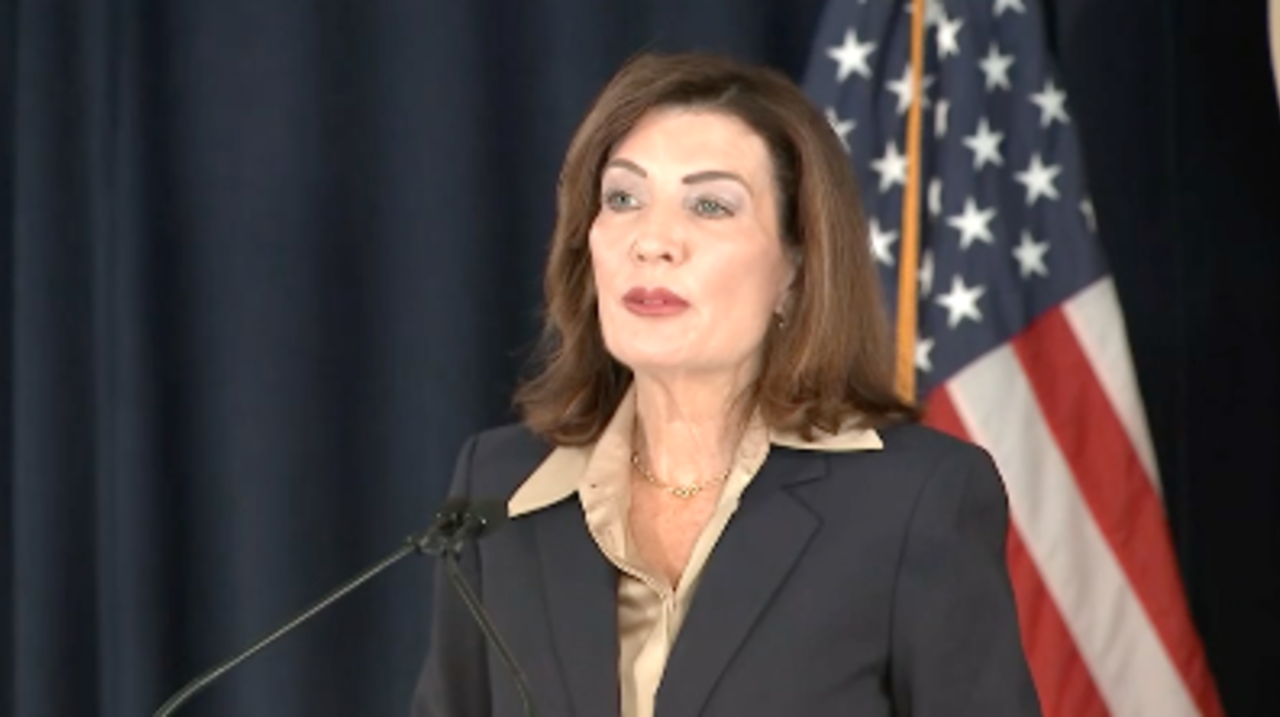
Hochul says officials can’t “look the other way” as AG takes over Cornell investigation
1:25• over Cornell investigation
1:25•
New York Gov. Kathy Hochul said Jane Doe was repeatedly failed by the same institutions that were meant to protect her and argued that newly surfaced reporting has raised questions about information the Tompkins County DA relied on when deciding not to pursue any charges.
“This young woman had already endured something that is utterly unspeakable, and that at every turn she was failed by people and institutions with an obligation to protect her,” Hochul said during Friday morning’s news conference.
Hochul appointed state Attorney General Letitia James as special prosecutor, saying she will conduct a fresh investigation and pursue criminal charges should the facts warrant one.
“No institution gets to protect its its reputation at the expense of a young person seeking justice,” Hochul said. No public official gets to “look the other way when the system breaks down and fails our young people,” she said.
In a statement to CNN Thursday evening, Cornell said the university “supports Governor Hochul’s decision to assign this case to the New York Attorney General’s Office.”
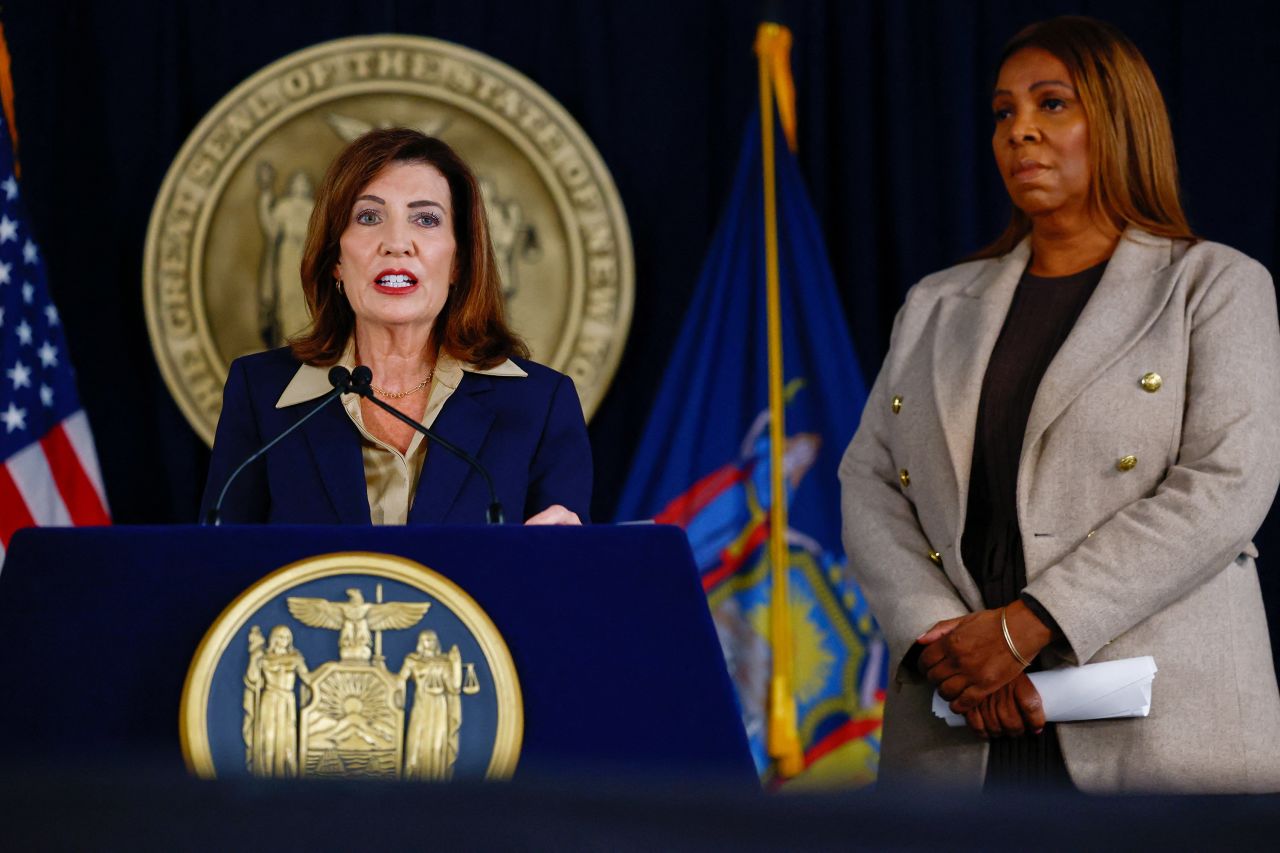
New York Gov. Kathy Hochul speaks during a press conference in New York on Friday.
New York Gov. Kathy Hochul declined to say whether Cornell’s president or the Tompkins County district attorney should step down at this time saying she conveyed her “deep concern” over the handling of the case to the university’s president.
Hochul said Cornell’s president was receptive to her request for outside counsel to carry out a “fully independent investigation,” of which she is waiting for the results of.
Attorney General Letitia James said she hadn’t talked with the district attorney but said she won’t be focusing on his actions.
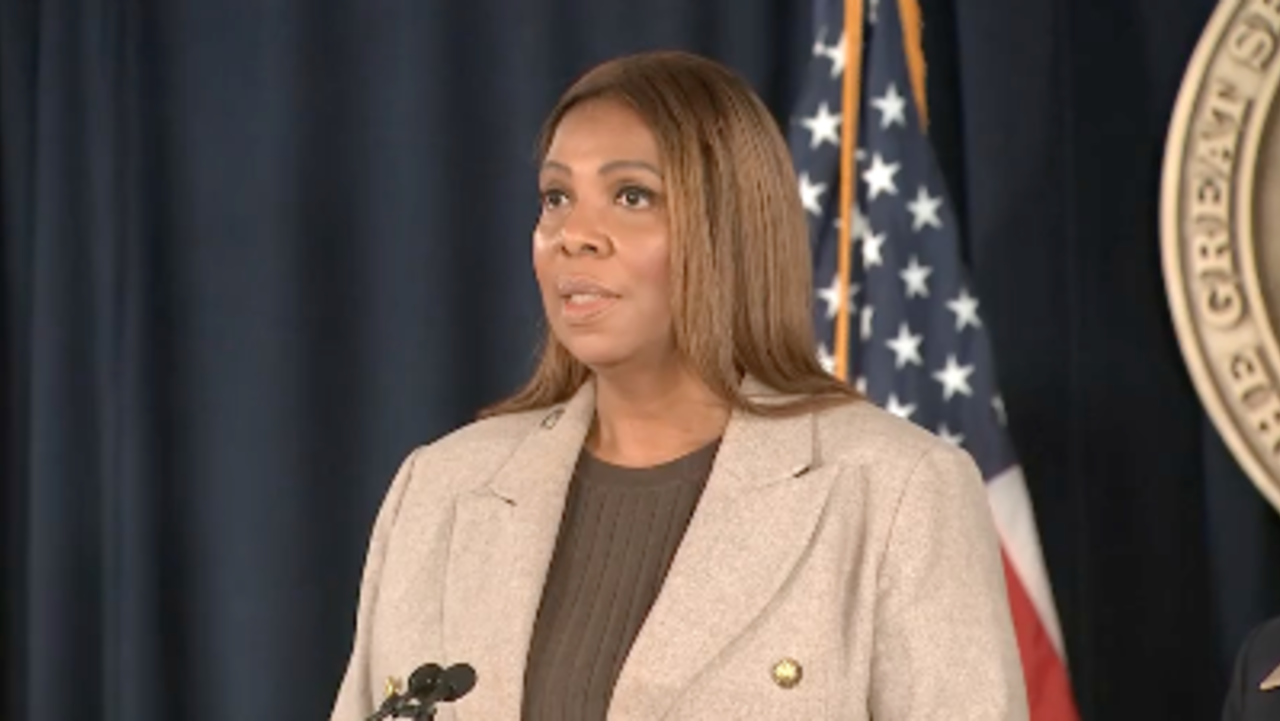
Alleged Cornell gang rape “now an active criminal investigation,” AG James says
0:51•igation,” AG James says
0:51
There is now “an active criminal investigation” into the gang rape allegations at the Chi Phi fraternity house in 2024
“I know that you want answers. I do, too. A comprehensive investigation of this nature takes time, but my office is committed to seeing it through,” she said Friday morning.
“Though we are limited in what we can share, we will provide updates as they become available.”
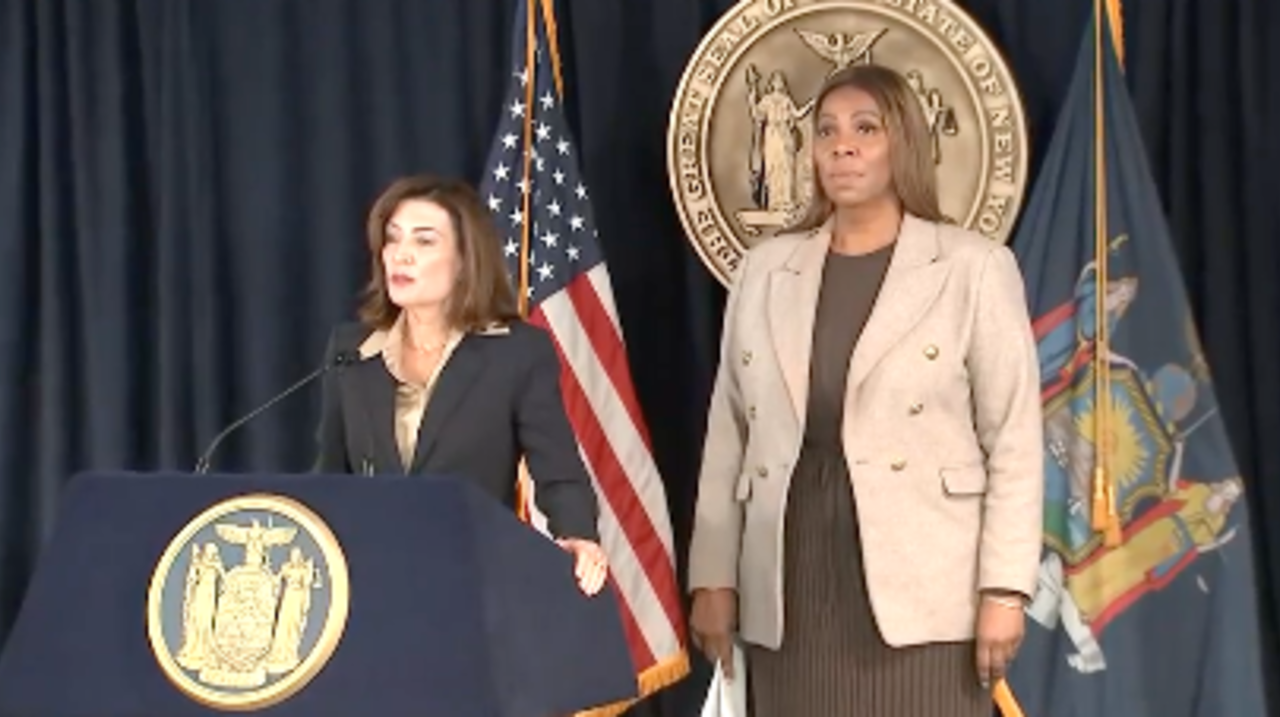
Rape not mentioned in account sent to prosecutors by Cornell police, governor says
1:33•nell police, governor says
1:33
New York Governor Kathy Hochul said according to new reports Jane Doe “could not have been clearer that she was 100% confident that she had been raped,” but “those words” were not included in the account that Cornell campus police shared with the prosecutors.
“In what world would the police learn from a victim that she’d been literally gang-raped while intoxicated by five men in a fraternity house, and not elevate those allegations to the district attorney?” she questioned.
“In what world does the district attorney not even interview her, or anyone else involved, or even request a full transcript?”

NYT: New revelations about alleged Cornell gang rape investigation
4:17•estigation
4:17
A heavily redacted, 99-page document obtained by CNN, which summarizes key evidence included in a Cornell University disciplinary panel’s decision, echoes some of the reporting in the New York Times on the men’s accounts, including that at least one said he could not tell the victim was under the influence.
That panel decision says more than 50 interviews were conducted as part of the university investigation, including all of the men accused of participating except one who declined to be interviewed.
While CNN has been unable to view the entire document due to redactions, the document describes alleged heavy use of drugs and alcohol that night in the fraternity house and details interactions between the men and Jane Doe, some of which occurred after a message saying “free p*ssy” was posted on a Snapchat group text.
One of the men said he and another went to the room after seeing that message to see if everything was ok, telling investigators “I was kind of befuddled” after reading the text. He said he conversed with Jane Doe and asked one of the men and Jane Doe if they were “all right,” to which both responded affirmatively.
One of the men accused, whose name was redacted, told the panel, according to the document: “I was sorry that maybe if it wasn’t consensual and she was victimized, I was sorry for not stopping it. And that I’m sorry I couldn’t tell if she was under the influence […] just sorry that I felt like if something actually bad happened, I didn’t stop it.”
According to the document, at least one of the men was found to have violated the school’s policy against sexual exploitation and sexual assault, and at least one respondent was found responsible for attempted sexual exploitation, but was not found responsible for sexual assault.
For the man found responsible only for attempted sexual exploitation, the Cornell panel imposed several sanctions, including a “no contact order” with Jane Doe and an order to submit to the Title IX office a “reflection paper” on the circumstances he was found responsible.
