

<a href="https://axiomcore.info/georgia-tech-announces-new-online-masters-degree-in-artificial-intelligence/” title=”Georgia Tech Announces New Online Master’s Degree in Artificial Intelligence”>Artificial intelligence is developing at a breakneck pace, and some former employees of the world’s leading AI companies are warning that the technology is not being developed with enough attention to safety. (Photo: KUTV)
SALT LAKE CITY (KUTV) —Artificial intelligence is developing at a breakneck pace, and some former employees of the world’s leading AI companies are warning that the technology is not being developed with enough attention to safety.
Some have called for stronger regulations, warning that if increasingly powerful AI systems are not properly controlled, they could pose a threat to humanity.
So who is working to make sure AI is used safely and benefits society?
At the University of Utah, researchers are studying how humans and AI can work together.
MORE | AI In Utah
- Gov. Cox mandates AI training, integration for state agencies in executive order
- AI’s rapid advancement raises questions about safety, human control
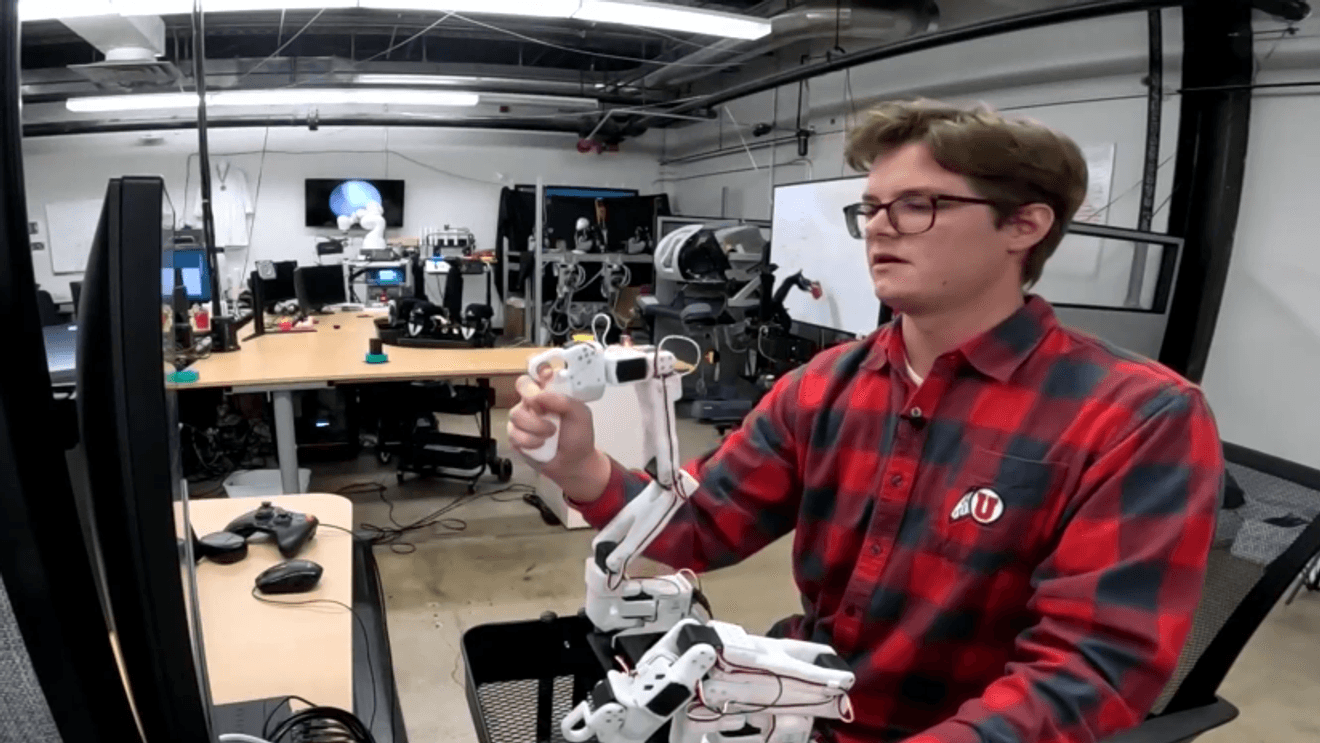
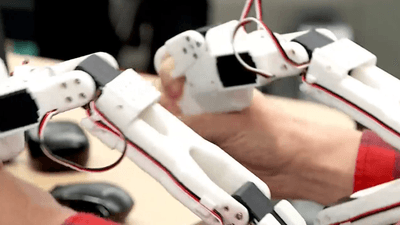
In the university’s robotics lab, students are working with relatively inexpensive robots that can learn to perform tasks and interact with people.
Connor Mattson, a Ph.D. student, is using AI to teach robots common tasks that could help people in their daily lives, such as cooking. He said the goal is not for robots to replace humans.
Mattson said he can’t speak for the companies that produce AI models and systems. But in academia, he feels confident researchers are working in the best interests of humans.
“The opportunity that we have as researchers and scientists right now is to help push the direction of research and the direction of science toward a system where humans and AI are working together, rather than taking over one another,” he said.
In the same lab, Ph.D. student Zohre Karimi is teaching a bigger, more expensive robot — one that looks like a giant arm — to cut a cancerous tumor from a patient’s throat.
She said a robot could potentially allow one surgeon to help more patients.
Karimi said she is not worried that robots will replace human surgeons.
“I’m not afraid because the way that we do the research, we always consider a way to have the human in control,” Karimi said.
The research comes as private companies race to develop increasingly powerful AI systems, raising concerns about job losses, safety and whether humans will be able to maintain control over the technology.
Daniel Brown, an assistant professor at the U’s School of Computing and a member of its Robotics Center, said researchers at the U are also working with other major universities to tackle challenges surrounding AI and robotics.
The U is one of six universities involved in the Center for Human and Robot Co-Adaption, studying how people and assistive robots can work together in homes, hospitals, assisted-living facilities and museums.
Brown said AI should do more than make people more productive.
“I think it’s important that we keep our souls, that we keep our humanity and that we figure out how to use these systems,” he said.
Mike Kirby, a computer science professor at the U, is part of the university’s Responsible AI Initiative, a group that works to ensure AI research on campus improves people’s lives.
He teaches a course on ethics and data and is currently working with a colleague to study AI and political science.
Kirby said the questions and concerns about what AI can and can’t do are forcing people to confront an even bigger question: What does it mean to be human?
As a scientist, Kirby said his job is to push the boundaries of AI. While he agrees there are many concerns about its use, he does not approach AI from a position of fear.
“I would say I’m an optimist, but a guarded optimist around AI,” he added.
Kirby said researchers, businesses, government and families need to work together to determine how the technology should be used and what guardrails are needed.
He sees AI as a societal issue that can bring people together around the goal of using the technology wisely.
“There is still a huge opportunity to steer it,” he said.
5
NEWAs AI races forward, Utah researchers work to keep humans in control4
NEWCrumbl closures offer glimpse into pressure on fast-casual, discretionary spending4
Pastrnak scores 2 goals, adds 2 assists in the Bruins’ 6-1 rout of the Mammoth4
Magna woman pushes for safer street after two parked cars get hit
