
Close Menu
Axiom Core

    Subscribe to Updates

    Get the latest creative news from FooBar about art, design and business.

    What's Hot

    Mayer Brown Adds Leading Media and Entertainment Litigation Team | News

    November 24, 2026

    Jensen Huang reinstated as Nvidia CEO after Trump pushes board

    November 24, 2026

    3 Wisconsin data centers account for 70 percent of growth in peak electricity demand

    November 24, 2026
    Facebook X (Twitter) Instagram
    Tuesday, November 24
    Axiom Core
    Facebook X (Twitter) Instagram
    • Home
    • AI
    • Data Centers
    • Current News
    • Cryptocurrency
    • Entertainment & Media
    Axiom Core
    Home»Data Centers»Google’s first data center satellite is online and writing poetry
    Data Centers

    Google’s first data center satellite is online and writing poetry

    adminBy adminOctober 30, 20261 Comment3 Mins Read
    Facebook Twitter Pinterest LinkedIn Tumblr Email
    Google's first data center satellite is online and writing poetry
    Share
    Facebook Twitter LinkedIn Pinterest Email

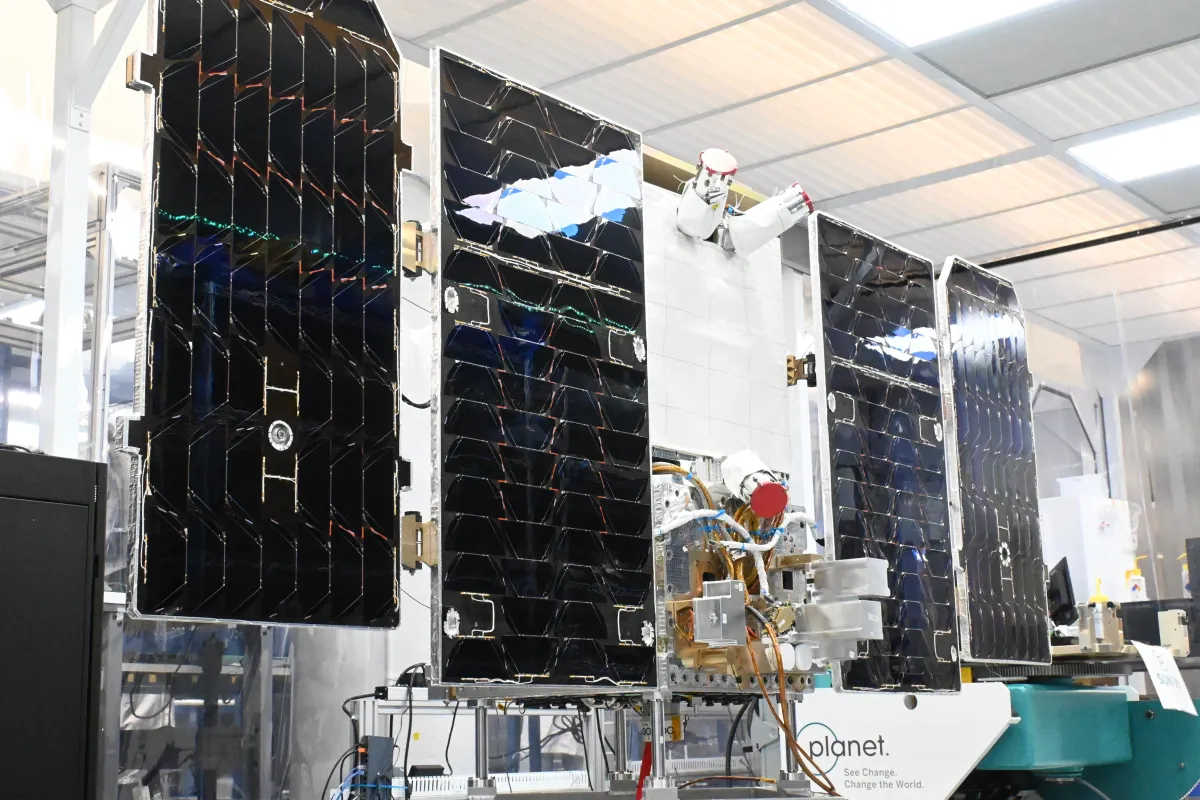
    Google Suncatcher’sprototype space data center is online and communicating with the ground after launching earlier this month alongside more than 100 other spacecraft on a SpaceX Falcon 9 rocket.

    The satellite, which carries four Google Tensor Processing Units (TPUs) and generates up to 1 kW of electricity, is intended to pave the way for future networks of close-flying satellites performing large inference workloads in orbit. However, the power demands of the TPU mean it can only turn one on for about twenty minutes at a time, complicating the already tricky business of space-to-ground communications.

    After a commissioning process that tested out the satellite’s subsystems over about three weeks, the spacecraft was ready to work. When engineers on the ground sent their first prompt this week, they asked the model pre-loaded onto the satellite, Google DeepMind’s Gemma 4, to write a haiku about being in space. And thus:

    Blue marble below
    Data streams in silent grace
    Starlight feeds my core. ✨

    Google said it tested the model with these space-themed limericks (they should have sent a poet?) and, perhaps more importantly, the company asked the spacecraft to report on the orbital conditions around the satellite.

    A spokesperson told TechCrunch that the satellite was operating nominally.

    The ongoing test campaign will examine how the chips perform under thermal stress and in the space radiation environment. Google has extensively tested its TPUs in particle accelerators on Earth, but now needs to see how radiation’s real effects on their hardware in space affect their processor. Radiation can cause “bit flips”—causing a stored value in computer memory—and that in turn can corrupt data without triggering typical monitoring tools.

    Testing on the ground suggested the impact of radiation would be minimal for inference workloads and more of a problem for training a model, but now the Google team will get to assess those dynamics in reality, not a simulation.

    If the TPU onboard this spacecraft proves capable, the next step will be launching two more satellites equipped with the advanced chips in 2027. Those spacecraft will support higher power generation and demonstrate inter-satellite optical links.

    Google’s Starcloud project is largely alone among visions for space-based data centers in planning on high-speed links between the satellites to support coherent distributed workloads; SpaceX’s data centers are also expected to use laser links but also to orbit too far apart to share processing effectively. Companies like Starcloud and Cowboy Space expect to perform inference loads on individual satellites.

    Google and SpaceX’s visions are closely linked. Alphabet, Google’s parent company, holds a significant investment stake in SpaceX. And to launch their orbital data centers, both companies will require Starship, the still-in-development heavy-lift rocket at the center of Elon Musk’s space vision, to be fully and rapidly reusable.

    In a peer-reviewed analysis published earlier this month, Suncatcher researchers estimated that SpaceX would need to fly Starship 1,800 times to achieve the same learning-driven cost reductions it saw with its earlier vehicles.

    Suncatcher is a classic Google moonshot—the company’s focus is on designing infrastructure that will be economical in the 2030s. Getting there, however, may depend on how the rest of the company responds to the pressures and opportunities of AI in the near term. Alphabet, Google’s parent company, saw its stock plunge this week after reporting that efforts to insert AI into its search businesses are hurting ad revenue growth.

    center Data first Googles satellite
    Share. Facebook Twitter Pinterest LinkedIn Tumblr Email
    admin
    • Website

    Related Posts

    3 Wisconsin data centers account for 70 percent of growth in peak electricity demand

    November 24, 2026

    Off-grid costs will push data centers back to utilities: Mitsubishi Heavy Industries CEO

    November 23, 2026

    Former Canadiens First

    November 23, 2026

    1 Comment

    1. Pingback: Super Intelligence - NASA - Axiom Core

    Leave A Reply Cancel Reply

    Our Picks

    Mayer Brown Adds Leading Media and Entertainment Litigation Team | News

    November 24, 2026

    Jensen Huang reinstated as Nvidia CEO after Trump pushes board

    November 24, 2026

    3 Wisconsin data centers account for 70 percent of growth in peak electricity demand

    November 24, 2026

    Inside the Black Market for America’s Artificial Intelligence

    November 24, 2026
    Stay In Touch
    • Facebook
    • Twitter
    • Pinterest
    • Instagram
    • YouTube
    • Vimeo
    Don't Miss
    Current News

    Ukraine sinks Russian warship off Libya in latest expansion of the war

    By adminNovember 23, 20261

    Ukrainian naval drones sink Russian warship off the coast of Libya 00:29 Get more newson Nov. 23, 2026, 5:40 AM EST / Updated Nov. 23, 2026, 8:08 AM EST

    Inside Trump’s cryptocurrency gala for $TRUMP meme coin’s largest buyers

    November 23, 2026

    Off-grid costs will push data centers back to utilities: Mitsubishi Heavy Industries CEO

    November 23, 2026

    Woman arrested after using AI identity theft to try to purchase $70K truck in Port Angeles

    November 23, 2026

    Subscribe to Updates

    Get the latest creative news from SmartMag about art & design.

    About Us

    Welcome to Axiom Core, your destination for the latest news, insights, and developments across technology, artificial intelligence, data centers, cryptocurrency, and entertainment media.
    At Axiom Core, we cover the industries and technologies shaping the digital world. From emerging AI innovations and data-center infrastructure to cryptocurrency, current technology news, streaming platforms, and the evolving entertainment industry, our goal is to keep readers informed about the stories that matter.

    Our Picks

    Mayer Brown Adds Leading Media and Entertainment Litigation Team | News

    November 24, 2026

    Jensen Huang reinstated as Nvidia CEO after Trump pushes board

    November 24, 2026

    3 Wisconsin data centers account for 70 percent of growth in peak electricity demand

    November 24, 2026
    latest posts

    Group protests outside SF cryptocurrency billionaire’s home over Flock cameras, surveillance use

    August 25, 2026

    Latest Iran updates: US threatens sanctions on countries that don’t cut economic ties to Tehran

    August 25, 2026

    Agentic Data Operations Platform (ADOP): Data engineering into hours

    August 25, 2026
    Facebook X (Twitter) Instagram Pinterest
    • About Us
    • Contact Us
    • Terms & Conditions
    • Privacy Policy
    • Disclaimer

    © 2026 axiomcore.info. All rights reserved.

    Type above and press Enter to search. Press Esc to cancel.