

generated political ads fuel debate over deception and free speech ahead of midterms
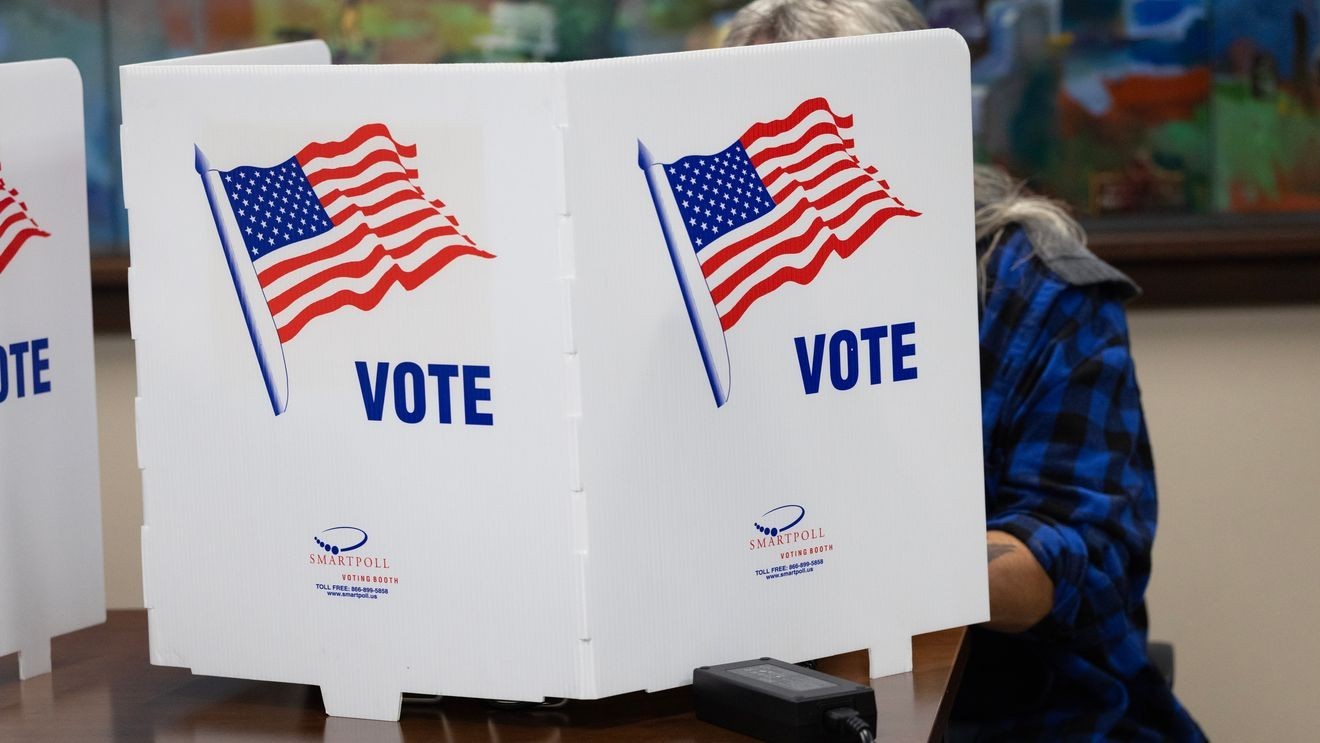
BELOIT, WISCONSIN – OCTOBER 20: A resident votes during In-Person Absentee Voting (early voting) on October 20, 2026 in Beloit, Wisconsin. Today is the first day of early voting in the state. (Photo by Scott Olson/
Artificial intelligence is changing the way political campaigns reach voters, with computer-generated advertisements, digital impersonations and increasingly realistic videos raising questions about election integrity, free speech and the future of political advertising just one week before the midterm elections.
The technology is making it easier and cheaper for campaigns to produce sophisticated political messages, but it is also creating new concerns about whether voters can distinguish between legitimate satire and deliberately misleading content.
As more states move to regulate AI-generated political advertisements, some campaign experts warn that overly broad restrictions could limit political expression and make it harder for smaller campaigns to compete with well-funded candidates.
Eric Wilson, a faculty member at the Leadership Institute and executive director of the Center for Campaign Innovation, joined The National News Desk to discuss the growing use of artificial intelligence in political advertising and how the technology could reshape future elections.
“These AI ads that we’re seeing are modern political cartoons, and voters are smart enough to know the difference,” Wilson said.
He argued that many of the AI-generated advertisements appearing during the current election cycle are intended as obvious satire rather than attempts to deceive voters.
“We’re seeing them be used this cycle to create parody, satire, humor,” Wilson said. “And it’s very clear to these voters.”
Political campaigns have long used exaggerated images, humor and fictional scenarios to criticize opponents or highlight policy disagreements.
AI tools now allow campaigns to create realistic-looking videos and images that previously would have required expensive production teams, specialized software or extensive editing.
Wilson said the technology is a natural extension of traditional political cartoons and campaign satire.
However, the ability to generate convincing images, voices and videos also creates opportunities for deception, particularly when content is presented without context or distributed through social media.
A synthetic video could make a candidate appear to say something they never said or participate in an event that never occurred.
Wilson acknowledged that concerns exist but argued that voters should be trusted to evaluate political content for themselves.
“Unfortunately, there are some who don’t want voters to make the decision for themselves and are trying to put rules in place,” Wilson said.
“I think [that] is a mistake and really harms the full potential of what AI can do for our campaigns.”
The discussion then turned to how artificial intelligence could change the economics of political advertising.
For decades, producing professional campaign advertisements has required significant financial reations an advantage in reaching voters
Wilson said AI tools are reducing those barriers by allowing campaigns to create videos and other digital materials at a fraction of the traditional cost.
“Absolutely,” Wilson said when asked whether AI could help smaller campaigns compete.
“We’re seeing campaigns be able to create more creative messages, which those of us who are having to sit through all these ads right now would really enjoy more creative ads,” he added.
According to Wilson, producing a professional video advertisement previously could cost tens of thousands of dollars.
“Previously, [it] would cost $10,000, $15,000, $30,000 to create a video ad to go online or on TV,” Wilson said.
He explained that AI technology can now help campaigns accomplish similar production tasks in minutes, provided they have the necessary expertise.
“[It’s] able to be done in just a few minutes with a little bit of expertise,” Wilson said.
The lower costs could allow more candidates to produce campaign content, experiment with different messages and communicate directly with voters.
Wilson argued that this could make political campaigns more competitive by reducing the importance of fundraising.
“Making sure that more people can get their message out,” Wilson said.
“That way campaigns can be fought on ideas, not who can raise the most money.”
The growing use of AI has also raised questions about how political advertisements should be labeled.
Some states require campaigns to disclose when advertisements contain artificially generated or substantially altered images, video or audio.
Supporters of disclosure requirements argue that labels can help voters identify synthetic content and avoid mistaking fabricated statements or events for authentic recordings.
But Wilson said labeling systems can have unintended consequences, particularly when viewers interpret an AI disclosure as evidence that an advertisement is deceptive.
He pointed to research conducted by his organization examining how voters respond to AI labels.
“Over 31 states now have regulations about AI ads,” Wilson said.
“We’ve actually run this study where we put an AI label on a real ad with a real human being, and the AI label made voters believe the real ad less.”
Wilson said the findings suggest that labels can affect how viewers judge the credibility of political messages, even when the underlying footage is authentic.
“It wasn’t helping them understand what was going on,” Wilson said.
The study’s full methodology, sample size and results were not provided during the interview, limiting what can be concluded about how broadly the findings apply.
Wilson argued that policymakers should consider those effects before adopting additional regulations.
“We’ve got to be very careful about the types of regulations that we put into place and really understanding this technology before we put too many laws on it,” Wilson said.
The issue highlights a difficult balance for election officials and lawmakers.
Disclosure requirements may help voters recognize synthetic media, but poorly designed labels could also create confusion or unfairly undermine legitimate political communications.
Research into how voters interpret AI disclosures is continuing as the technology becomes more widespread.
The debate over AI-generated political advertising is becoming increasingly urgent as the November elections approach.
According to the National Conference of State Legislatures, 31 states have enacted laws regulating the use of deepfakes in political messaging. Most require disclosures identifying artificially generated or manipulated content, while some restrict deceptive media during specified periods before elections.
Many of those laws include exemptions for satire and parody, reflecting concerns about protecting political expression under the First Amendment.
Wilson argued that existing laws already address many forms of deliberate deception and fraud, making additional restrictions on legitimate campaign advertising unnecessary in some circumstances.
“The things that we’re already worried about are already illegal,” Wilson said.
However, not every misleading political advertisement is unlawful, and existing laws do not necessarily address every form of AI-generated election deception.
Wilson said his greater concern involves foreign adversaries using artificial intelligence to interfere with American elections.
“Bad actors like Russia, like China, like Iran, don’t play by any rules,” Wilson said.
He argued that technology companies and online platforms should play a greater role in detecting and addressing malicious content, particularly when it originates outside the United States.
“We’ve got to have stronger protections in place at the platform level, not on legitimate campaigns,” Wilson said.
Foreign influence operations have long been a concern for federal election security officials, and generative AI has introduced new ways for malicious actors to create convincing images, impersonate public figures and distribute misleading information at scale.
Experts have also warned that synthetic audio and video could be used to spread false information about voting procedures, fabricate candidate statements or undermine confidence in legitimate election results.
The challenge for lawmakers and technology companies is distinguishing protected political commentary from content intended to mislead voters about real events or election procedures.
Wilson maintained that campaigns should be able to use AI creatively without facing restrictions that could discourage legitimate political expression.
He also argued that the technology could provide significant benefits for candidates who lack the financial re
“Campaigns can be fought on ideas, not who can raise the most money,” Wilson said.
As voters prepare to cast their ballots, the growing use of artificial intelligence is forcing campaigns, technology companies and election officials to confront questions about transparency, trust and the future of political advertising.
For Wilson, the goal should be protecting voters from genuine deception while preserving the ability of campaigns to communicate creatively and compete on a more level financial playing field.
6
Snow, slippery driving conditions return to mountain passes3
Edmonds school board approves attendance boundary changes4
Capitol Hill’s ‘Single Shot’ owner sentenced, admits spending tax pay on personal expenses4
Family of man who died while restrained by police in Federal Way hospital files lawsuit
