
A situation report in an hour instead of a day: in Africa’s fight against Ebola, AI shows how it can bolster healthcare, in Germany too. But experts warn of opaque systems and unresolved risks.
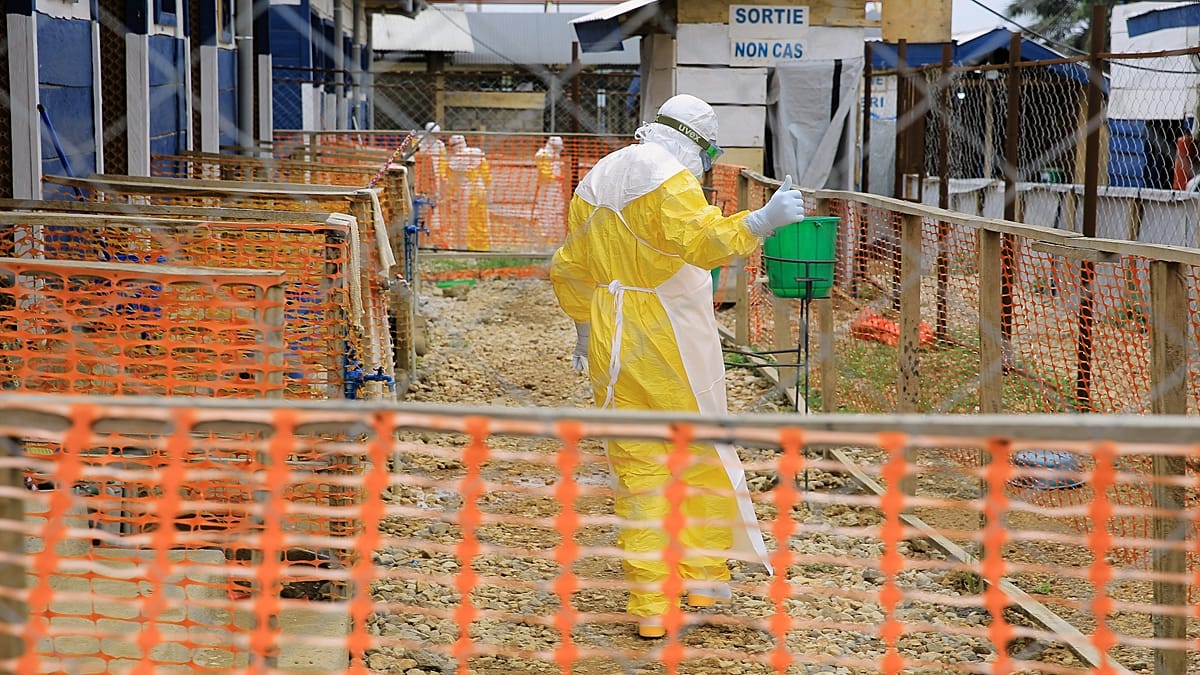
Since May, teams on the ground in the Democratic Republic of Congo (DRC) have been fighting the Bundibugyo strain of the Ebola virus. Every day, so-called health workers knock on doors and offer advice. They record recoveries and deaths and refer people with suspicious symptoms to medical facilities.
The knowledge of these health workers, whose notebooks reflect the condition of entire communities, has been digitised, according to a report by the AI company Anthropic.
Who has fallen ill? Who did the person have contact with, and where were they staying before they knew they were infected? To evaluate the answers and reports, Anthropic’s Claude model was used. Among those involved in the study were CEPI, the WHO Regional Office for Africa and the national biomedical research institute INRB.
AI helps to assess the spread of epidemics more quickly
“A situation report is now produced within an hour instead of taking an entire working day,” explains Dr Marie Roseline Darnycka Belizaire, Director for Emergency Preparedness and Response at the World Health Organization (WHO) Regional Office for Africa. Artificial intelligence can help to assess the spread of epidemics more quickly and to target medical assistance more precisely, the WHO deputy director said on stage at the World Health Summits.
While analysing the data, potential outbreak hotspots were identified and preparations made, such as getting stocks of medical supplies to key hubs or high-risk areas.
That can be decisive in an emergency. The earlier health authorities respond to a potential outbreak, the better they can prepare and organise care. AI is intended to help process information from differente
This positive example of how artificial intelligence can be used in healthcare illustrates a level at which AI can be deployed with relatively little risk. Experts, however, see far more possibilities for the future use of artificial intelligence.
The technology could improve diagnoses, relieve medical staff of administrative tasks and help to deploy scarce rel questions: how reliable are the results? Can medical professionals understand how an AI arrives at a decision? And do patients really benefit?
AI as a support for overstretched healthcare staff
Demand for healthcare is growing worldwide. At the same time, many places lack staff, time and equipment. For Dr Thomas Zapata, Director of the WHO Academy in Lyon, this is a key starting point for the use of artificial intelligence.
“We have to think about a paradox we are currently facing. We have more health professionals worldwide than ever before, and we have unprecedented technologies at our disposal,” Zapata said in a panel discussion at the World Health Summit. Yet, he added, there is still an enormous shortage of healthcare workers. “Demand for health services keeps on rising.”
He sees AI as a way to narrow that gap. It is crucial, however, not to see it as an end in itself, but as a tool to be integrated into existing health systems.
“AI is an enabler, a means to an end. At the moment we are very fascinated by technology and AI, but I think we need to place it in the right context within the health system,” warns Zapata. In his view, artificial intelligence fits in two areas. On the one hand, AI could change the way care is organised; on the other, training and continuing education for health workers must adapt to the new possibilities.
Ultimately, AI can of course help to reduce workloads, streamline administrative tasks, improve clinical decision-making and enhance diagnostic processes. For him, it is particularly important that the technology frees up time for what cannot and should not easily be automated: caring for patients.
Above all, the Ebola crisis in the Democratic Republic of Congo has shown that trust in local health systems is lacking.
That gives doctors more time for their patients
Automated processes can make a particular difference where healthcare staff work under intense time pressure. Dr Cecilia Mbaca, Senior Technical Adviser for Health and Emergencies at the aid organisation CARE, knows these challenges from more than 15 years on the front line.
For her, three questions are crucial: can AI support clinical decision-making? Can it take over repetitive tasks? And does it help to tailor care more closely to the individual needs of patients?
“If AI does this work very well, that leaves more time for the personal aspects of care, so that we can ask questions, listen, examine patients and refer them on to the next level of care,” explains Dr Cecilliah Mbaka, Senior Technical Adviser for Health and Emergencies at the aid organisation CARE as well.
She herself spent more than 15 years working on the front line, with little support, limited re
In epidemics in particular, it is not just about medical data. Trust within the population also plays an important role. People must be able to trust that they will be protected and properly cared for in a health facility. In affected communities, this trust can be decisive in whether people seek medical help in time.
It is estimated that around 50 percent of deaths in villages in the DRC occur outside medical facilities, according to epidemiologist Maximilian Gertler. The local health system is under pressure and was not prepared for the Ebola outbreak. Thousands of protective suits are needed every day to shield nursing staff from contamination. Germany recently increased its aid by 21 million euros.
AI can therefore support the organisation of care. On its own, however, it cannot ensure that people trust medical facilities. As AI experts themselves criticise, the path leading to a diagnosis is still often opaque.
The transparency problem: how does AI arrive at its diagnosis?
Modern AI systems can analyse large volumes of data and detect patterns that humans might miss. Yet in many cases it remains unclear exactly how they reach their results.
Dr Thomas Thesen, Professor of Medical Education and Informatics at the Geisel School of Medicine at Dartmouth University in the United States, describes the problem like this: “They are extremely good at recognising patterns, but they are really bad at explaining to us what those patterns actually are.” Chatbots and large language models such as Claude or ChatGPT have what he calls an explanation problem. In this respect, artificial intelligence remains a black box.
This so-called black-box problem is particularly relevant in the healthcare sector. When a system provides a diagnosis or treatment recommendation, medical professionals need to be able to judge whether it makes sense in the specific case. A result on its own is not always enough; the path leading to it also has to be traceable.
“That is the problem of explainability. They cannot explain in human-understandable language how they arrive at these conditions.”
This black-box issue concerns not only transparency but also responsibility: who is liable if an AI provides a wrong recommendation? That is why, for Dr Mbaka, it is crucial that AI does not simply spit out results, but genuinely supports decision-making.
Expert: AI must not replace learning in training
Artificial intelligence can also help in training medical professionals, for instance by making information more accessible or assisting with repetitive tasks. But when it comes to learning itself, Thesen, the professor of medical education and informatics, also sees risks.
He points to a study that compared searching for informationudents who used the chatbot ended up with more superficial knowledge that was less firmly anchored
“These so-called desirable difficulties are actually very important for the learning process. And if you outbe highly efficient – you do not actually learn anything.”
Anyone who needs to retain knowledge in the long term should not, in his view, let an AI take over every mental step. Especially in medicine, it can be crucial to make the right decisions even when technological support is not available.
Thesen therefore also recommends using AI primarily where it reduces workload. Where the aim is to understand knowledge and retain it in the long term, independent learning must continue to have its place.
1fe533859c532c9c00628a535df9c831
