
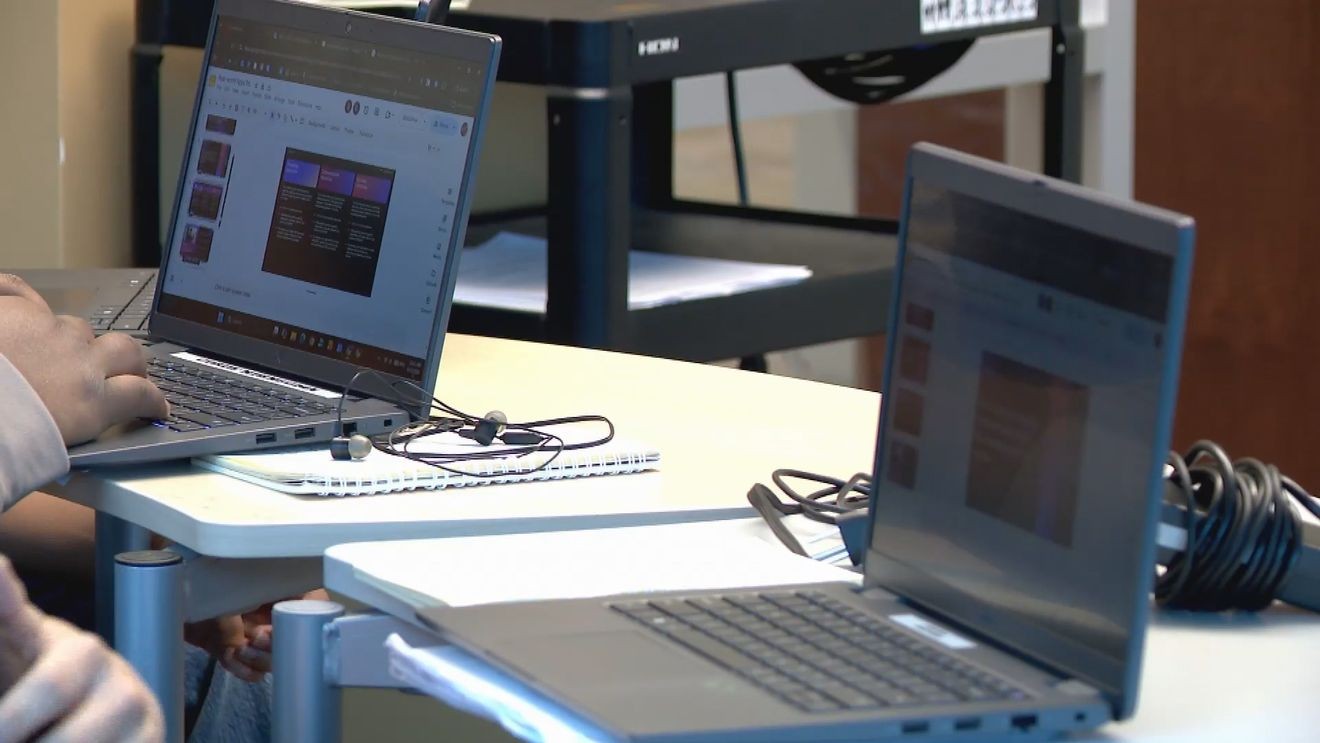
Operation Education: Local school district embracing Artificial Intelligence

Career Academy Network of Public Schools is embracing Artificial Intelligence by staff and teachers (WSBT 22)
SOUTH BEND, Ind. (WSBT) —A local school district is embracing Artificial Intelligence and encouraging students and teachers to use it.
Career Academy Network of Public Schools says AI is being used in the classroom and behind the scenes.
It is both a tool for teachers and an important topic of learning for students.
Artificial Intelligence is already in our homes, our workplaces, and yes, in our schools.
“What we’re not going to do is stick our heads in the sand and pretend that students aren’t using the tools, and that we can’t leverage the technology to help get better outcomes,” says Jeremy Lugbill, the CEO of Career Academy Network of Public Schools, “we’re still figuring out what the right balance of utilizing the tools is.”
Career Academy Network of Public Schools is a public charter school system based in South Bend.
It serves students from kindergarten through 12th grade.
Lugbill says, in every grade level, CANOPS is now using AI in the classroom, behind the scenes, and in its curriculum to improve student outcomes, reduce teacher workload and improve communication with families.
“We try to really push when there are new opportunities to provide better, get better outcomes for students,” says Lugbill.
“Because AI is not going away and we wanted to make sure that not only are our staff empowered to use it appropriately, but also that our students understand the appropriate uses and non uses for it,” says David Ebersol, the Director of Career and Technical Education for the Career Academy Network of Public Schools.
Last year, the charter school network formed an AI task force, led by Ebersol and made up of staff from each of its 5 school buildings.
The group’s purpose was creating ethical and responsible use guidance, policies and guardrails for teachers and students while also helping drive the use of AI throughout the network.
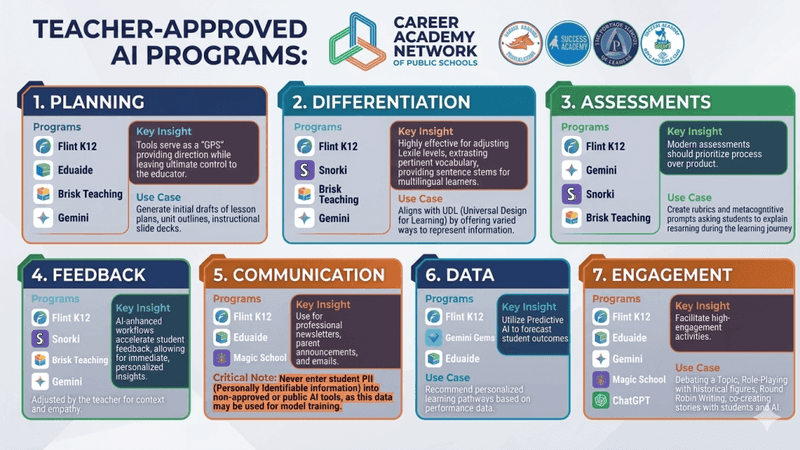
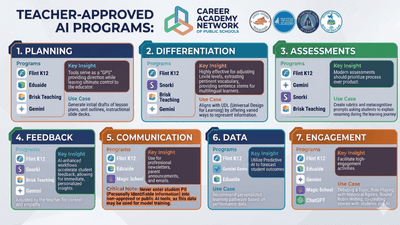
Academy Network of Public Schools has distributed this guidance for its teachers and staff on ways to use AI tools. (WSBT photo)
Ebersol is adamant that AI is not meant to replace teachers.
Instead, he says it is meant to save teachers time so they can spend more of it with students.
Ebersol says teachers and staff can use AI as a tool to help them be more efficient and organized rather than as a replacement for the important connection and creativity that students need.
“We’re using the tools that we have to make it more efficient to get where we’re going and take away some of those mundane tasks, we don’t have to devote so much power processing power to,” says Ebersol.
For him, Google’s Gemini has been helpful to manage tasks, communicate, and keep his calendar in check.
“I was a teacher for ten years and there are some things I’m just not great at and there are some things I’m fantastic at. Like being present in the classroom, delivering the lecture, checking for understanding from the students in the moment, I’m great at those. But lesson planning is not one of my strong suits. So, I used Gemini,” says Ebersol, “so trying to give teachers back more time to do the things they’re great at and pick up the slack of things they can improve on.”
Brett Harring is seeing firsthand how AI is helping teachers cut down on preparation and paperwork.
“Everybody gets into education to work with kids, and help kids, and make a difference. If this can give us a little bit more time towards that, I think we’re moving in the right direction,” says Harring, the director of online learning for Career Academy Network of Public Schools.
Harring is also an AI coach helping middle and high school teachers and staff incorporate and expand their use of AI.
He says while some have been hesitant at first, most ultimately find it is helping them reclaim their classroom time.
“It can be as much as you want it to be, and as little as you want it to be. AI can kind of fill in those cracks that you have as a teacher,” says Harring.
Harring, who is also on the AI Task Force, says the group looked at 40 to 50 different platforms to identify which would be most useful for teachers.
He says Flint K12 has been a valuable AI platform to help educators create lesson plans, personalize student activities, and evaluate where students need additional support.
“The fact that it’s doing that intuitively, automatically, and we’re not having to prompt anything is really nice. I’ve been in education for a little over 20 years. It comes up with things that sometimes don’t make sense, but it does spark a new idea for you,” says Harring, “it is giving you back time with kids.”
While school leaders here say they are seeing a positive impact at CANOPS schools, because AI technology is advancing at such a rapid pace, research on its impact in education is limited.
Stanford University’s SCALEInitiative just released a report reviewing current research.
“The Evidence Base on AI in K-12: A 2026 Review” found when used by teachers AI can improve instructional practices and save teachers time.
The Evidence Base on AI in K-12 ReportPDF preview
View PDF
It also found that results were mixed when used by students.
Other studies have shown that using AI in the classroom can cause students to feel less connectedto their teacher.
Still, at CANOPS, there is excitement over the role of AI in and outside the classroom of today and what that looks like for the future.
CANOPS has also launched an AI/Machine Learning Pathway to prepare high school students for real-world workforce applications that will likely become part of many future opportunities no matter their career goals.
“I’m trying to teach these students that how can we take this and make the world a better place and more ways than one,” says Spencer Noah, the lead AI and mathematics instructor at Career Academy High School.
Noah says that includes teachingethical and responsible AI use.
While Noah is teaching high school students about this quickly advancing technology, his colleagues district-wide are learning to use it too.
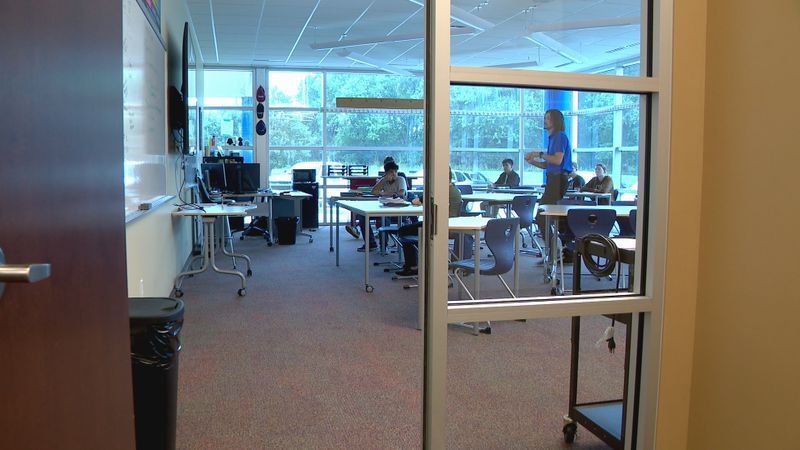
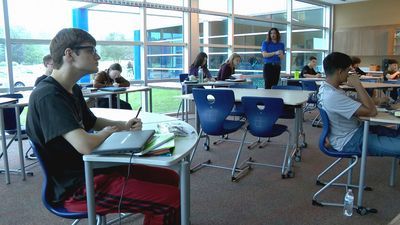
Career Academy Network of Public Schools has launched an AI/Machine Learning Pathway to prepare high school students for real-world workforce applications that will likely become part of many future opportunities no matter their career goals. (WSBT photo)
“We don’t have it all figured out, but it’s not going away,” says Lugbill.
On Wednesday, Operation Education is digging deeper into how the district is preparing students from elementary school through high school for a workforce that uses AI.
Watch Operation Education on Mondays and Wednesdays on WSBT22 News at 6:00 p.m.

Talk to us! Kristin Bien Operation Education.
Watch Operation Education on Mondays and Wednesdays on WSBT 22 at 6 p.m.
